
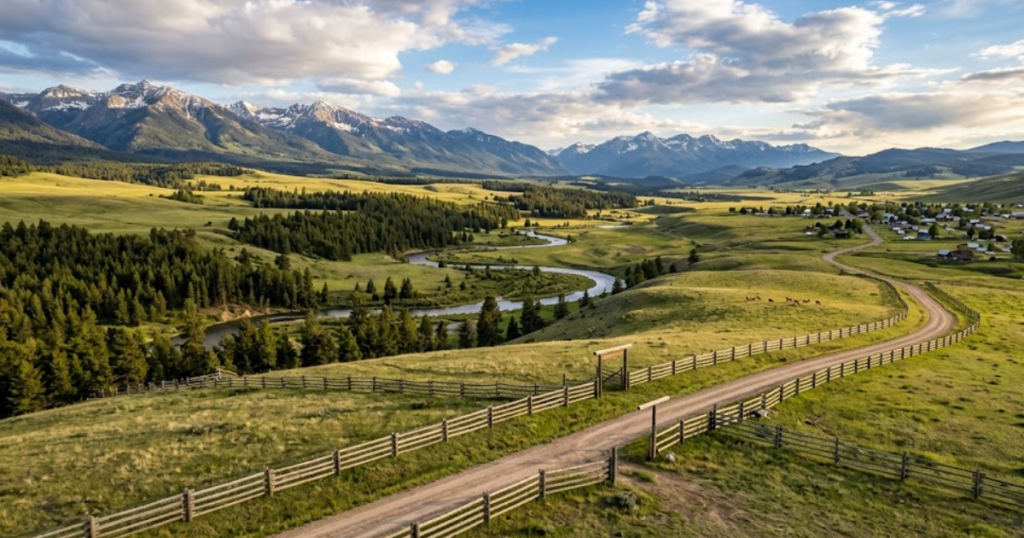
You find a breathtaking 100-acre ranch in the Colorado foothills. The price is surprisingly affordable for the amount of acreage. You buy the property with a grand master plan: you will build your dream equestrian estate on the front 50 acres, and in ten years, you will subdivide the back 50 acres and sell it to a developer to fund your retirement.
You close the deal, hire a surveyor, and head to the county planning office to start the subdivision paperwork. The clerk takes one look at your deed and shakes her head. The property is locked in a Conservation Easement held by a local land trust. You cannot subdivide the land, and you cannot build your new indoor arena because it falls outside the designated building zone. You just bought 100 acres of beautiful, legally frozen dirt.
Conservation easements are incredibly common on large Colorado parcels. They are powerful tools for preserving the natural beauty of the West, but they can be a massive trap for buyers with big development dreams.
Here is how to evaluate the restrictions and benefits of a conservation easement before you make an offer.
Are There Any "Conservation Easements" Preventing Further Sub-division?
Quick Summary: The Permanent Promise
- The Development Freeze: A conservation easement is a legally binding agreement that permanently strips the development rights from a piece of property, making it illegal to subdivide the land into smaller parcels.
- The Building Envelope: Even if you own 100 acres, an easement typically restricts all new construction, including barns and arenas, to a tiny, pre-defined building envelope of just one or two acres.
- The Perpetuity Clause: These agreements are not temporary. They are attached to the property deed and last in perpetuity, meaning they apply to you and every future buyer of the land forever.
- The Pristine Guarantee: While restrictive, an easement is the ultimate protection against urban sprawl. It guarantees that the pristine mountain views and wildlife corridors surrounding your farm will never be replaced by a high-density subdivision.
Conservation easements can either protect the exact rural character you want or permanently block the future plans you expected to have for the land.
1. Understanding the "Severed" Development Rights
Just like mineral rights or water rights, the right to develop land can be severed from the physical dirt.
- The Tax Incentive: Conservation easements usually exist because a previous owner struck a deal with the IRS and a local land trust. By voluntarily giving up their right to ever subdivide or heavily develop the land, they were granted massive federal and state tax deductions.
- The Legal Transfer: Once those development rights are donated or sold to a land trust, they are gone forever. When you buy the property, you are buying the surface dirt, but you are not buying the right to develop it.
- The Enforcement Watchdog: The land trust, or government agency, that holds the easement acts as a strict watchdog. They will physically audit your property once a year to ensure you are not violating the terms of the agreement.
2. The Strict "Building Envelope"
An easement does not just stop you from selling off parcels. It dictates exactly where you can live and work on your own land.
- The Invisible Box: To protect wildlife or agricultural use, the easement document will explicitly define a building envelope. This might be a 2-acre square drawn on a map of your 100-acre farm.
- The Construction Limit: Every single structure, your main house, your guest house, your horse barn, your hay shed, and your riding arena, must fit entirely inside that designated 2-acre box.
- The No-Build Zone: The remaining 98 acres are permanently designated as a no-build zone. You can graze your horses on it, but you cannot pour a concrete foundation or erect a permanent structure on it, no matter how badly you want a new run-in shed.
The size of the parcel can create false confidence. What matters is not just acreage owned, but the exact footprint where construction is legally allowed.
3. The Absolute Ban on Subdivision
If you view raw acreage as a financial investment to split and flip, an easement is an absolute dealbreaker.
- The Preservation Goal: The primary purpose of the easement is to prevent the fragmentation of large agricultural tracts and wildlife habitats.
- The Legal Blockade: The deed restrictions will explicitly forbid you from breaking a 100-acre parcel into two 50-acre parcels or three 35-acre parcels. The property must be sold intact as a single unit for the rest of time.
4. The Hidden Benefits for the Right Buyer
While easements sound terrifyingly restrictive, they are actually highly sought after by a specific type of equestrian buyer.
- The Discounted Price: Because the property cannot be subdivided or developed, it is useless to commercial builders. This significantly shrinks the buyer pool, meaning easement-encumbered properties often sell for noticeably less than unrestricted land.
- The Tax Relief: Because the land's market value is artificially lowered by the inability to develop it, your annual property taxes are often significantly reduced.
- The Protected View: If you buy a property surrounded by land that is also locked in conservation easements, you are buying peace of mind. You have a legal guarantee that a developer will never buy the ranch next door and build a massive strip mall or a 500-home subdivision on your fence line.
We Read the Deed Before You Buy
We do not just look at the open space; we look at the legal invisible lines drawn across it.
When Mark Eibner and Belinda Seville help you purchase a sprawling equestrian property, we pull the title work early. We actively look for Conservation Easements and read the fine print. We will show you exactly where the building envelopes are located and help you determine if the restrictions will ruin your future plans or perfectly protect your private sanctuary.
Contact Us Today to find a property with the right balance of freedom and preservation.
Browse Active Colorado Horse Properties: Browse Active Colorado Horse Properties that offer pristine, protected acreage
Frequently Asked Questions (FAQ) About Conservation Easements
Can I buy my way out of a conservation easement later?
No. Conservation easements are designed to be permanent and run in perpetuity. They are notoriously difficult, and almost always impossible, to reverse or extinguish, even if you offer to pay the land trust a massive sum of money.
Does a conservation easement mean the public is allowed to hike or hunt on my land?
Generally, no. Unless the specific easement document explicitly grants public access, which is very rare for private residential ranches, the land remains entirely private. You still have the absolute right to post No Trespassing signs and keep people off your farm.
Can I use my conservation-easement land for a commercial boarding facility?
It depends entirely on the specific language of the easement. Some easements strictly limit the land to personal agricultural use or natural habitat preservation and ban all commercial enterprises. Other, more flexible agricultural easements may fully allow commercial horse boarding, as long as it does not require building outside the designated envelope. You must have an attorney read the specific document.