
Renting an arena or trails can turn underused areas of a small horse property into income alongside boarding or lessons. The income potential from a small horse property depends on usable facilities, available labor, local demand, and the cost of caring for horses and maintaining the grounds. Boarding, lessons, training, and rentals each involve different workloads and expenses.
Stall income is only one possibility: an arena, pasture, or trails may also serve riders who don’t board on-site. These income streams come with different costs, from feed and veterinary care to labor and facility upkeep, so consider both the revenue and the work involved.
Rentals can make facilities useful to local riders, but the right option depends on the property’s features and your capacity to manage bookings and upkeep. Compare each possibility with your current operation before deciding what to offer.
Key Takeaways
- Estimate boarding income alongside feed, veterinary, labor, and facility costs to understand what may remain as earnings.
- Assess whether lessons or training fit your skills, available time, and property setup before building them into a business plan.
- Consider renting arenas, pasture, or trails to serve riders who don’t board on the property.
- Compare potential revenue streams by the work and upkeep they require, then focus on the options that best fit your land and capacity.
1. Horse boarding rates and operating costs
Boarding can bring recurring revenue, but care responsibilities and facility costs determine how much remains.
Feed, veterinary care, bedding, labor, water, fencing, and arena upkeep all affect operating results. Track income and expenses for each service, then prepare a monthly profit-and-loss statement to identify which costs are putting the most pressure on your margins.
Facility planning starts with land, stalls, and daily labor. A minimum viable boarding operation typically requires 5-10 acres, and most horses need stalls measuring at least 10×12. Operations often need 8-12 horses to cover a typical mortgage and produce modest profit, assuming substantial owner labor. The sustainable number also depends on usable pasture, water, fencing, turnout, and staff capacity.
Boarding can range from pasture access to self-care or full-care, with feeding and stall cleaning adding regular work. Leasing a suitable horse to a rider may help offset feed costs while keeping the horse active. Clear service descriptions, current photos, and written agreements help explain what each arrangement includes.
Local zoning determines whether boarding or events are permitted on a property. Permits, licensing, insurance, waste management, and animal-welfare duties depend on the activity and applicable local rules. In Oregon, permits for agricultural-property events can allow up to 18 events annually under a conditional use permit, according to Oregon Legislature.
Profit depends on occupancy, care costs, labor, and repairs; a well-utilized boarding and training center has an illustrative net margin of 10-25%. Risks include vacancies, veterinary bills, staffing pressure, and facility maintenance. For tax planning, the Internal Revenue Service states the 2025 Section 179 deduction limit is $2.5 million.
2. Riding lessons and training income
Lessons can add revenue without relying solely on boarding. A riding program can serve children, adults, beginners, and competitive riders, with scheduling shaped by instructor availability, horse suitability, and arena access. You can teach or hire an instructor. For example, beginner lessons might cover balance and basic horse handling, while advanced sessions develop competition skills.
Set a clear lesson format before opening a riding school. Define the level each session serves, the horses available, and how riders use the arena. Experienced instructors can tailor lessons to beginners or competitive riders. Therapeutic riding is another possible audience, often developed through collaboration with organizations. The service mix should reflect the instructor’s experience and the horses’ training, rather than demand alone.
Training income differs from lesson income because each horse needs a consistent program. Specify the work included, such as schooling rides or progress sessions, and keep records for each horse. Track the profit from training separately from lesson income to see which activity makes the best use of your time and facilities.
Clinics can introduce your property to riders beyond its regular lesson clients. One option is to host a clinic with a trainer on a recurring schedule. Plan around the trainer’s discipline, arena requirements, and participants’ availability. Record attendance, facility use, and related expenses to assess whether the event contributes to the business.
For owners considering a property for lessons or clinics, horse properties suited to riding programs can help focus attention on facilities and land use.
3. Arena, pasture, and trail rentals
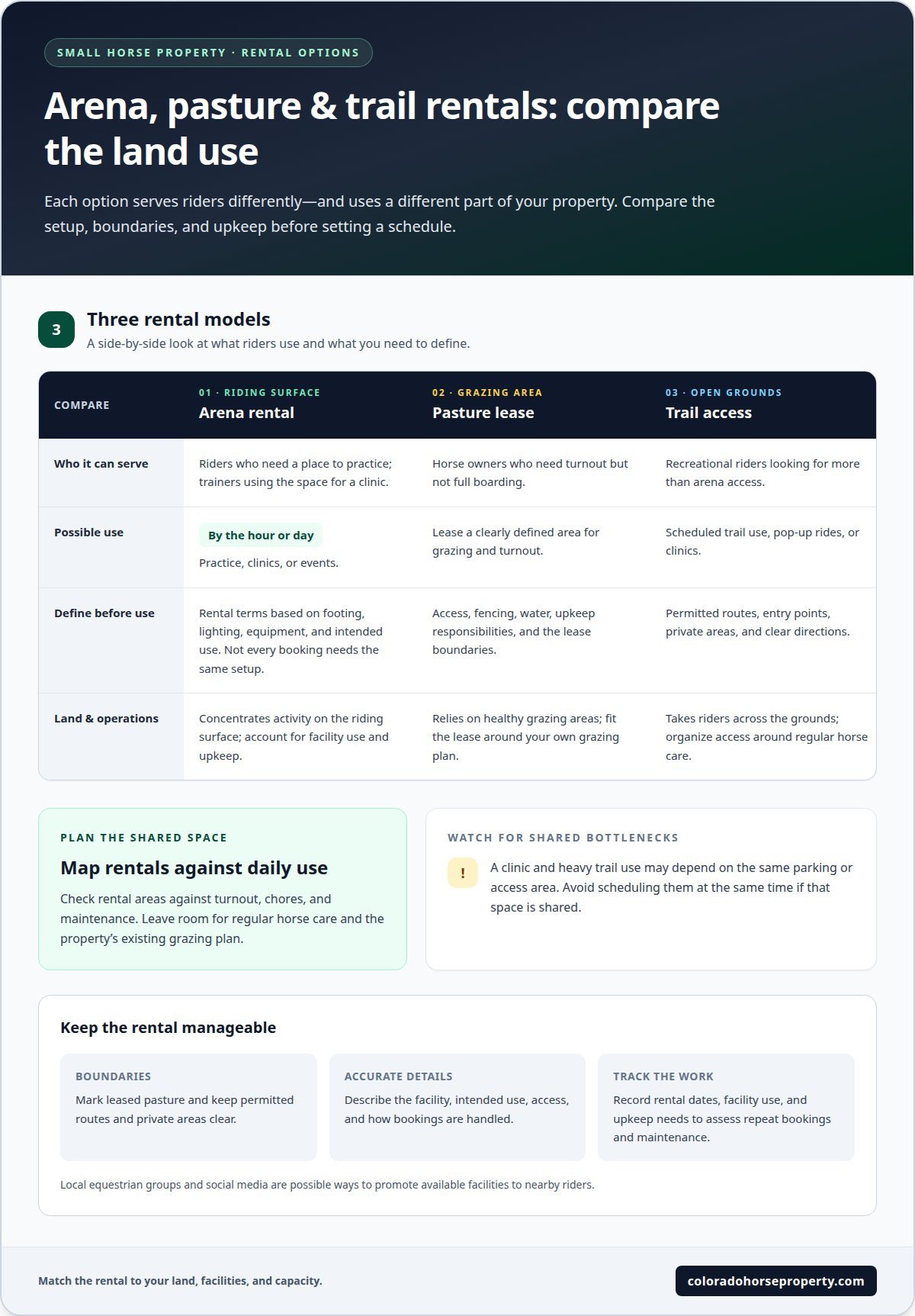
An arena can bring in income between lessons by giving other riders a place to practice. You can rent it by the hour or day for practice, clinics, or events. An independent rider might book arena access for schooling, while a trainer could use the space for a clinic. Set terms according to the footing, lighting, equipment, and intended use. Price the rental based on the access provided, since not every booking needs the same setup.
Pasture access may suit horse owners who need turnout but not full boarding. You could lease a defined area, with terms covering access, fencing, water, and upkeep responsibilities. Its value depends on pasture condition and how the lease fits your own grazing plan. Mark off leased acreage from areas reserved for resident horses, and make the boundaries clear before use begins.
Trails and open grounds can appeal to recreational riders looking for more than arena access. You could offer scheduled trail use, pop-up rides, or clinics. Define permitted routes, entry points, and private areas. Clear directions help visitors stay on the intended route and keep their activity organized around regular horse care.
Each rental uses the land differently. Arena bookings concentrate activity on the riding surface, pasture leases rely on healthy grazing areas, and trail access takes riders across the grounds. Map these uses against turnout, chores, and maintenance before setting a schedule. For example, avoid scheduling a clinic and heavy trail use at the same time if both depend on the same parking or access area.
Promote rentals through local equestrian groups and social media, where nearby riders may find available facilities. Describe the arena or land accurately, including its intended use and how to book. Record rental dates, facility use, and upkeep needs. This helps you identify spaces that attract repeat bookings and judge whether the income justifies the maintenance work.
4. What are typical income sources for a small horse property?
Multiple income streams can reduce reliance on boarding alone. The right mix depends on existing facilities, available labor, and local rider demand. An owner with an arena might combine rentals with clinics, while someone with suitable pasture could lease grazing space. Diversification may support a more sustainable business, but every activity brings additional work and costs.
Some properties offer horse-exercising services for busy owners or riders recovering from injury. Grooming may also be an option, including bathing, mane and tail care, and hoof care. Match each service to staff skills, horse-handling capacity, and available facilities. Track its income and expenses separately to see whether the extra workload fits the property’s overall plan.
Breeding is a separate business with different risks and timelines. A farm may partner with studs or mares, then offer foals or trained horses to buyers seeking particular bloodlines. Demand, care costs, and the time needed to prepare horses for sale all affect the return. Treat breeding as a distinct line in financial projections, not as guaranteed income.
Landowners can also host equestrian recreation, clinics, or photo shoots. A barn or scenic grounds may attract photographers and videographers working on wedding, graduation, or engagement sessions. Event use can bring revenue beyond daily horse activities, but it requires planning for access, parking, and facility upkeep. An agritourism and lessons operation with a small herd has an illustrative margin of 10-15%.
For extra acreage, leasing equestrian land can generate income without adding another horse-care service. Highlight practical features such as fencing, pasture, or an existing barn in the listing. The income potential from a small horse property depends on how well each use fits the land and its ongoing costs. Explore horse properties suited to your income plans to find land with features that fit your intended operation.
Colorado Horse Property: AI-Powered Horse Property Search
Colorado Horse Property helps buyers match property features to equestrian plans with its Colorado Horse Property Search, an AI-powered tool. Use it to look for land and homes with features such as barns, arenas, water, and pasture that suit your intended operation. The details matter: a lesson program may depend on arena access, while boarding requires suitable stalls and turnout.
If you’re buying, Buyer Representation supports your property search and transaction. Owners preparing to sell can use Real Estate Listing Services to present their horse property to relevant buyers. Transaction Management helps coordinate the steps involved in a real estate deal.
Contact Colorado Horse Property to discuss your horse-property goals.
Turn your property plan into a focused search
The income potential from a small horse property starts with matching your business model to the land, facilities, and day-to-day work you’re prepared to manage. Before searching, decide which property features your plan requires and which you could add over time. That clarity can focus your search and help you assess whether a property suits your intended use.
Colorado Horse Property’s AI-Powered Horse Property Search can help identify properties with equestrian features, while Real Estate Listing Services and Buyer Representation support sellers and buyers through their real estate goals. Whether you’re planning a purchase or preparing to list, take the next step when you’re ready. Contact Colorado Horse Property to discuss your horse-property plans and move forward with purpose.
Frequently Asked Questions
How much can horse boarding earn per horse per month in different regions?
Those figures are regional benchmarks, not a single national rate. Local demand, included care, facility quality, and competition all affect what owners can charge. To estimate gross revenue, multiply the planned monthly rate by the number of occupied spaces, then account for vacancies and operating expenses.
What are typical rates for pasture boarding, stall boarding, and full-care boarding?
These regional benchmarks don’t provide a distinct stall-only rate. Pricing depends on what the arrangement includes, such as turnout, feeding, bedding, and stall cleaning. Define those services clearly so customers can compare options and understand the care provided.
How much income can horse riding lessons, training, or trail rides generate?
Gross lesson income depends on paid teaching hours and attendance; training income depends on the number of horses and services included. Trail rides can also bring in revenue, depending on demand, route access, scheduling, and the work required to manage each ride.
What are the startup and ongoing costs of operating a small horse property?
Startup costs depend on which facilities are already usable and what needs to be built or repaired. Planning categories often include fencing, stalls, water access, arena improvements, and equipment. Ongoing expenses include feed, bedding, veterinary care, labor, insurance, and maintenance. Build a budget for each service, separating shared property costs from expenses tied to boarding, lessons, or rentals. This makes it easier to assess which activities support the operation.
What zoning, licensing, insurance, and animal-welfare rules apply to horse businesses?
Local zoning determines whether boarding or events are permitted, and permit, licensing, insurance, waste-management, and animal-welfare requirements depend on the activity and applicable local rules. Check local laws and insurance requirements before starting; in Oregon, a conditional use permit can allow up to 18 agricultural-property events annually.