
You buy a 15-acre horse property with native grass pastures and a beautiful seasonal creek. During your first winter, the horses congregate around the gate and the water trough, turning the area into a knee-deep mud bog. When the spring rains arrive, the runoff washes that mud and manure directly into the creek.
You realize you need to pour reinforced concrete “heavy use” pads, install cross-fencing to rotate the grazing, and build a proper three-bin manure composting facility to protect the watershed. The contractor estimates come back at a staggering $45,000.
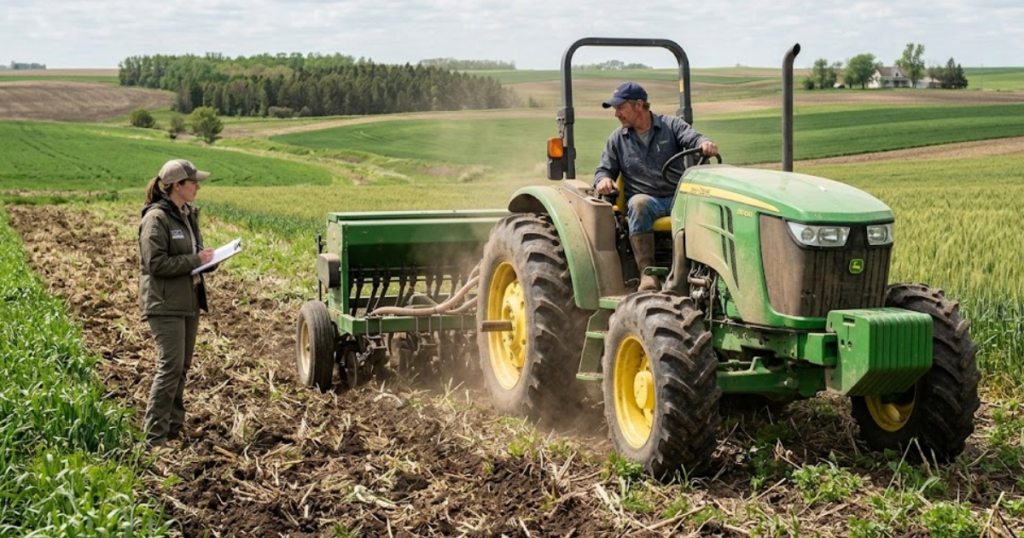
Most new rural buyers assume they have to drain their savings to fix the land. In reality, there is a massive pool of federal money specifically designed to help you pay for these exact improvements.
Here is how to leverage government cost-share programs to upgrade your equestrian property’s infrastructure.
Are There "Cost-Share" Programs for Soil Conservation?
Quick Summary: The Federal Funding Opportunity
- The EQIP Program: Through the Natural Resources Conservation Service, the federal government offers the Environmental Quality Incentives Program, or EQIP, which pays agricultural landowners to install conservation infrastructure.
- The Equestrian Application: These funds are not just for massive cattle ranches. Horse property owners frequently secure funding for cross-fencing, pasture water lines, heavy-use concrete pads, and manure storage facilities.
- The Golden Rule: You must apply and be approved before you break ground. If you build the fence or pour the concrete first, you permanently disqualify yourself from reimbursement.
- The Over-Engineering Reality: If the government is paying for half the project, you must build it to their exact, rigorous engineering standards. A DIY pallet-wood compost bin will not qualify.
Conservation upgrades can be expensive, but on the right property they may be partially funded if you understand the program rules and structure the work correctly from the beginning.
1. Understanding the NRCS and Cost-Share
You are not asking for a handout. You are partnering with the government to protect natural resources.
- The Agency: The Natural Resources Conservation Service, a branch of the USDA, is tasked with preventing soil erosion and protecting water quality. They recognize that helping private landowners build better infrastructure is the cheapest way to protect public waterways.
- The Shared Investment: It is called a cost-share, not a 100% free grant. The NRCS will typically cover a fixed percentage, often 50% to 75%, of the standardized cost of the project. You pay the contractor upfront, and the NRCS reimburses you upon completion and inspection.
- The Farm Tract Number: To apply, you must establish your property with the local Farm Service Agency office to get a Farm Tract Number. You do not need to be a massive commercial operation to get this. Managing acreage with grazing horses often qualifies.
2. What Infrastructure Can Be Funded?
For equestrians, EQIP funding is a gold mine for expensive, unglamorous infrastructure.
- Heavy Use Area Protection (HUAP): This is the most popular program for horse owners. The NRCS will help pay to excavate mud bogs around gates, run-in sheds, and waterers, replacing them with geotextile fabric and engineered gravel or concrete pads.
- Pasture and Water Management: If your horses are overgrazing a single large pasture, the NRCS will help fund the installation of permanent cross-fencing to create rotational paddocks. They will even help pay for the trenching, pipe, and automatic waterers required to supply those new distant paddocks.
- Waste Storage Facilities: To prevent manure runoff from contaminating groundwater, the program will heavily subsidize the construction of massive, concrete-walled manure storage or active composting facilities.
The best candidates for cost-share money are often the least polished properties, especially when the resource problem is obvious and the improvement has clear conservation value.
3. The Critical Rules of Engagement
Dealing with federal bureaucracy requires extreme patience and strict adherence to the rules.
- The Sequence of Events: This is where most landowners fail. You must meet with an NRCS agent, have them draft a conservation plan, formally apply for the funding, and sign a contract before you start the work. If you start digging trenches while waiting for approval, the funding is voided.
- The Timeline: Government money moves slowly. From your first meeting with the NRCS to actually signing an EQIP contract, the process can easily take 6 to 12 months. This is a long-term property strategy, not a quick fix for a sudden problem.
- Strict Engineering Standards: The NRCS will hand you a massive binder of engineering specifications. Your concrete must be a specific thickness, your gravel must be a specific grade, and your fence posts must be driven to a specific depth. Your contractor cannot cut corners, or the NRCS will refuse to issue your reimbursement check.
4. Buying a Property With an Existing Contract
When shopping for horse properties, cost-share programs can directly impact your real estate transaction.
- The Inherited Contract: If the seller currently has an active, unfinished EQIP contract on the property, that contract is attached to the land. As the buyer, you must formally agree to assume the contract and finish the work, or the seller may be forced to pay back the federal money they already received.
- The Blank Slate Potential: If we are touring a property with heavily degraded, overgrazed pastures and terrible mud issues, it is not necessarily a dealbreaker. We often view these properties as prime candidates for NRCS funding, allowing you to use federal money to force major equity and operational improvements into the farm.
We Look for the Potential Before You Buy
We do not just look at the problems on a property; we look for the funding to fix them.
When Mark Eibner and Belinda Seville represent you in buying a Colorado horse property, we help you see the operational potential of the land. We can connect you with local agricultural extension agents and help you identify if a property's soil or water issues make it an ideal candidate for federal conservation funding.
Contact Us Today to find a property where you can leverage agricultural programs to build your dream facility.
Browse Active Colorado Horse Properties: Browse Active Colorado Horse Properties that offer incredible potential for infrastructure development
Frequently Asked Questions (FAQ) About Cost-Share Programs
Do I have to pay income taxes on the money the NRCS reimburses me?
Yes. The funds you receive from EQIP and other federal cost-share programs are considered taxable agricultural income. You will receive a 1099-G tax form at the end of the year. You must work with your CPA to properly offset this income with the depreciation and expense of the infrastructure you built.
Is there a minimum acreage required to qualify for NRCS funding?
No, there is no strict federal minimum acreage requirement. However, your property must have a legitimate, identifiable natural resource concern, like severe soil erosion or water contamination, that the NRCS deems worthy of fixing.
How long am I required to maintain the improvements the government pays for?
Every EQIP practice has a lifespan requirement. For example, if the NRCS helps pay for cross-fencing, you are legally obligated to maintain that fence in working condition for its designated lifespan, often 10 to 20 years. If you tear it down early, they can demand their money back.