
A ranch’s setting, not just its size, creates a sense of quiet. The peace and quiet of owning a secluded mountain ranch can mean waking to wilderness views, spending time in a sheltered valley, and living farther from crowds and city routines. It offers a distinct way to experience open land and connect with the mountain landscape.
If you’re drawn to that kind of space, location matters as much as the ranch itself. A valley can frame the views and shape daily life, while distance from busy areas can bring a welcome change of pace. This article explores how mountain scenery, a quiet valley setting, and distance from crowds shape the ranch experience, helping you consider what seclusion could mean for your property search.
Key Takeaways
- Look beyond acreage to understand how terrain, tree cover, and building placement shape the views from a ranch.
- Consider how a valley’s setting affects the sense of privacy and connection to the surrounding landscape.
- Decide what distance from crowds and city life means for your preferred balance of seclusion and access.
- Narrow your search by region and property features to find mountain ranches that fit your lifestyle goals.
Mountain and wilderness views
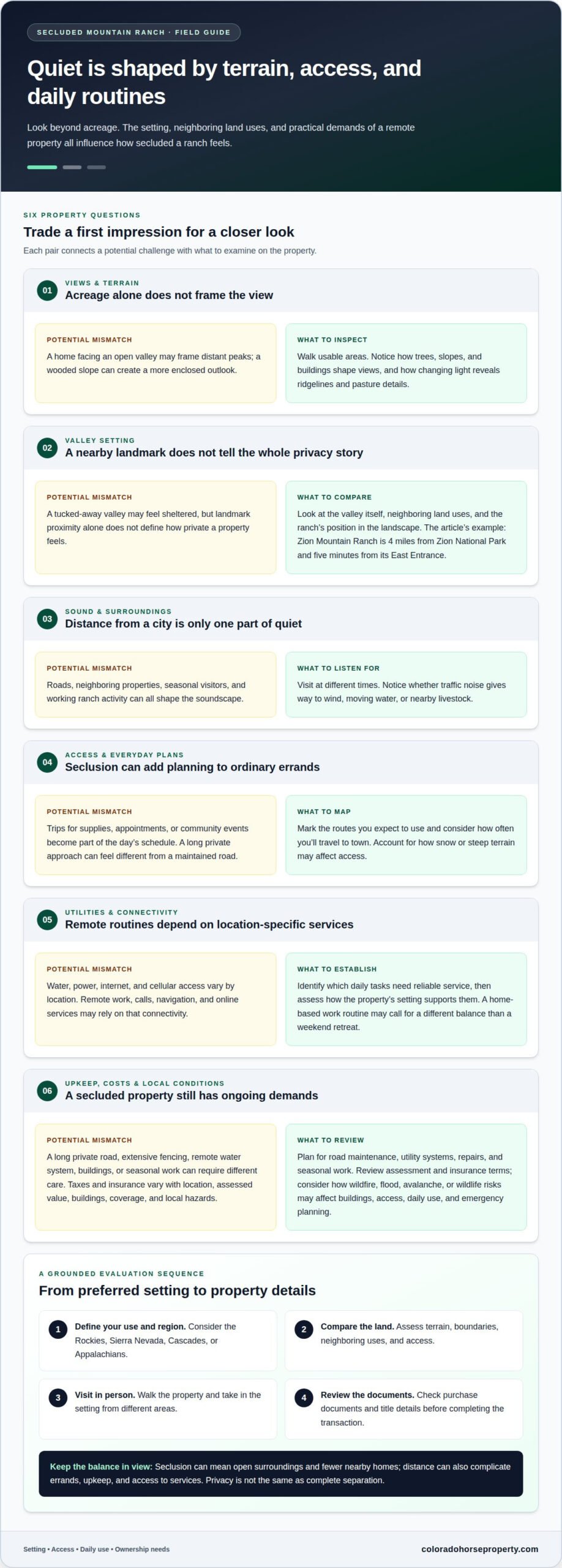
The peace and quiet of owning a secluded mountain ranch starts with how the home fits into the terrain. A house facing an open valley may frame distant peaks, while a wooded slope can create a more enclosed outlook. Changing light reveals different ridgelines and pasture details throughout the day. Walk the property’s usable areas to see how trees, slopes, and buildings shape the views. The surroundings beyond those views also contribute to a ranch’s sense of quiet.
Annual upkeep depends on the property’s access, buildings, utilities, and land-management needs. A long private road, extensive fencing, or remote water system may require different care from a compact property with easier access. Plan for the ranch’s specific features, including road maintenance, utility systems, repairs, and seasonal work.
Property taxes and insurance costs vary with location, assessed value, buildings, coverage, and exposure to local hazards. A ranch with a large home, outbuildings, and extensive land may have different costs from a smaller nearby property. Include the assessment and insurance terms in your ownership plans.
Mountain ranches have no standard acreage or home layout. One property might combine pasture and wooded ground with a residence, barn, or arena. Another may prioritize open land and mountain-facing living areas. Match the acreage and features to your intended use, whether keeping horses, managing pasture, or maintaining a private retreat.
Road access, utilities, internet, and winter weather all affect how a remote ranch functions. Consider whether access depends on a private road and how snow or steep terrain may affect travel. Water, power, and internet options vary by location. Someone working from home, for example, may need different connectivity from someone seeking a weekend retreat.
Wildfire, flood, avalanche, and wildlife risks depend on terrain and surrounding conditions. A wooded hillside, creek corridor, steep slope, or location near wildlife habitat can present different considerations. Review the land’s layout and access routes, then consider how local hazards could affect buildings, daily use, and emergency planning.
Secluded mountain-valley location
A valley can feel sheltered while keeping mountain terrain in view. Compare the setting with your priorities for privacy, access, and daily use.
Regions With Secluded Ranches
In the United States, mountain-ranch searches can include the Rockies, Sierra Nevada, Cascades, and Appalachians. Each region offers distinct terrain and a different relationship between valleys, mountain slopes, and nearby communities. In Utah, Zion Mountain Ranch is 4 miles from Zion National Park and five minutes from the park’s East Entrance. That example shows why proximity to a landmark alone doesn’t define how private a property feels. Focus on the valley itself, neighboring land uses, and the property’s position within the landscape.
Benefits and Drawbacks of Seclusion
A secluded ranch can offer open surroundings, fewer nearby homes, and room to shape the land around your priorities. A tucked-away valley may feel more private than a property beside a busy travel route. The tradeoff is that distance can complicate errands, upkeep, and access to services. Consider how often you need to travel to town and whether the location suits your routines, not just your ideal view.
To evaluate and buy a secluded mountain ranch, start by defining your intended use and preferred region. Compare properties based on terrain, boundaries, neighboring uses, and access. During an in-person visit, walk the land and take in the setting from different parts of the property. Review the purchase documents and title details before completing the transaction. Buyer representation can help organize the property evaluation and purchase process.
For a Colorado search, explore Colorado mountain ranch listings with your priorities in mind, including the setting and how you plan to use the land.
Seclusion from crowds and city life
Distance from urban activity changes the sounds and feel of a typical day. On a Colorado mountain ranch, traffic noise may give way to wind, moving water, or nearby livestock. Quiet depends on more than distance from Denver: roads, neighboring properties, seasonal visitors, and working ranch activity all shape the soundscape. Visit at different times to understand those patterns.
Seclusion also affects how you plan errands and social activities. A trip into town for supplies, appointments, or community events becomes part of the day’s schedule. Before choosing a remote property, map the routes you expect to use and consider how often you’ll need them. A ranch near a maintained road may feel different from one reached by a long private approach.
Night skies can make the contrast with city life especially clear. Away from city lights, a dark sky can make stargazing part of an ordinary evening. On a ranch, darkness can make stargazing part of an ordinary evening, while nearby lighting and weather affect what you can see. Consider where outdoor living areas sit and whether their views face away from roads or neighboring buildings.
Factor connectivity into your daily routine. Remote work, calls, navigation, and online services may depend on internet or cellular access that varies by location. Identify which tasks require reliable connectivity, then assess how the property’s setting supports them. Someone who works from home, for example, may want a different balance of isolation and access from someone seeking a weekend retreat.
Finally, distinguish privacy from complete separation. A secluded ranch can offer room to focus on land, horses, and household routines, but deliveries, visitors, and maintenance still take planning. List the services and regular trips that matter to your household, then weigh those practical needs against the quiet, open setting that drew you to mountain property.
Peace Mountain Ranch seeks to help veterans find common ground through shared experiences and understanding, supporting growth and life reintegration. For some households, connection matters alongside quiet and distance. Consider what kind of community and shared purpose fits the life you hope to build on a ranch.
Which U.S. regions offer secluded mountain ranches for sale?
Secluded mountain ranch searches can span several U.S. states, but a state name alone won’t define the property. Compare the landscape, access, and intended land use in each location. Colorado is a clear starting point for buyers seeking ranches and acreage with equestrian features.
Consider Montana, Wyoming, Idaho, Utah, and New Mexico alongside Colorado. Each state contains varied terrain and communities, so use the list to structure an initial search, not as a substitute for comparing locations. Narrow your options by identifying the setting you want, such as a high mountain basin, wooded foothills, or open valley. Then weigh that landscape against your plans for horses, pasture, and daily travel.
Within Colorado, compare properties by their specific features rather than assuming the whole state offers the same ranch experience. A valley property may suit a buyer prioritizing sheltered land, while another buyer may want broader pasture or a particular barn setup. Define your must-have features before comparing listings across different Colorado locations.
Refine your search in a practical order: choose a preferred state, identify suitable terrain, then filter for ranch features and access needs. Review how each listing describes acreage, barns, arenas, water rights, and pasture. A location may look appealing on a map, but the land configuration and infrastructure determine how well the property supports your plans.
For buyers focused on Colorado, explore Colorado ranch listings by equestrian features and acreage. A focused search helps connect regional preferences with the practical requirements of owning and using the land.
Colorado Horse Property
Colorado Horse Property can turn your priorities for privacy, terrain, and equestrian use into a focused property search. Its AI-Powered Horse Property Search helps narrow Colorado options by features such as barns, arenas, water rights, and pasture. Buyer Representation supports you as you assess how a ranch’s setting and land fit your plans. Transaction Management helps coordinate the purchase process when you’re ready to move forward. If Colorado is your preferred region, this is a practical next step from imagining the landscape to comparing specific properties. Share the features that matter most and the kind of ranch lifestyle you’re seeking. Contact Colorado Horse Property to discuss your search.
Make your ranch vision the next step
The peace and quiet of owning a secluded mountain ranch begins with choosing a property that fits your priorities and daily life. Clarify what seclusion means for your routine, which land features matter, and how you plan to use the ranch. These decisions can guide your search and help you measure each property against your long-term goals.
Colorado Horse Property offers AI-Powered Horse Property Search, Real Estate Listing Services, and Buyer Representation to support your search and purchase decision. If the peace and quiet of owning a secluded mountain ranch is your goal, use these services to move from imagining the setting to evaluating properties that fit your plans.
Contact Colorado Horse Property to discuss your ranch goals and take the next step with confidence.
Frequently Asked Questions
How much does it cost to maintain a remote mountain property each year?
Annual upkeep depends on access, buildings, utilities, and land-management needs. A long private road, extensive fencing, remote water system, repairs, and seasonal work can all affect costs.
What acreage, home features, and amenities are common on mountain ranches?
Mountain ranches have no standard acreage or layout. They may include pasture and wooded land with a residence, barn, or arena, as well as water systems and mountain-facing living areas.