
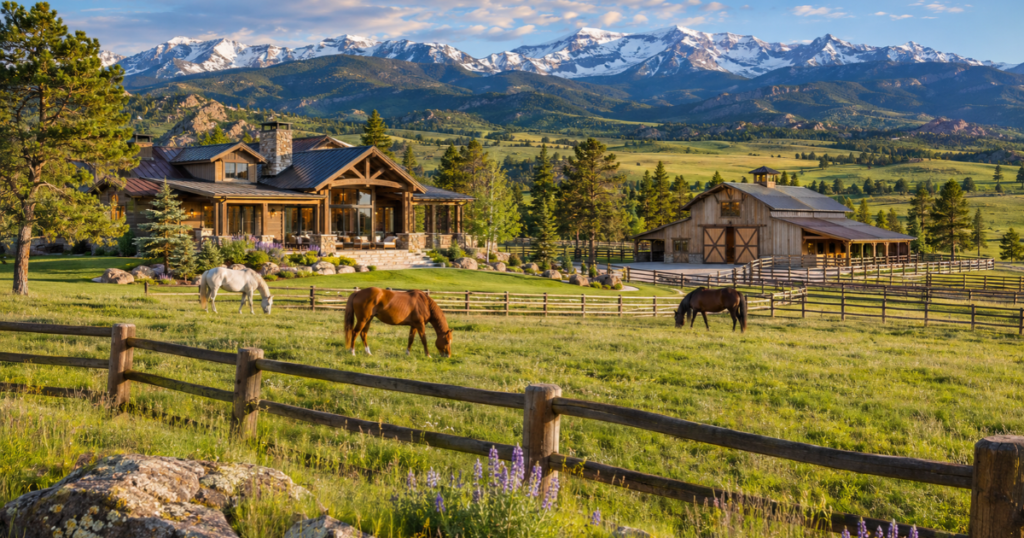
Ask ten Colorado horse owners where to buy and you’ll get ten answers, because the right county depends on how you ride, what you can spend, and how much hay you want to buy. Grass, water, trails, and vet care change a lot from one county line to the next.
The short answer: The best Colorado counties for horse property are Douglas and Elbert for south-metro access and show venues, Larimer for trails and top veterinary care, Weld for working horse operations and irrigated land, El Paso for pine-forest trails near Colorado Springs, Boulder and Jefferson for foothills riding at a premium, the Western Slope counties of Mesa, Delta, and Montrose for long growing seasons, and Custer and Chaffee for mountain-valley living.
Below, we explain how we compared them, what each county does best, and what to watch for, using data from CSU Extension, the USDA, the U.S. Geological Survey, and the counties themselves.
Best Colorado Counties for Horse Properties and Why
Quick Summary: Colorado's Best Horse Counties at a Glance
- Growing season varies by months, not days: CSU Extension lists Grand Junction at about 183 frost-free days a year, Denver at 155, Fort Collins at 142, and Salida at 109. Longer seasons mean more grazing and less hay.
- Water sources differ by county: Rural Douglas County homeowners rely entirely on their own groundwater wells, and Elbert County gets about half its water from the Denver Basin aquifers, according to the U.S. Geological Survey.
- Trail access is a real differentiator: Jefferson County allows horses in all but two of its open space parks, and Boulder County allows them on nearly all of its open space trails.
- Weld County leads Colorado agriculture: The 2022 Census of Agriculture ranks Weld first in the state for total farm sales and for hay and other crops.
County Comparison: Best For, Strengths, and What to Watch
No county is best for everyone. Use this table to narrow the list to two or three that fit how you ride and what you can spend.
| County | Best For | Key Strength | What to Watch |
|---|---|---|---|
| Douglas | Show riders and boarders near Denver | Colorado Horse Park and a county list of horse trails | High prices; declining groundwater levels in rural wells |
| Elbert | More acreage within reach of Denver | Open, rural plains | About half of water use comes from Denver Basin groundwater |
| Larimer | Trail riders who want top vet care | CSU's veterinary teaching hospital; Horsetooth Mountain and Red Mountain open spaces | Higher prices near Fort Collins and Loveland; foothills wildfire |
| Weld | Working operations and hay production | Colorado's top agricultural county | Water rights and ditch shares drive value; check them closely |
| El Paso | Pine-forest trails near Colorado Springs | Black Forest, Pineries, and Homestead Ranch trails | Wildfire in forested areas; Denver Basin wells |
| Boulder | Foothills trail riding with a larger budget | Horses allowed on nearly all county open space trails | Among the highest land and boarding costs in Colorado |
| Jefferson | Foothills riding close to Denver | 275-plus miles of trail across 27 open space parks | Steep lots, mountain wells, wildfire |
| Mesa, Delta, Montrose | Owners who want long grazing seasons | About 183 frost-free days at Grand Junction | Long drives to Front Range shows and referral hospitals |
| Custer and Chaffee | Mountain views with flat meadow ground | Wet Mountain and Upper Arkansas valleys near national forest | Shorter seasons and longer drives to services |
1. How Did We Choose These Counties?
We compared Colorado counties on six things that decide whether horse ownership is practical: usable land, water, growing season, access to vets and venues, riding access, and cost. The counties on this list each stand out on at least two of those.
The Six Criteria
- Usable land: flat or gently rolling acreage that can be fenced and built on.
- Water: whether properties typically rely on wells, irrigation rights, or both, and how reliable that water is.
- Growing season: how many frost-free days pasture has to grow, which drives hay costs.
- Vets and venues: distance to equine hospitals, farriers, feed suppliers, and show grounds.
- Riding access: public trails and open space where horses are allowed.
- Cost: land prices and boarding rates relative to the rest of the state.
What We Left Out
We didn't rank counties by a single score, because the best choice for a trail rider is often wrong for someone running a breeding operation. Mountain counties like Park, Teller, and Gunnison have devoted horse owners too. We cover the trade-offs of high-country living in Colorado Horse Property: Mountain vs. Valley.
2. Douglas and Elbert Counties: South Metro Horse Country
Douglas and Elbert counties combine rural acreage with a short drive to the Denver metro. Douglas offers more polish and better access to shows and services at a higher price. Elbert offers more land for the money and a quieter, more agricultural feel.
Douglas County
Parker, Franktown, Castle Rock, and Sedalia are long-established horse areas. The Colorado Horse Park in Parker hosts hunter, jumper, dressage, and eventing competitions, and in 2022 a group of veterinarians from Littleton Equine Medical Center bought the park and planned to keep hosting shows there, according to The Chronicle of the Horse. The county also keeps a list of parks, trails, and open space areas that allow horses.
Water is the main thing to check. The U.S. Geological Survey notes that homeowners in rural Douglas County depend entirely on their own groundwater wells, and that rising demand has caused water levels in the Denver Basin aquifers to decline.
Elbert County
Elizabeth, Kiowa, and Elbert sit on open rolling plains east of Douglas County, where larger parcels are common. Buyers often find more usable acreage per dollar than in Douglas County while staying within commuting distance of Denver and Colorado Springs.
The USGS reports that Elbert County gets about half of its water from Denver Basin bedrock aquifers, and that neighboring Arapahoe, Douglas, and El Paso counties draw heavily on the same aquifers. Ask about well depth, the aquifer the well draws from, and recent production before you buy.
3. Larimer and Weld Counties: The Northern Front Range
Larimer County pairs foothills trail riding with CSU's veterinary teaching hospital in Fort Collins. Weld County, just east, is Colorado's agricultural heartland, with irrigated land, hay producers, and livestock markets close at hand.
Larimer County
The Colorado State University Veterinary Teaching Hospital in Fort Collins gives Larimer County owners close access to specialty and emergency equine care, and The Ranch Events Complex in Loveland hosts horse shows and rodeos.
Trail riders have real options. Horsetooth Mountain Open Space has about 29 miles of trail open to hiking, biking, and horseback riding, and Red Mountain Open Space, a 15,780-acre property north of Fort Collins, welcomes horses on its designated trails. CSU Extension lists Fort Collins at about 142 frost-free days a year.
Weld County
Weld County leads Colorado agriculture. The 2022 Census of Agriculture ranks it first in the state for total farm sales and for hay and other crops. For horse owners, that means irrigated pasture, a deep pool of local hay, and neighbors who understand livestock.
On irrigated Weld County land, ditch shares and water rights often make up a large part of a property's value. Confirm exactly which rights convey with the sale, what the annual assessments are, and how water is delivered.
4. El Paso County: Black Forest, Falcon, and Peyton
Northern and eastern El Paso County offers two kinds of horse property: ponderosa forest around Black Forest and open prairie around Falcon and Peyton. Both are close to Colorado Springs, with county parks built with riders in mind.
Trails and Parks
Black Forest Regional Park covers 385 acres of pine forest and meadow popular with equestrians. Near Peyton, Homestead Ranch Regional Park has a water trough for horses and more than five miles of trail. The county's Pineries Open Space adds a loop of about 9 miles through former ranch land near Black Forest.
Climate
CSU Extension lists Colorado Springs at about 152 frost-free days and Monument, at 7,400 feet, at about 150, so the growing season here holds up well despite the elevation.
What to Watch
Forested parcels carry real wildfire risk. The 2013 Black Forest Fire burned a large part of Black Forest Regional Park, and park staff have worked to restore it since. Much of the area also relies on Denver Basin wells, so check well depth, the aquifer, and production history.
5. Boulder and Jefferson Counties: Trail Access at a Premium
Boulder and Jefferson counties have some of the best public trail riding on the Front Range, right next to Denver and Boulder. The trade-off is cost: these are among Colorado's most expensive places to own land or board a horse.
Boulder County
Boulder County Parks and Open Space allows horses and pack animals on nearly all of its open space trails, with a few exceptions. The City of Boulder's open space system also has designated trailer parking at several trailheads. CSU Extension lists Boulder at about 156 frost-free days, one of the longer seasons on the Front Range.
Board and Stable notes that the Denver metro and Boulder County sit at the top of Colorado's boarding market, which reflects land values here too.
Jefferson County
Jeffco Parks and Open Space manages more than 58,000 acres, 27 parks, and over 275 miles of trail. All of its parks except Lookout Mountain Nature Center and Preserve and Mount Galbraith Park are open to horses, and White Ranch and Reynolds parks have equestrian campsites.
Much of the county's horse property sits in the foothills, so expect slopes, wells in fractured rock, and wildfire risk. The mountain vs. valley trade-offs apply here in full.
6. Mesa, Delta, and Montrose Counties: The Longest Growing Seasons
The irrigated valleys around Grand Junction, Delta, and Montrose have some of the longest growing seasons in Colorado, which means more months of grazing and less hay to buy. Boarding and land often cost less than on the Front Range, but the big show venues and referral hospitals are a long drive over the mountains.
Climate and Grass
CSU Extension lists Grand Junction, at 4,597 feet, at about 183 frost-free days a year, roughly four weeks more than Denver. The National Weather Service in Grand Junction notes that the city's average last spring freeze is around April 22, compared with mid-June in Aspen.
Agriculture and Water
These valleys are farm country. Mesa County ranks first in Colorado for fruit sales in the 2022 Census of Agriculture, and irrigation canals and ditch companies serve much of the valley floor. As in Weld County, the water rights that come with a parcel are often worth as much attention as the barn.
Cost
Published boarding rates show the difference. Board and Stable lists Grand Junction and Fruita barns from about $350 to $650 a month, below the rates at many Front Range facilities.
What to Watch
If you show on the Front Range or need specialty vet care, plan for long hauls over mountain passes. Summers are hot, so shade and fly control matter more here than in higher counties.
7. Custer and Chaffee Counties: Mountain Valley Living
Custer and Chaffee counties offer something the plains can't: flat meadow ground surrounded by mountains, with national forest trails a short ride or trailer haul away. In exchange, owners accept shorter growing seasons, colder winters, and longer drives to services.
Custer County and the Wet Mountain Valley
The Wet Mountain Valley around Westcliffe lies between the Sangre de Cristo Range and the Wet Mountains, with open ranch land on the valley floor and the San Isabel National Forest on both sides. It appeals to trail riders who want big views and room to ride.
Chaffee County and the Upper Arkansas Valley
The valley around Salida and Buena Vista pairs river-bottom pasture with access to national forest and the Collegiate Peaks. CSU Extension lists Salida, at 7,060 feet, at about 109 frost-free days, so owners here typically feed hay for a good part of the year.
What to Watch
CSU Extension treats anything above 7,500 feet as high elevation in Colorado, and much of the land in these counties is near or above that line. Plan for longer winters, more hay, heavier snow loads on barns, and longer drives to equine hospitals. On public land, check whether certified weed-free hay is required.
8. How Do You Choose the Right County for You?
Start with how you ride and how many horses you keep, then narrow by water, growing season, and budget. Show riders and boarders tend to fit Douglas, Larimer, or Boulder. Owners who want more land for the money look at Elbert, Weld, or eastern El Paso. Owners who want the most grazing look west, and trail riders who want mountain views look at Custer and Chaffee.
| Location | Growing season |
|---|---|
| Grand Junction | About 183 days |
| Denver | About 155 days |
| Fort Collins | About 142 days |
| Salida | About 109 days |
Growing season is one of the biggest differences between these counties, and it shows up directly in your hay bill. A longer season means more months on pasture; a shorter one means more hay stored for winter.
Questions to Ask About Any County
- What water will the property use: a well, irrigation rights, or both? For wells, what aquifer and what permit?
- How many frost-free days does the area get, and how much hay will you need to buy?
- How far is the nearest equine vet, and the nearest referral hospital?
- Where can you ride: public trails, open space, or only your own land?
- What does county zoning allow for the number of horses and buildings you plan?
- What's the wildfire risk, and can you insure the property at a reasonable cost?
We Know Horse Property in Every One of These Counties
Picking the right county is the first big decision in a horse property search, and it shapes every decision after it: the water you'll rely on, the hay you'll buy, the trails you'll ride, and what the land will be worth when you sell.
When Mark Eibner's team works with you, we start with how you ride and how many horses you keep, then narrow the map to the counties that fit. From there, we check well permits and water rights, zoning, and access on every property we show you.
Contact us today at coloradohorseproperty.com to find premium horse properties Colorado buyers trust.
Browse active Colorado horse ranches for sale or search by location with our Search by County and Search by City tools.
About the Author
Mark Eibner is broker/owner of Realty Oasis and leads Team Eibner with MB Metro Brokers. His team represents buyers and sellers of horse and acreage property across the Denver metro and Colorado Front Range.
Frequently Asked Questions (FAQ) About Colorado Horse Property Counties
What is the best county in Colorado for horse property?
There's no single best county; it depends on how you ride. Douglas and Larimer suit show riders who want venues and vets nearby, Elbert and Weld offer more acreage and agricultural land, Boulder and Jefferson have the best foothills trail access at higher prices, and Mesa, Delta, and Montrose have the longest growing seasons.
Which Colorado county has the longest growing season for horse pasture?
The Western Slope valleys do. CSU Extension lists Grand Junction in Mesa County at about 183 frost-free days a year, compared with about 155 in Denver, 142 in Fort Collins, and 109 in Salida. More frost-free days mean more months of grazing and less hay to buy.
Where can I trail ride on public land near Denver?
Jefferson County allows horses in all of its open space parks except Lookout Mountain Nature Center and Preserve and Mount Galbraith Park, across more than 275 miles of trail. Boulder County allows horses on nearly all of its open space trails, and Douglas County publishes a list of parks and open space areas that allow horses.
Is water a concern for horse property south of Denver?
It can be. The U.S. Geological Survey reports that rural Douglas County homeowners rely entirely on their own groundwater wells, that water levels in the Denver Basin aquifers there have declined, and that Elbert County gets about half its water from the same aquifer system. Check the well permit, depth, aquifer, and production history before you buy.
Is horse property cheaper on the Western Slope?
Often, yes. Published boarding rates in Grand Junction and Fruita run from about $350 to $650 a month, below many Front Range barns. The trade-off is distance from Front Range shows and specialty veterinary care.
Which county is best for hay and irrigated pasture?
Weld County leads Colorado agriculture, ranking first in the state for total farm sales and for hay and other crops in the 2022 Census of Agriculture. Irrigated parcels there, and in the Western Slope valleys, can produce much of their own forage if the water rights come with the land.
Sources
- The Chronicle of the Horse: Colorado Horse Park
- Douglas County: Parks and trails for horses
- USGS: Rural Douglas County Groundwater Network
- USGS: Elbert County groundwater
- Larimer County: Horsetooth Mountain Open Space
- Larimer County: Red Mountain Open Space
- USDA: 2022 Census of Agriculture Colorado rankings
- Trails and Open Space Coalition: Black Forest Regional Park
- El Paso County: Homestead Ranch Regional Park
- The Gazette: Pineries Open Space
- Boulder County: Horses on open space trails
- City of Boulder: Equestrians on Open Space and Mountain Parks
- Board and Stable: Colorado boarding costs
- Jefferson County: Parks and Open Space
- Jefferson County: Open space camping
- National Weather Service: Average spring frost and freeze dates