
The best Colorado horse town for retirement may be the one with the winter and elevation you can comfortably live with, not the most dramatic mountain setting. Colorado can suit retirees seeking equestrian acreage, but the best Colorado horse towns for retirees in 2026 differ in climate, terrain, and access to everyday services. Grand Junction has milder winters than the Front Range, while Salida sits at 7,084 feet and averages about 11 degrees on January nights.
When comparing the best Colorado horse towns for retirees, look beyond the scenery. Winter conditions, elevation, and the practical demands of caring for horses on rural property can shape daily life as much as a town’s setting.
This guide compares Colorado towns by climate, terrain, housing costs, and healthcare access. Use these factors to identify locations that may fit your priorities and decide what to investigate before choosing a place to settle.
Key Takeaways
- Weigh retirement finances alongside equestrian property needs, including acreage, barns, and room for pasture.
- Compare seasonal conditions and elevation against the routine you want for both riding and horse care.
- Factor healthcare access, wildfire exposure, and winter travel into the trade-offs of mountain-town living.
- Use the town comparison to narrow your search by setting, housing budget, and day-to-day priorities.
Is Colorado a good place to retire?
Colorado may suit retirees seeking outdoor access and equestrian acreage, but costs and services vary by location. Compare housing, healthcare, and everyday amenities alongside the needs of horse property.
Retirement Affordability and Housing Costs
Colorado’s costs vary by town, so retirement affordability depends on housing choices and income. Pueblo is generally the most affordable among the cities compared here; Boulder is among the state’s most expensive markets. Eligible homeowners aged 65 or older who have owned and occupied their primary home for at least 10 years can exempt 50% of the first $200,000 of its value, according to Colorado Division of Property Taxation.
| Destination | Housing comparison | Retirement consideration |
|---|---|---|
| Pueblo | More affordable of these cities | Compare acreage and amenities |
| Greeley | Balance housing and services | |
| Boulder | Among Colorado’s priciest | Plan for higher housing costs |
Quality of Life and Health-Care Rankings
WalletHub ranked Colorado fourth overall for retirement in 2026, with 58.37 points. Its state comparison placed Colorado 19th for affordability, 19th for quality of life, and third for retirement healthcare. These rankings offer a broad state-level view, not a guarantee of nearby services in every horse town. Denver and Colorado Springs have the state’s deepest concentrations of hospitals and specialists, so distance to care matters when comparing rural living with city access.
Boarding, Safety, and Community Amenities
Safety, transportation, shopping, and community amenities vary by town and rural area, so compare specific locations rather than assuming one statewide pattern. Horse boarding costs depend on location, care, and facility amenities, so there is no single useful statewide figure. Rules for keeping horses depend on the parcel’s local zoning and any applicable neighborhood restrictions. Before buying, investigate water rights, well permits, and livestock limits for the specific property, as these can shape how you use the land.
Balance housing affordability and access to healthcare with the amenities and horse-property features that matter most to your retirement.
Climate, winter weather, and altitude
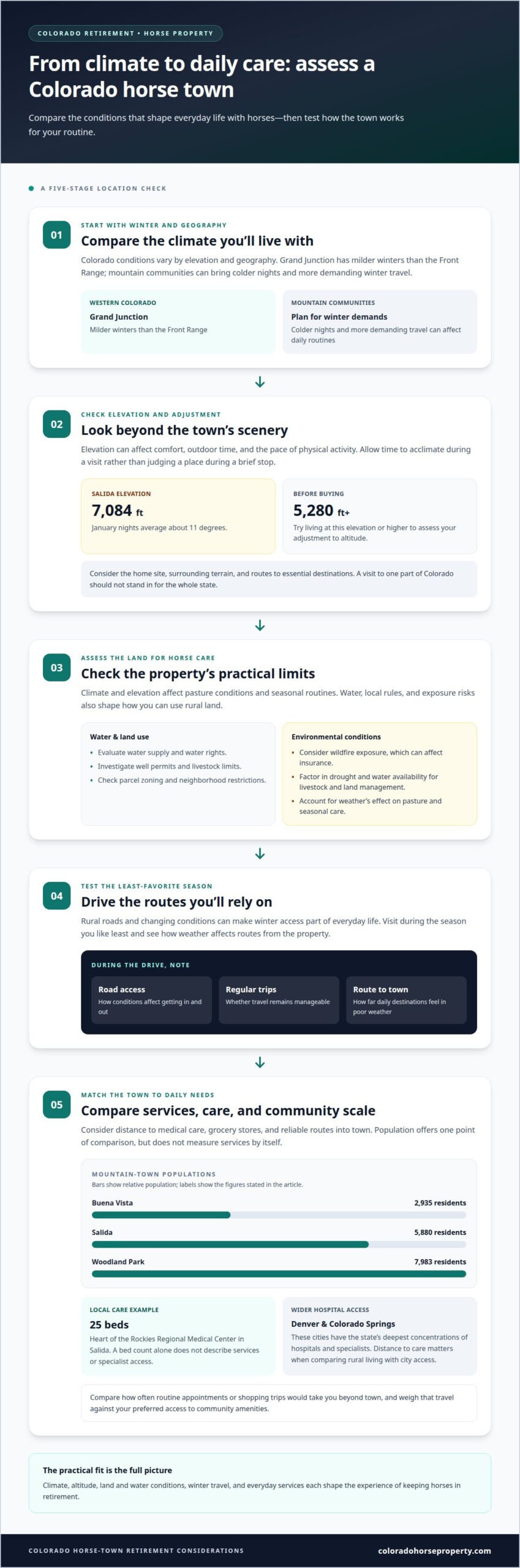
Colorado’s climate varies with elevation and geography, so town averages may not reflect conditions at a particular property. Grand Junction has milder winters than the Front Range, while mountain communities can bring colder nights and more demanding winter travel. These differences can affect riding plans, pasture use, and how easily you can reach town.
Salida shows how elevation changes the picture. The town sits at 7,084 feet, and January nights average about 11 degrees. A property at that elevation may feel different from a lower-elevation destination, even within the same state. Retirees considering Colorado are advised to try living at 5,280 feet or higher before buying, to assess their adjustment to altitude.
Elevation can also affect day-to-day comfort, including time outdoors and the pace of physical activity. Allow time to acclimate during a visit rather than judging a town during a brief stop. Consider the home site, surrounding terrain, and routes to essential destinations. Colorado Springs and other Front Range locations differ from western towns, so one visit should not stand in for the whole state.
Climate, elevation, wildfire, drought, and water availability all matter when keeping horses. Weather and elevation affect pasture conditions and seasonal routines. Wildfire risk is growing in foothill and mountain communities and can affect insurance. Water availability matters for livestock and land management, so evaluate the property’s water supply and rights as part of assessing its practical use.
Preparing a vehicle for winter matters when rural roads and changing conditions are part of daily life. Before choosing a location, drive the routes in the season you like least. Note how weather affects access and whether regular trips remain manageable. This can reveal more than a visit in sunny weather, especially for homes outside town centers.
Climate is one part of retirement cost of living, alongside housing and travel needs. For a location-focused search, Colorado horse property listings can help connect town preferences with available equestrian properties.
Colorado mountain-town retirement considerations
Mountain-town retirement can offer easy access to high-country terrain, but daily needs deserve equal consideration. Compare the home’s distance from medical care, grocery stores, and reliable routes into town. Salida, Buena Vista, and Woodland Park each offer a different setting. The right fit depends on how you balance mountain living with regular services and travel.
Healthcare access is a practical consideration. Heart of the Rockies Regional Medical Center in Salida has 25 beds, a concrete point to include when assessing local care. A bed count alone doesn’t describe available services or specialist access, so consider how a town fits your healthcare needs and travel patterns. Rural properties can add driving time between home, town, and appointments.
Include wildfire exposure in your property comparison. Risk is growing in Colorado’s foothill and mountain communities and can affect insurance. Consider the property’s setting and insurance implications alongside your purchase plans rather than focusing on scenery alone. Visit during the season you like least before choosing a place to live. This helps reveal how weather, road access, and the property’s surroundings affect everyday routines.
Population offers another useful point of comparison, though it doesn’t measure services by itself. Buena Vista has 2,935 residents, Woodland Park has 7,983, and Salida has 5,880. Compare each place’s scale with your preferred access to community amenities and nearby services. Ask how often a routine trip would take you beyond town, especially if you expect frequent appointments or shopping trips.
Retirement income and savings should account for both property expenses and the cost of living. Colorado’s flat state income tax rate is 4.40%; include that figure when comparing take-home income across states. A mountain property’s setting, access, and insurance considerations can shape ongoing costs, so compare them with your retirement budget before settling on a town. Choose the place that fits your routines, care needs, and financial priorities, not just its views.
For safety, consider wildfire exposure and its insurance implications. For transportation and shopping, compare access to medical care and groceries, route reliability, and the extra driving rural properties can add to routine trips. Population can give you a sense of a town’s scale, but weigh that against the services and access you need.
Colorado towns and cities for retirement
For retirees comparing the best Colorado horse towns in 2026, weigh housing, healthcare access, and the property’s equestrian features together. A town’s appeal matters less if the specific acreage can’t support your daily routine or preferred level of horse care.
Horse-Friendly Retirement Destinations
Fruita, Montrose, Estes Park, and Steamboat Springs each offer a distinct setting and housing costs. These figures help frame housing comparisons, but they do not show whether a specific property suits horses.
To narrow the best Colorado horse towns for retirees in 2026, compare properties in Fruita and Montrose with your budget, services, and preferred setting. Grand Junction is the Western Slope’s regional healthcare hub, which may matter to retirees prioritizing access to care. A town’s median value is only one factor; acreage, infrastructure, and day-to-day travel also shape the fit.
Trails, Arenas, and Equestrian Facilities
Access to equine veterinarians, farriers, and feed stores depends on the property’s location and each provider’s service area. Compare routes from the property address, not just distance from the town center. Use the same property-level approach for trails, arenas, and equestrian facilities: consider access, terrain, and whether each suits your riding and horse-care routine.
Fruita, Montrose, and Grand Junction are useful starting points for a shortlist, but a town name alone does not establish whether a parcel has suitable acreage, water, or equestrian infrastructure. Compare housing figures with access to senior services and healthcare, as well as the property features that matter for your retirement.
Use horse-property listings to compare available acreage and equestrian features across Colorado towns.
Colorado Horse Property
Colorado Horse Property helps retirees connect town preferences with equestrian real estate decisions. Its AI-powered Horse Property Search can focus your search on features such as barns, arenas, water rights, and pasture. This is useful once climate, terrain, healthcare access, and daily routines have narrowed your choices, but you’ll still need to compare individual properties.
Real Estate Listing Services and Buyer Representation support the search and purchase process. After you select a property, Transaction Management helps coordinate the transaction. Your next step depends on whether you’re exploring Colorado towns, comparing listings, or preparing to buy.
To discuss your Colorado horse-property search, contact Colorado Horse Property.
Turn your retirement priorities into a property search
Start with a clear list of property priorities. Decide what matters most for daily horse care, such as usable pasture, barn layout, water access, and distance to town. Separate essentials from preferences so you can assess each listing against the life you want to build, not just its views or location.
The best Colorado horse towns for retirees in 2026 will look different for each buyer. A practical comparison starts with the land itself and how it supports your routine through changing seasons. Keep your priorities visible as you consider properties, and let them guide which trade-offs are worth making.
When you’re ready to explore Colorado horse properties, contact Colorado Horse Property. Take the next step toward finding a place that fits both your retirement plans and your horses.
Frequently Asked Questions
What are Colorado horse-town home prices, property taxes, and cost of living in 2026?
Colorado home costs vary by town, with the statewide housing cost index sitting at approximately 108.8, which is about 9% above the national average. The effective property tax rate is approximately 0.50% of a property’s value. Budget separately for acreage upkeep and horse-ready improvements.
Which Colorado towns offer acreage and zoning that allow horses?
Fruita, Montrose, and Grand Junction are useful places to compare, but whether you can keep horses depends on the specific parcel and local zoning. A town name or acreage figure alone does not establish permitted use. Assess the property’s zoning, restrictions, water access, and existing equestrian infrastructure together. Colorado Horse Property’s AI-powered search can help you find listings with features such as barns, arenas, water rights, and pasture.
Which Colorado horse towns have good healthcare, senior services, and access to hospitals?
Denver and Colorado Springs have Colorado’s deepest concentrations of hospitals and specialists, while Grand Junction serves as the Western Slope’s regional healthcare hub. Senior support also varies by community. Services funded under the Older Americans Act include personal care, congregate meals, transportation, and nutrition education. Compare the nearest hospital and senior-service options with your likely travel routine, not just the town’s distance from a medical center.