
A fence that holds cattle can still put a horse at risk. Knowing how to convert cattle pasture to horse-safe fencing starts with removing barbed wire and choosing a visible fence about 4.5 to 5 feet high. Keep openings no larger than 2×4 inches, with the bottom of the fence about 8 to 12 inches above the ground.
You may be able to make a cattle pasture safer for horses without replacing every sound post or fence section. Start by checking the existing fence and identifying hazards such as barbed wire, unsafe gaps, poor visibility, or damaged posts.
This guide explains how to convert cattle pasture to horse-safe fencing, from inspecting the fence line to selecting suitable materials and improving visibility. Use these steps to decide what you can retain, what needs modification, and how to create a safer enclosure.
Key Takeaways
- Assess the existing fence for horse safety, visibility, upkeep, and condition before deciding what to adapt or replace.
- Remove barbed wire from horse areas and choose a clearly visible boundary that discourages jumping and escape.
- Use openings no larger than 2×4 inches and keep the bottom of the fence about 8 to 12 inches above ground.
- Match fencing materials to the animals, terrain, and intended use, then weigh durability and maintenance alongside installation needs.
Pasture Fencing for Horses vs Cattle: What’s Different?
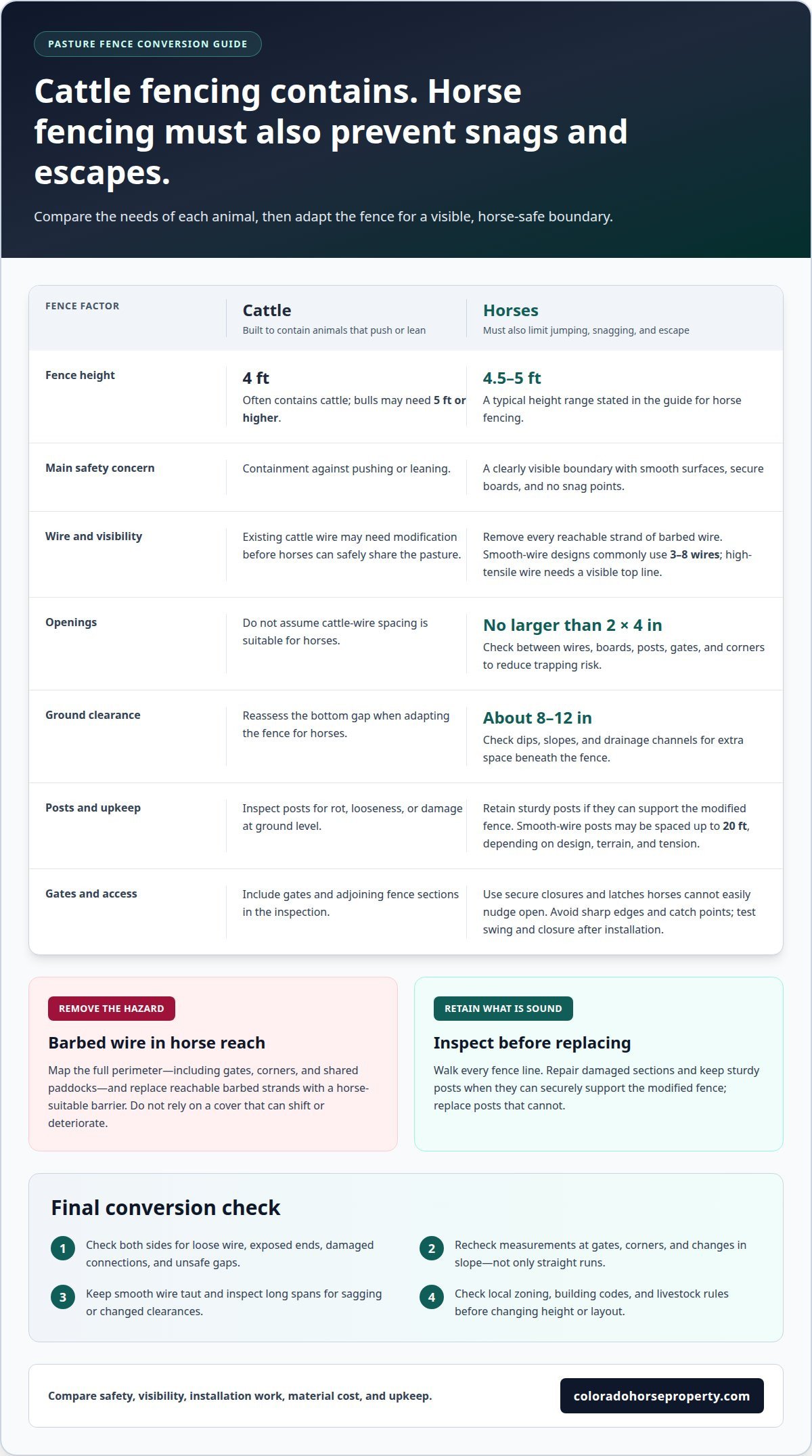
Cattle fencing is built to contain animals that push or lean; horse fencing must also limit jumping and snagging. Adapt the pasture by assessing fence condition, local rules, and the needs of both animals.
Compare safety, upkeep, installation, and cost
Start by walking the fence line and comparing each section’s safety, maintenance needs, installation work, and material cost. A 4-foot fence often contains cattle, while bulls may need 5 feet or higher; horse fencing generally stands 4.5 to 5 feet. Look for visibility, secure boards, and smooth surfaces. Include upkeep in the decision: repair damaged sections, and consider pasture renovation separately through soil testing, liming, fertilizing, or reseeding.
Check rules and existing fence posts
Before changing fence height or layout, identify the zoning, building codes, and livestock rules that apply to the property. Requirements vary by location, so consult the relevant local planning or building office and livestock authority. Inspect each fence post for rot, looseness, or damage at ground level. You can often retain sturdy posts, but replace any that cannot securely support the modified fence.
Install horse-safe electric fencing
Choose an electric-fence charger sized for the pasture, and connect its ground rod to the soil to complete the circuit. Electric fencing uses a high-voltage, low-amperage current; the stated minimum charging capacity is one joule per five acres. Voltage alone does not determine whether a charger is suitable, so match its capacity to the fenced acreage. Where you use high-tensile wire, maintain a visible top line.
Choose safe gates, latches, and openings
Fit gates that close securely and use latches that horses cannot easily nudge open; avoid sharp edges and places where a hoof or halter can catch. Check the whole fence for gaps no larger than 2×4 inches, including around gates and corners. Keep the bottom of the fence about 8 to 12 inches above ground to reduce the chance of a horse or foal rolling underneath. Test each gate’s swing and closure after installation.
Avoiding barbed wire for horses
To convert a barbed-wire cattle fence, remove every strand horses can reach and replace it with a horse-suitable barrier. Begin by mapping the entire perimeter, including sections that are easy to overlook. Smooth-wire designs commonly use three to eight wires, but safe spacing and visibility matter as much as the number of strands.
- Walk the perimeter and mark each barbed section, including fence lines beside gates, corners, and shared paddocks. Include any area a horse could reach now or might access if turnout arrangements change. Plan the replacement before removing strands so the pasture remains enclosed throughout the work.
- Choose a smooth-wire design rather than leaving barbed strands in the horse enclosure. Common designs use three to eight wires; select a layout that fits the boundary, maintains safe openings, and remains visible. If you use high-tensile wire, add a top line to make the fence easier for horses to see.
- Remove barbed wire from horses’ reach instead of relying on a visual cover. If the covering shifts or deteriorates, the hazardous strand may be exposed again. Also separate adjoining cattle areas if horses could reach barbed sections across or through the dividing fence.
- Before turning horses out, inspect both sides of the converted boundary. Look for loose wire, protruding ends, damaged connections, and gaps near gates or corners. Recheck the full fence line after installation and repairs: even smooth wire can become hazardous if it sags or has an exposed end.
If you’re also considering a property with horse-ready pasture, browse horse property listings for land that fits your plans.
Horse fence spacing and ground clearance
- Measure every opening, not just the distance between fence posts. Keep horse-fence gaps no larger than 2×4 inches to reduce the chance of a horse’s head or hoof becoming trapped. Check spaces between wires, boards, posts, and gate frames. A safe-looking fence run can still have a hazardous opening where a gate meets its post.
- Set the bottom edge about 8 to 12 inches above the ground. This clearance helps prevent a horse or foal from rolling underneath, while avoiding a large opening at the base. Walk the line after installation and look for dips, uneven ground, and drainage channels that create extra space under the fence.
- Choose wire spacing with the horse’s size and behavior in mind. Do not assume cattle-wire spacing is suitable; check each gap for places where a head, leg, or hoof could enter. Pay particular attention to low strands a foal could reach and openings near corners where horses may press against the fence.
- Set smooth-wire posts no farther apart than the design allows. Smooth-wire fencing can use posts spaced as much as 20 feet apart, but the terrain and fence tension affect the layout. Keep the wire taut and inspect long runs for sagging, since a loose span can change the clearance or opening size.
- Recheck measurements at gates, corners, and changes in slope. A 2×4-inch maximum opening applies to the whole barrier, not only its straight sections. Confirm the ground clearance remains consistent where the pasture rises or falls, then repeat the inspection after repairs or adjustments. This final pass catches gaps that a quick view from the pasture may miss.
Horse- and cattle-suitable materials
- Choose materials for the animals and the fence’s purpose, not just cattle containment. Horses need a visible boundary without sharp edges or snag points, while cattle fencing may prioritize resistance to pushing and leaning. In a shared pasture, assess each section for both uses and replace anything that poses a hazard to horses.
- Wooden rails can provide a solid, visible boundary. Install the boards on the inside of posts so a horse rubbing against them is less likely to push them out. Use wooden posts at corners and reinforce their bases with poured concrete. Add posts at regular intervals along long stretches to support the fence line.
- Assess PVC carefully before using it in a horse enclosure. PVC fencing can break when a horse weighing 1,000 lbs pushes against it. Consider the horse’s contact with the fence and the material’s condition, rather than relying on appearance alone. A cracked or broken section can leave sharp edges or create an opening that needs repair.
- Electric fencing may suit a pasture where a flexible boundary works with the layout. It can be economical, adaptable to different terrain, and straightforward to install. Use a system designed for livestock containment, and ensure horses can see the fence. On a shared cattle-and-horse boundary, consider visibility and strength as well as how each animal may contact it.
- Match the material to site conditions and maintenance needs. Inspect wood for loose or damaged boards, and check wire for sagging, breaks, and loose connections. Compare how each option handles animal pressure, terrain, repairs, and visibility. Choose a material that meets the horses’ safety needs while still serving cattle use.
Looking for acreage that suits your fencing plans? Explore horse property listings as you evaluate the right setup.
Colorado Horse Property
Colorado Horse Property can help you find or purchase land suited to your plans for horses and cattle. If adapting an existing pasture involves more work than expected, consider how features such as acreage, barns, arenas, and pasture layout affect your next move.
Use the AI-Powered Horse Property Search to narrow your options by equestrian features, and draw on Buyer Representation and Transaction Management as you evaluate a purchase. Real Estate Listing Services can help sellers present a horse property to buyers. These services support the real estate decision, not fence installation or pasture renovation.
For help finding or purchasing a Colorado horse property, contact Colorado Horse Property.
Plan for the land you want to use next
A fencing project can show how well a property supports your longer-term plans. Consider whether the pasture layout, access between fields, and nearby facilities will continue to work as your horse use changes. Planning the conversion can help you look beyond immediate repairs and assess whether the land suits your routine. A practical plan also leaves room for future adjustments instead of treating each fence section in isolation.
If adapting the current pasture leads you to consider a different property, make your search reflect how you intend to use the land. Colorado Horse Property can help you explore that next move with the needs of your horses in mind. Take the next step when you’re ready: Contact Colorado Horse Property today. A well-matched property can give you a stronger foundation for the life and land you’re working toward.
Frequently Asked Questions
How Do I Prevent Horses from Jumping Over the Fence?
Use a clearly visible fence with a top rail to make the boundary easier for horses to recognize. Horse pasture fencing is generally 4.5 to 5 feet high, which helps discourage jumping and escape. Also consider the horse’s habits and the pasture layout: a horse repeatedly approaching one section may need a more visible, secure boundary there. No fence design can guarantee that a horse won’t try to jump.
What Is the Difference Between a Horse Fence & a Cattle Fence?
Cattle fences are designed to withstand pushing, rubbing, or leaning. Horse fences must also reduce the risks of jumping, snagging, and trapped hooves. Barbed wire may contain cattle, but it is unsuitable for areas horses can access. In a mixed-use pasture, plan boundaries around the animals’ different behaviors, with particular attention to visibility and gaps that could catch a hoof.
Why isn’t barbed wire good for horses?
Barbed wire can cut or snag a horse that brushes against it, presses on it, or gets caught in it. A startled horse may react quickly, increasing the chance of contact with exposed barbs. Remove barbed wire from every area horses can reach, including shared boundaries. Replace it with smooth wire or another suitable barrier so sharp strands are no longer within reach.
What fencing types are safest for horses compared with cattle fencing?
Options for horse pastures include visible board fencing, smooth-wire designs, and properly installed electric fencing. Choose according to the animals, terrain, and intended use. Smooth wire needs a visible top line, and board placement should help prevent a horse from pushing boards out while rubbing against them. Keep barbed wire out of horse-accessible areas, even if it remains in a separate cattle enclosure.
What fence height and post spacing are recommended for horse pastures?
Horse pasture fences are generally 4.5 to 5 feet high. Smooth-wire fencing can use posts spaced as much as 20 feet apart, but that spacing depends on the fence design and terrain. For example, long or uneven runs may need closer support to keep wire taut. Check the full fence line for sagging and gaps, especially where the ground rises or falls.
How much does horse-safe fencing cost per linear foot in the United States?
That figure applies to PVC, not to every horse-safe fencing material or a complete installation. Total project cost can also depend on the layout, gates, terrain, and how much existing fencing needs replacement. Compare materials by their maintenance needs and suitability for your horses, rather than treating one material’s average as a universal price.