
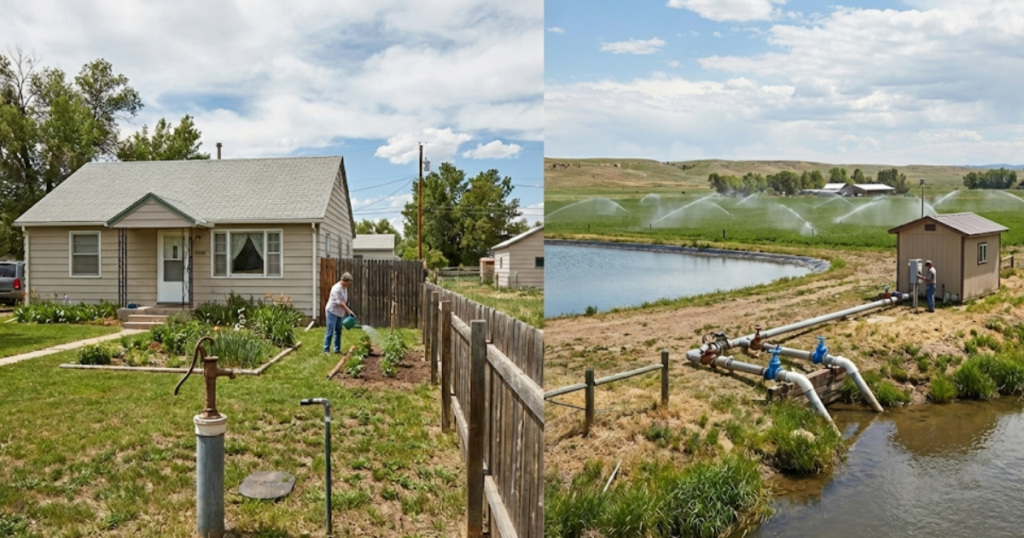
You are looking at two properties. One is a 40-acre ranch with a “Domestic Well.” The other is a 5-acre lot in a fancy subdivision with an “Augmented Well.”
Both wells pump water. Both wells allow you to water your horses. So what is the difference?
In Colorado, water law is based on “First in Time, First in Right.” Technically, pumping a new well steals water from the river, which hurts the farmers who own the water rights from 1860.
The difference between these two permits is how they handle that theft. One is given a pass by the state, and the other has to pay for it.
Here is the breakdown of the two most common ways horse owners get water.
What’s the Difference Between a Domestic Well and an Augmentation Plan?
Quick Summary: Two Very Different Water Rights
- Domestic well: A statutory right tied to land size (typically 35+ acres) that allows livestock and limited irrigation without replacement water.
- Augmentation plan: A water court decree that allows wells on smaller lots by legally replacing the water you use.
- Cost difference: Domestic wells are usually simple to operate, augmentation plans often involve fees, meters, and reporting.
- Legal structure: One is based on statute, the other on court-approved accounting.
1. The Domestic Well
The domestic well is the simplest and most flexible option for horse owners.
- Land size requirement: Commonly associated with parcels of 35 acres or more.
- Typical allowances: Household use, watering of domestic animals, and irrigation of up to one acre.
- Operational simplicity: Usually no annual fees and no mandatory metering in most areas.
2. The Augmentation Plan
Augmentation plans make smaller-lot horse ownership possible.
- Why they exist: To protect senior surface-water rights when wells are drilled on parcels under 35 acres.
- How they work: Replacement water is released into the river system to offset pumping.
- Common requirements: Flow meters, strict usage caps, and annual fees paid to an HOA or water district.
3. Which Is Better for Horses?
Both can work, but they support different lifestyles.
- Domestic well: More flexibility and fewer administrative obligations.
- Augmented well: Works well in planned subdivisions but requires careful monitoring of water use.
- Practical impact: Larger herds and big gardens are easier with a domestic well.
4. The “Household Use Only” Trap
This is the most common mistake buyers make on small acreage.
- Household-only wells: Do not allow livestock watering.
- Domestic vs. augmented: Both may allow horses if properly permitted.
- Critical check: Any property under 35 acres must be confirmed as part of an augmentation plan.
We Verify the Water Source
Water rights are often misunderstood and frequently misrepresented in listings.
We review permits, augmentation plans, and case numbers so you know exactly what your water rights allow, and what they cost.
Contact Us Today to review the water rights on a property you’re considering.
Browse Active Colorado Horse Properties: View All Available Listings
Frequently Asked Questions (FAQ) About Augmentation
Do I have to file augmentation reports myself?
Usually no. Most HOAs or water districts handle reporting once you provide meter readings.
Can I opt out of an augmentation plan?
No. The augmentation plan is tied to the land and is mandatory for that permit.
What happens if the replacement water runs out?
If a plan fails or is poorly managed, the state can curtail well use until replacement water is restored.