
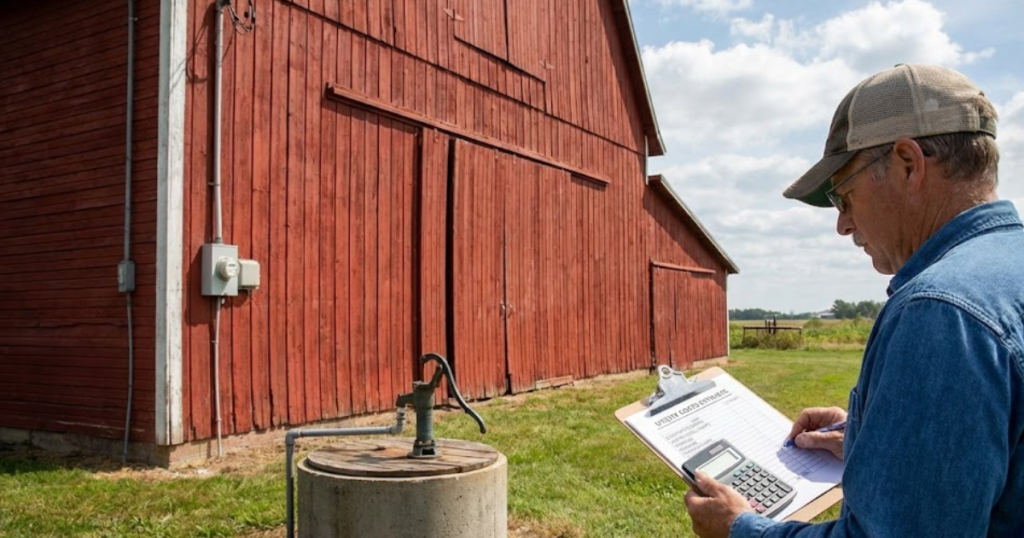
You look at a horse property and think, “Great! I won’t have a water bill or an HOA fee. I’ll save so much money!”
Then the first January electric bill arrives.
Managing the utilities on a horse property is a different game than in the city. You are essentially your own utility company. You manage your own water source (well), your own waste (septic), and often your own fuel storage (propane).
While you save on some line items, the energy required to keep horses warm and water unfrozen in a Colorado winter adds up fast.
Here is a realistic breakdown of what it costs to keep the lights on and the water flowing.
What Are the Average Utility Costs for a Property With a Well and a Large Barn?
Acreage utilities don’t behave like city utilities. They behave like systems—electric demand that swings with the season, fuel deliveries that come in big chunks, and mechanical equipment you’re responsible for maintaining. Here’s a practical, buyer-friendly breakdown of what to budget for on a Colorado horse property with a well and a large barn.
Quick Summary: The Rural Utility Budget
- Electricity is usually the biggest variable: Heated water setups, barn lighting, and larger square footage can push winter bills significantly higher.
- Propane costs arrive in chunks: Many rural homes heat with propane, and fill-ups can be a major one-time expense—especially in winter.
- Wells don’t bill you monthly: But pumps, pressure tanks, and electrical use still cost money—and repairs are real.
- Septic has maintenance: Plan regular pump-outs and keep an eye on system age and condition.
- Internet is its own category: “It’s available” can mean slow DSL, spotty wireless, or Starlink.
Think in two buckets: monthly spend (electric, internet) and scheduled/unscheduled system costs (propane fills, pump replacements, septic pump-outs).
1. Electricity: The Winter Spike
Electric costs vary by property size, insulation, heating style, and how the barn is set up. What surprises buyers is how much “small stuff” adds up in winter.
Common electric drivers on horse properties
- Stock tank heaters: Often 1,000–1,500 watts each. Multiple tanks running 24/7 can add up fast.
- Heated buckets / heated waterers: Helpful, but they’re essentially tiny heaters running for long periods.
- Barn/arena lighting: Large footprints and older fixtures can be expensive—LED upgrades help.
- Well pump draw: Water may not be billed, but moving it still uses electricity.
- Space heaters in tack rooms: Common on show barns, and they can quietly inflate the bill.
Many owners see winter electric bills in the $200–$400+ range depending on usage, rates, and heating choices (some will be lower, and some can be much higher).
Ways owners reduce electric pain
- Switch barn lights to LEDs.
- Use only the number of tank heaters needed and size them correctly for the tank.
- Improve wind protection around water sources and trough placement.
- Insulate or weather-strip heated rooms (tack/feed areas).
2. Propane: The One-Big-Bill Fuel
Propane is common on acreage because natural gas lines often don’t reach rural areas. The key difference is the payment style: you don’t get a “nice steady” monthly bill. You get fill-ups.
What to ask about propane
- Tank ownership: Owned vs leased matters. Leases can include fees and lock you into a supplier.
- Tank size: 500-gallon and 1,000-gallon tanks are common for larger homes.
- Fill strategy: Many homeowners fill in late summer/early fall to reduce winter price risk.
- Appliances: Propane may fuel heat, hot water, stove, and fireplaces—each adds demand.
Budget propane as a seasonal expense. Your cost depends on winter severity, how the home is heated, and how much square footage you’re warming.
3. Well + Septic: Low Monthly, High Repair
Wells and septic systems are why acreage can feel cheaper month-to-month—but they come with maintenance and replacement cycles.
The well: what it really costs
- Operating cost: Often minimal beyond electricity—commonly around $10–$20/month in power usage depending on demand.
- Pump life: Many pumps last roughly 10–15 years.
- Replacement: Commonly $2,500–$4,000 depending on well depth and configuration.
- Other parts: Pressure tanks, controls, and filtration may also need service over time.
The septic: maintenance you can’t skip
- Pump-outs: Typically every 2–4 years (depends on household size and system).
- Cost: Often around $300–$500 per service.
- Best practice: Keep service records and avoid “flushable wipes” (not actually septic-friendly).
Set aside a repair fund. The “monthly savings” from not paying city water/sewer is what finances the inevitable pump, pressure tank, or septic repair later.
4. Internet: What “Available” Really Means
Internet on acreage depends on location, line-of-sight, and infrastructure. If you work remotely, verify serviceability before closing.
- DSL: Sometimes available but may be too slow for reliable video calls.
- Wireless ISPs (WISPs): Can be solid, but coverage depends on towers and terrain.
- Starlink: Often the most reliable option in rural pockets (monthly service plus equipment).
- Cellular hotspots: Useful backup, but performance depends on signal strength and data limits.
Ask sellers what they use today and request a speed test screenshot. “It works fine for us” can mean anything from streaming to struggling.
We Ask to See the Bills
The fastest way to get real numbers is to review the last 12 months of utility history. We look for winter spikes, identify propane patterns, and confirm whether the propane tank is owned or leased.
Contact Us Today if you want help evaluating the true monthly cost of a specific property.
Browse Active Colorado Horse Properties: View All Available Listings
Frequently Asked Questions (FAQ) About Utilities
Is solar worth it on a barn?
Often, yes. Barn roofs can be excellent solar real estate. A properly sized system can reduce electric costs dramatically, especially if you have consistent barn power demand.
Do I need a generator for a well?
If outages happen in your area, a generator is worth considering—especially because most deep well pumps are 220v and need proper backup power to keep water running.
How do I reduce winter electric costs for horses?
Switch to efficient tank heaters, reduce “always-on” loads where safe, upgrade to LED lighting, insulate small heated areas, and improve wind protection around watering setups.
How often should a septic tank be pumped?
Many households pump every 2–4 years, depending on tank size and household usage. If you don’t have records, it’s smart to budget a pump-out soon after move-in.
What should I verify during due diligence?
Ask for 12 months of electric bills, propane usage history, well service/pump details, and septic records. For internet, confirm real speeds with a provider check or speed test.