
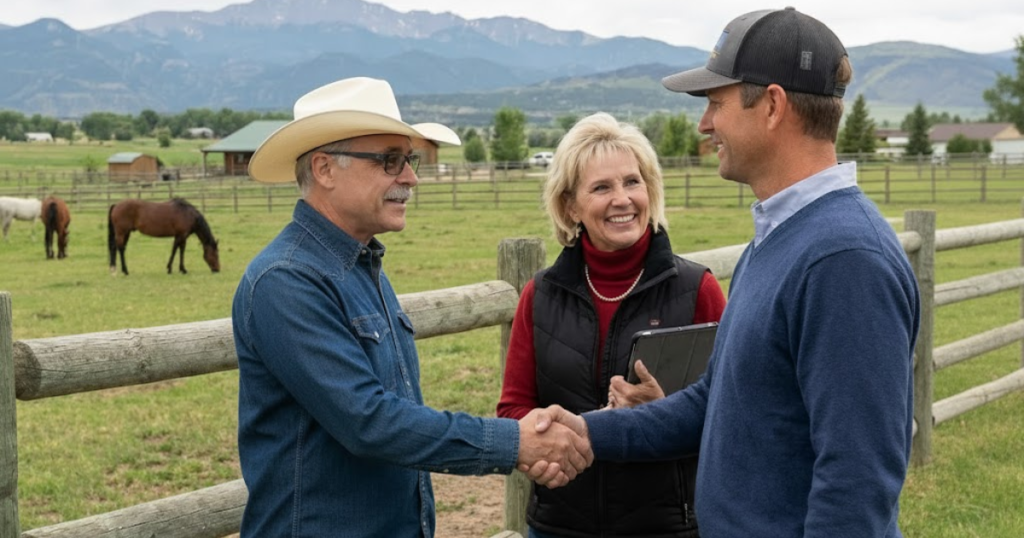
When it comes to equestrian properties, having a knowledgeable, horse-savvy real estate professional by your side is critical. It can mean the difference between a smart investment and a costly mistake.
Many buyers find a beautiful rural home and use a standard residential agent to close the deal. Unfortunately, they often discover after closing that the well does not produce enough water, the zoning prohibits livestock, or the property lacks proper trail access.
Whether you are looking for a custom equestrian estate or a small, horse-friendly homestead, you need guidance every step of the way with attention to detail and strategic insight.
Here is what makes a specialized equestrian agent essential for your property search.
The Best Agents for Buying Horse Property in Colorado
Quick Summary: The Rural Difference
- The rural difference: Buying a ranch is completely different from buying a suburban home. You need an agent who understands agricultural land, water rights, and rural infrastructure.
- Zoning is everything: The best agents know exactly how to check county zoning codes to ensure you can legally keep your desired number of horses.
- Infrastructure expertise: You need a professional who can properly evaluate the safety and condition of barns, loafing sheds, and riding arenas before you make an offer.
- Comprehensive support: A true equestrian specialist guides you through complex issues like septic inspections, well water flow rates, and finding local equine veterinarians.
Horse property purchases are won or lost in the details that a standard residential transaction often misses.
1. What We Help Horse Property Buyers With
A standard home inspection does not cover the realities of a working farm. We provide specialized consulting to ensure every aspect of your equestrian lifestyle is supported.
We help buyers navigate:
- Acreage requirements and rural/agricultural zoning, including for horse boarding.
- Water rights, domestic wells, irrigation access, and augmentation plans.
- Septic system inspections, permits, and leach field evaluation.
- Evaluating barns, loafing sheds, tack rooms, riding arenas, and outbuildings.
- Pasture layout and fencing, including pipe rail, electric, no-climb, and vinyl.
- Discovering exactly how many horses per acre zoning allows in each county.
- HOA restrictions and local land-use guidelines.
- Local boarding facilities, veterinary care, feed and tack suppliers, and trail access.
- Financing options for land, rural homes, and equestrian estates.
2. Navigating Zoning and Water Rights
One of the most overlooked components of a horse property is the water supply. Horses drink a massive amount of water, and maintaining irrigated pasture requires even more.
We help you verify domestic well flow rates and navigate complex augmentation plans so your herd never goes thirsty.
Furthermore, not every piece of land outside the city limits is zoned for equine use. We dive into the county codes to confirm agricultural zoning regulations. We make sure you know exactly how many horses you can legally keep before you sign a contract.
A property can look horse-ready on the surface and still fail the legal or water-use test once you review the actual documents.
3. Evaluating the Infrastructure
A freshly painted red barn looks great in listing photos, but functionality and safety matter more. We walk the property with you to evaluate the layout and the logistics of the farm.
We check the safety of the existing fencing, assess the drainage in the riding arenas, and inspect the structural integrity of the outbuildings. We also help you understand the location, age, permit status, and future maintenance needs of the property's septic system and leach field.
4. Areas We Serve Across the Front Range
We represent horse property buyers across Colorado's Front Range and beyond. From the northern plains to the southern foothills, we have your next horse-ready property covered.
Our core service areas include:
- Fort Collins
- Loveland
- Greeley
- Longmont
- Boulder
- Brighton
- Parker
- Elizabeth
- Castle Rock
- Sedalia
- Monument
- Colorado Springs
We Know the Land and the Lifestyle
We do not just sell houses, we understand the equestrian way of life.
When Mark Eibner and Belinda Seville help you buy a horse property, we bring decades of rural real estate experience to the table. We protect your investment by scrutinizing the water rights, zoning laws, and farm infrastructure, so you can focus on enjoying your horses.
Contact Us Today to start your search with true equestrian property experts.
Browse Active Colorado Horse Properties: View All Available Listings
Frequently Asked Questions (FAQ) About Horse Properties in Colorado
What zoning requirements are needed to own horses in Colorado?
Most rural properties fall under one of the following zoning categories: A (Agricultural), RR (Rural Residential), or ER (Estate Residential). We verify the exact zoning and horse-per-acre rules for every single property you consider.
How many horses can I keep per acre?
It strictly depends on your county and local zoning regulations. Most counties recommend 1 to 2 horses per acre, though some allow more with proper permitting or specific calculations.
Do most horse properties come with barns and fencing?
Yes. Many listings include loafing sheds, barns, paddocks, tack rooms, and fencing. However, we always make sure they are properly permitted, structurally sound, and highly functional for your specific needs.
What kind of fencing is best?
Popular and safe options include vinyl rail, no-climb wire, wood rail, and metal pipe fencing. We help you evaluate the durability, safety, and replacement cost of the existing fences.
What should I know about septic systems on horse properties?
Every rural septic system requires a thorough inspection. We help you understand the location, age, permit status, and future maintenance needs of the tank and the leach field.
Can I build a barn, shed, or riding arena later?
Usually, yes. However, building setbacks, permits, and strict zoning laws apply. We guide you through what is legally possible before you commit to a purchase.
What is the difference between a horse property and an equestrian estate?
Horse properties typically offer basic, functional facilities on smaller acreage. Equestrian estates often feature luxury homes, massive barns, indoor arenas, pristine paddocks, and premium land.
Is well water enough for horses?
Yes, most rural homes depend entirely on healthy well water. We confirm the flow rate, check the water rights, and recommend comprehensive safety testing.
Can I run a boarding business from my property?
Some properties permit commercial boarding or lessons, but it heavily depends on specific zoning and licensing requirements. We help you confirm this legal capability before you make a purchase.