
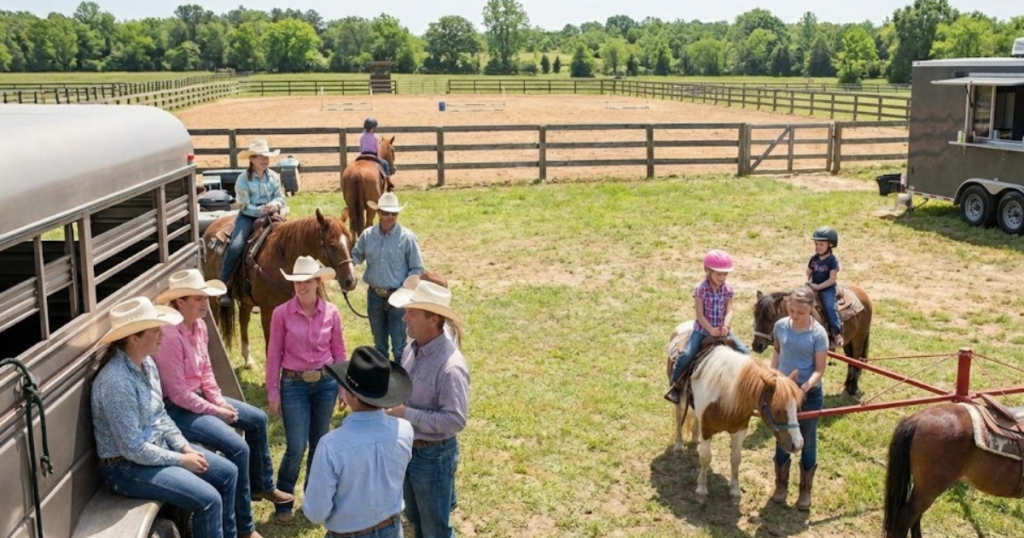
You can buy the most beautiful barn in the world, but if you are the only horse person in a ten-mile radius, it can feel lonely.
Buying into a strong horse community changes your ownership experience. It means having someone to ride with on Tuesday nights. It means having a neighbor who can throw hay to your horses when you get stuck late at work. It means having access to a network of farriers and trainers who actually service your area.
Here is how to spot a vibrant equestrian community before you buy.
Is There a Strong Local Horse Community?
Quick Summary: Finding Your Tribe
- The vibe varies by zip code: Parker and Franktown skew high-level English disciplines and show jumping. Berthoud and Loveland are hubs for reining, cutting, and rodeo. The foothills are dominated by trail riders.
- The safety net: A strong community is not just social rides. In a wildfire or a blizzard, neighbors in active horse communities band together to haul animals to safety or share hay supplies.
- The “digital” barn: Today, local feed-store gossip happens online. Facebook groups like “Douglas County Horse People” or “Colorado Horse Forum” are where you find hay, vet recommendations, and riding buddies.
- Youth organizations: If you have kids, look for areas with active Pony Club chapters, 4-H groups, or access to the Westernaires. These programs provide built-in social circles for young riders.
If you can’t name a vet, a farrier, and a local riding group within 15 minutes of the property, you might be buying isolation.
1. The Regional Hubs: Know the “Flavor”
Colorado has distinct equestrian personalities depending on where you look.
- Parker / Franktown / Elizabeth (Douglas/Elbert): This is the “English” capital. With the Colorado Horse Park nearby, you’ll find a dense concentration of Hunter/Jumper barns, Dressage trainers, and Eventers. The community is competitive and professional.
- Loveland / Berthoud (Larimer/Weld): This is “Cowboy Country.” The community revolves around The Ranch Events Complex. Cutting, Reining, and Roping circuits are strong. If you ride Western, this is your people.
- Conifer / Evergreen / Golden (Jefferson): This is the “Trail” capital. It’s less about ribbons and more about navigating the mountains. Relaxed, recreational, and focused on endurance and pleasure riding.
2. The Formal Organizations: Clubs and Circuits
A strong community is usually anchored by active clubs.
- Rocky Mountain Dressage Society (RMDS): A large network with local chapters that host clinics and schooling shows.
- Colorado Hunter Jumper Association (CHJA): Governs the local show circuit. Active regions mean plenty of C-rated and schooling shows where you can compete without spending a fortune.
- Westernaires: A Jefferson County institution. This mounted precision drill organization for kids is unique to Colorado, and it drives a huge youth horse culture in Golden/Lakewood.
- 4-H and Pony Club: In rural counties like Elbert, the 4-H fair is often the social event of the year, connecting families and building long-term riding circles.
3. The “Invisible” Safety Network
The best part of a horse community is what happens when things go wrong.
Fire evacuation
- In active horse neighborhoods, there are established phone trees and Facebook groups dedicated to emergency hauling.
- If a wildfire sparks, neighbors with big trailers show up to help evacuate those with two-horse bumpers.
The hay network
- When hay is scarce, strong communities share resources.
- Neighbors group orders to buy semi-loads of hay from out of state to save money.
Lost horse (or dog)
- If a horse gets loose, the community mobilizes. Posts go up, people show up with halters, and it gets handled fast.
When you own horses, the “community” is also your emergency plan.
4. How to Find It: The “Trailer Test”
How do you know if a neighborhood has an active scene?
Do the Saturday drive-through
- Count the trailers: Do you see trailers hooked to trucks? Do you see horses turned out in front pastures?
- Visit the feed store: Go to Murdoch’s or Big R and check the bulletin board. Full of clinic flyers, gymkhanas, and tack swaps? That’s an active community. Empty board often means “keep to yourself.”
We Know the Neighborhood Vibe
We don’t just sell houses; we ride in these neighborhoods.
Mark Eibner and Belinda Seville know which streets have the best block parties and which subdivisions have the most active riding clubs. We can tell you if an area is “dressage focused” or “rodeo focused” so you land among friends.
- Contact Us Today to find a community where you fit right in.
- Browse Active Colorado Horse Properties in the heart of horse country.
Browse Active Colorado Horse Properties: View All Available Listings
Frequently Asked Questions (FAQ) About Horse Communities
Are horse communities loud?
They can be early risers. You might hear a tractor at 7 AM or a horse whinny at feeding time. But compared to suburban traffic and leaf blowers, they’re generally much quieter and more peaceful.
Can I join a riding club without owning a horse?
Yes. Many clubs (including Westernaires and some Pony Clubs) have options for leasing horses or volunteering. It’s a great way to get involved before you buy.
Do neighbors mind the smell?
In a zoned horse community, no—everyone expects manure. But on the edge of a non-horse subdivision, you might get complaints from neighbors who aren’t used to rural life.