
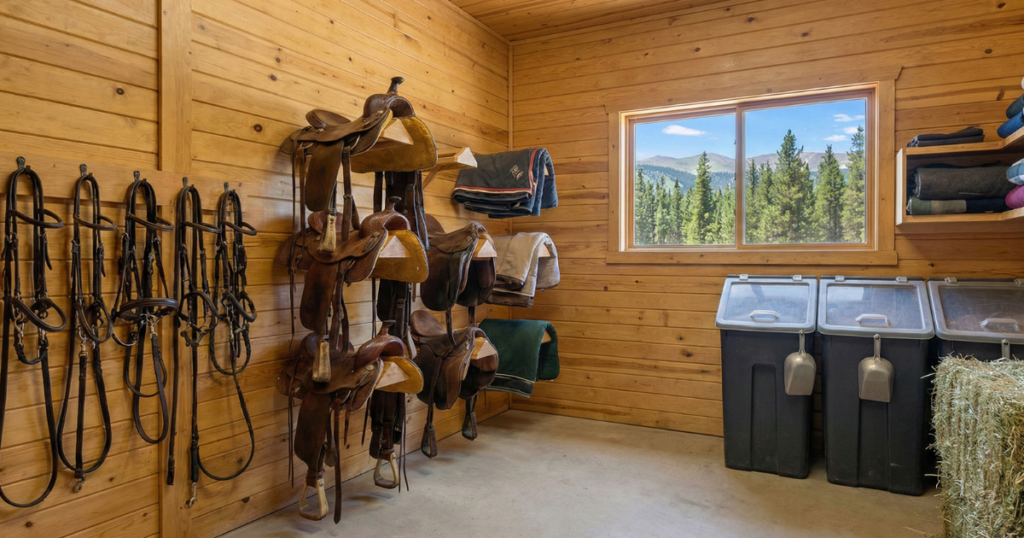
You see a listing for a property with a “4-stall barn.” You walk in, and you see stalls. You see an aisle. But where do you put the saddles? Where do you keep the grain?
In many basic pole barns, the “tack room” is just a dusty corner of the aisle, and the feed sits in trash cans next to the horses.
To a casual observer, this seems fine. To an experienced horse owner, it is a disaster waiting to happen. Dedicated, enclosed rooms for tack and feed are not luxuries. They are essential for the longevity of your equipment and the safety of your animals.
Here is why you should demand dedicated service rooms in your next barn.
Is There a Dedicated Tack Room and Feed Room?
Quick Summary: More Than Just Storage
- Leather protection: Storing saddles near stalls exposes tack to ammonia and humidity that damages leather and rusts hardware.
- Rodent control: A feed room should be sealed with tight doors and a hard floor to keep pests and wildlife out of grain.
- The safety factor: Secure feed storage reduces the risk of grain overload, colic, and founder if a horse gets loose.
- Resale value: Finished tack rooms and proper service areas signal a more professional equestrian facility.
1. The Tack Room: Protecting Your Investment
Tack is an investment, and storage conditions decide how long it lasts.
- Ammonia exposure: Unsealed storage can dry out leather and corrode rivets, buckles, and hardware.
- Dust and grit: Without a sealed door, dust settles quickly and accelerates wear like sandpaper.
- Climate control: Insulation helps prevent stiff leather in winter and mold growth in damp seasons.
2. The Feed Room: Your First Line of Defense
The feed room has two jobs: keep pests out, and keep horses out.
- Rodent proofing: Tight thresholds and hard floors help prevent contamination and reduce disease risk.
- Grain overload risk: A secure, locking door can prevent catastrophic overeating and related emergencies.
- Storage best practice: Use sealed bins and keep feed organized to reduce odor, dust, and spills.
3. The Efficiency Factor
Good design saves time every day.
- Workflow: Place feed storage near delivery access, but keep it central enough for fast feeding routes.
- Clean zone: A tack room provides a place for tack care, boot changes, and vet-kit organization.
4. Security and Insurance
Tack theft is a real risk, and policies may require locked storage.
- Lock it up: A deadbolt tack room adds real protection in open barn environments.
- Insurance detail: Some policies only cover theft when tack is kept in a locked enclosure.
We Check the Details
When we tour barns, we look beyond stall count and check whether the facility actually functions day-to-day.
That includes door seals, floor types, storage layout, and signs of rodents around feed areas.
Contact Us Today to find a barn that is ready for your gear.
Browse Active Colorado Horse Properties: View All Available Listings
Frequently Asked Questions (FAQ) About Barn Rooms
Can I combine the tack and feed room?
You can, but it’s not ideal. Feed dust settles on leather, and feed attracts rodents, which you don’t want near tack and pads.
Do I need a concrete floor in the tack room?
Yes. Concrete is dry, durable, easy to sweep, and reduces moisture and rodent intrusion compared to wood over dirt.
How big should a tack room be?
For a 4-stall barn, a 12x12 room is a comfortable minimum for saddle storage, wall space, and a few trunks.