
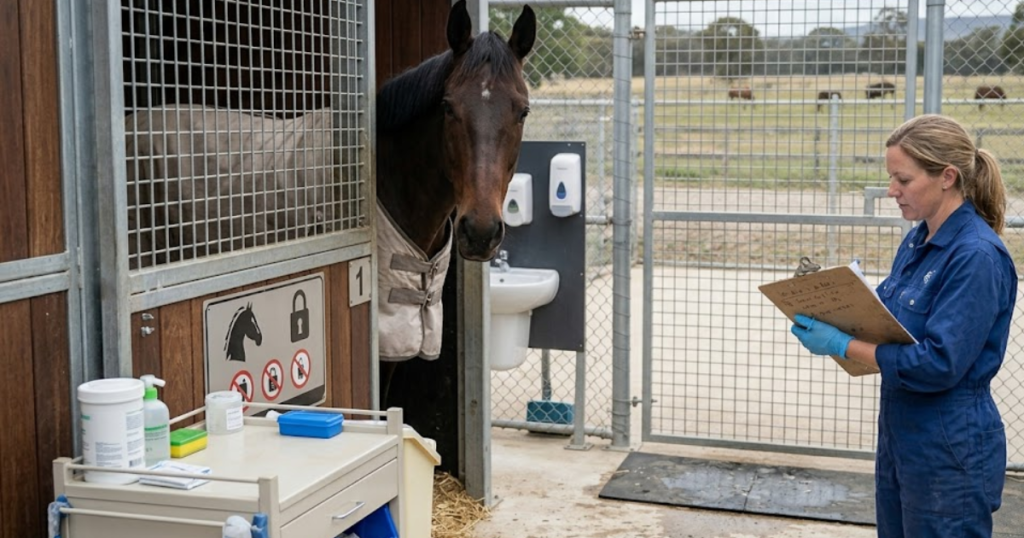
You just purchased a beautiful new gelding and brought him home to your Colorado horse property. You immediately turn him out with your existing herd so they can get acquainted. Two days later, the new horse develops a thick nasal discharge and a fever.
Within a week, every horse on your property is coughing, your barn is under a strict veterinary lockdown, and you are facing thousands of dollars in emergency medical bills.
In the equestrian world, highly contagious respiratory and bacterial infections spread like wildfire. Whether you are running a busy commercial boarding facility or just keeping a few personal horses, having a dedicated bio-security area is not a luxury—it is an absolute necessity.
When evaluating a horse property, you must look at the layout not just for convenience, but for disease control. Here is how to evaluate a farm’s quarantine capabilities before you buy.
Is There a "Bio-Security" Area for Isolating New or Sick Horses?
Quick Summary: The Quarantine Zone
- The 30-Day Rule: Every new horse brought onto a property, or returning from a high-traffic show, should undergo a strict 30-day quarantine to prevent the spread of dormant pathogens.
- Airborne and Runoff Risks: True bio-security requires more than just a separate stall. The isolation area must have independent airflow and drainage that flows away from the main herd's pastures.
- Dedicated Equipment Space: A proper quarantine zone includes secure storage for dedicated pitchforks, buckets, and grooming supplies so cross-contamination does not occur on the owner's boots or tools.
- The Financial Protection: An outbreak of a highly contagious disease like Strangles or EHV-1 can shut down a barn for months. A simple, separate isolation paddock is the cheapest insurance policy against astronomical veterinary bills.
On a horse property, bio-security is not just a management preference. It is a layout issue that protects animal health, veterinary costs, and the long-term stability of the farm.
1. The Geometry of Isolation
Bio-security is all about physical distance and preventing nose-to-nose contact.
- The Danger of the Shared Fenceline: A separate paddock is useless for quarantine if it shares a common fence with the main pasture. Horses will inevitably touch noses over the rail, instantly transmitting respiratory viruses and bacteria.
- The Ideal Distance: A true isolation paddock should be separated from the main herd by at least 30 to 50 feet of dead space. This buffer zone prevents direct contact and drastically reduces the transmission of airborne water droplets from coughing or sneezing.
- The Separate Structure: The gold standard for bio-security is a completely standalone run-in shed or a small one-stall isolation barn located well away from the primary stables.
2. Airflow and Drainage Dynamics
Pathogens travel invisibly through the air and the water. You must understand the environmental flow of the property.
- Shared Ventilation: Using the end stall in your main barn as a quarantine zone is highly risky. In a fully enclosed barn, the horses share the same airspace. A coughing sick horse will circulate viral particles down the entire barn aisle.
- The Downhill Threat: Pay close attention to the topography. The isolation paddock must sit at a lower elevation than the main pastures, or drain away from them. If the quarantine pen is uphill, a heavy Colorado rainstorm will wash contaminated manure and bacteria directly into the main herd's grazing area.
True isolation depends on more than distance. You need separate airflow patterns, drainage that moves away from healthy horses, and a layout that supports strict handling protocols.
3. Equipment and Protocol Storage
Bio-security is easily broken by human error. The isolation area must support strict handling protocols.
- Dedicated Tools: You cannot use the same muck bucket, pitchfork, or wheelbarrow in the quarantine pen that you use in the main barn. The isolation area needs a secure, dry place to store its own dedicated tools.
- Boot and Hand Washing: The area should ideally have access to a separate water spigot. This allows you to fill water buckets without dragging a shared hose between troughs, and provides a place to wash your boots and hands before returning to the healthy horses.
4. The Cost of an Outbreak
When viewing properties, buyers often look at an old, detached shed and think about tearing it down. Think twice.
- Strangles and EHV-1: Diseases like Equine Herpesvirus (EHV-1) and Strangles are devastating. They require strict, prolonged isolation, deep cleaning of all facilities, and can lead to fatal neurological or respiratory complications.
- The Business Impact: If you plan to board horses commercially, an outbreak will freeze your business. You will not be able to accept new boarders, and current boarders will not be able to travel to shows.
- The Value of a Sick Pen: A small, slightly isolated structure with sturdy fencing is incredibly valuable. It acts as an insurance policy, protecting the health of your primary herd and the financial stability of your farm.
We Inspect the Layout Before You Buy
We do not just admire the main barn; we evaluate the entire operational layout.
When Mark Eibner and Belinda Seville help you purchase a horse property, we look at the farm through a lens of safety and logistics. We assess the property's layout to identify natural quarantine zones, evaluate the drainage patterns, and ensure you have the infrastructure needed to manage your herd's health effectively.
Contact Us Today to find a property engineered for the long-term health of your horses.
Browse Active Colorado Horse Properties: Browse Active Colorado Horse Properties with professional-grade layouts and amenities
Frequently Asked Questions (FAQ) About Bio-Security
Can I just use a portable corral panel setup for a quarantine pen?
Portable panels can work in an emergency, but they are not ideal for a full 30-day quarantine. A sick or stressed new horse is more likely to pace, challenge the fence, or try to jump out. A permanent, highly visible, and sturdy fence is vastly superior for keeping an isolated horse safely contained.
How long does a quarantine area need to stay empty after a sick horse leaves?
It depends entirely on the pathogen. Some viruses die quickly in direct sunlight, while the bacteria that causes Strangles can survive in water troughs and on wooden fences for weeks or even months. You must thoroughly scrub and disinfect all surfaces, troughs, and buckets before placing another horse in that space.
Should I quarantine a horse that just came back from a weekend trail ride?
If they were exposed to unknown horses at a busy trailhead or shared a communal water trough, yes, a brief isolation and temperature-monitoring period is a very smart precaution. Biosecurity is not just for brand new purchases.