
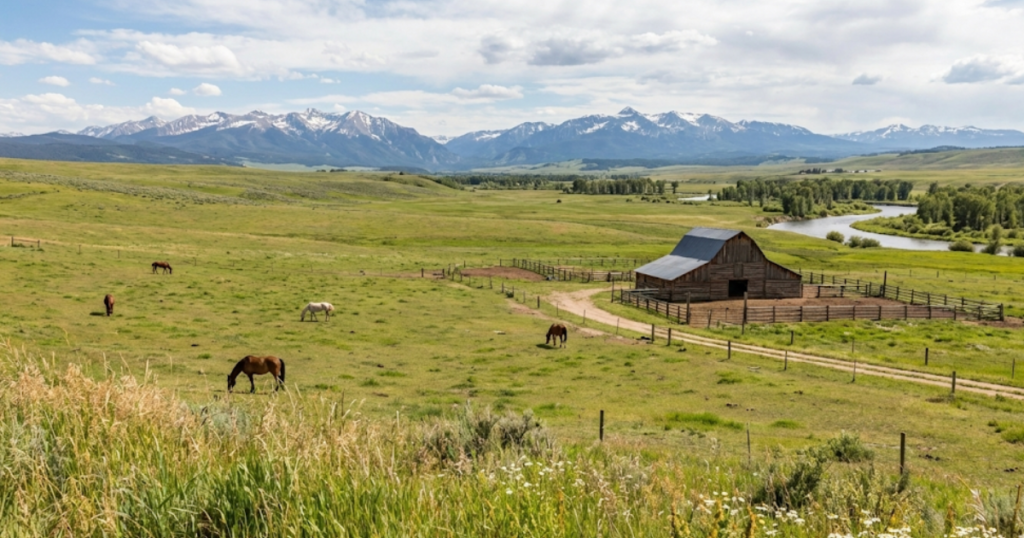
You see a listing for 35 acres in the foothills at an incredible price. You imagine your horses galloping across wide-open fields.
Then you drive up the driveway and realize the truth.
The property is beautiful, but it is vertical. The “pasture” is a steep mountainside covered in sharp rocks and cactus. The only flat spot is the driveway.
In Colorado, topography is everything. We have mountains, canyons, and mesas. This means 5 acres in the mountains is rarely equal to 5 acres on the plains. Buying “unusable” land is one of the most common regrets for new horse property owners. You end up paying for land your horses can’t stand on.
Here is how to judge the terrain before you fall in love with the view.
Is the Acreage Actually “Usable” for Your Horses?
Quick Summary: Don’t Confuse Gross Acres With Usable Acres
- Gross vs. net: You may pay for 10 acres, but only a fraction may be safe and functional for horses.
- Slope danger: Steep, rocky terrain increases injury risk and becomes unusable when icy.
- Vegetation matters: Dense scrub oak/forest is often not pasture and is expensive to reclaim.
- Drainage matters: Low flat areas can become seasonal mud pits and floodplains.
1. The “Paper Acres” vs. “Hoof Acres” Test
Listings sell gross acreage. Horses need usable acreage.
- What to subtract: House footprint, driveway, septic area, steep ravines, rock outcroppings, and dense trees.
- What’s left: The land that can actually be grazed, fenced, and safely used for turnout.
- Why it matters: A “10-acre” parcel can function like a 1-acre paddock if most of it is unusable.
2. Steep Slopes and Injury Risks
- Joint stress: Long-term turnout on steep grades strains stifles and hocks.
- The winter slide: Ice turns slopes into dangerous slip zones, especially around water and hay routes.
- Erosion: Steep pastures rut and wash out during storms, degrading footing over time.
3. The Scrub Oak and Forest Trap
- Scrub oak thickets: Dense, ungrazable, and difficult to ride through.
- Toxic risk: Oak leaves and acorns can cause serious illness if ingested.
- Clearing costs: Heavy machinery and regrowth control can be expensive and ongoing.
4. Flat Isn’t Always Good: The Mud Pit
- Drainage: Low properties can trap snowmelt and rain, creating persistent mud.
- Hoof problems: Extended mud exposure increases thrush and abscess risk.
- Floodplains: Check flood maps—barns in flood zones are a major risk and cost driver.
We Walk the Fence Line
We evaluate slope, drainage, vegetation, and the real usable acreage—so you know what your horses will actually have.
Contact Us Today to find a property with safe, functional land.
Browse Active Colorado Horse Properties: View All Available Listings
Frequently Asked Questions (FAQ) About Terrain
Can I grade steep land to create a flat pasture?
You can build pads or “benches,” but flattening entire pastures is usually prohibitively expensive compared to buying flatter land.
Is rocky ground always bad for hooves?
Some horses adapt to rocky footing, but sensitive-footed horses may need shoes or boots and can be prone to stone bruises.
How much usable pasture do I need per horse?
For meaningful grazing, CSU guidance varies widely (often 2–10+ acres/horse depending on rainfall and forage). For turnout-only with hay feeding, you can use less if it’s dry and safe.