
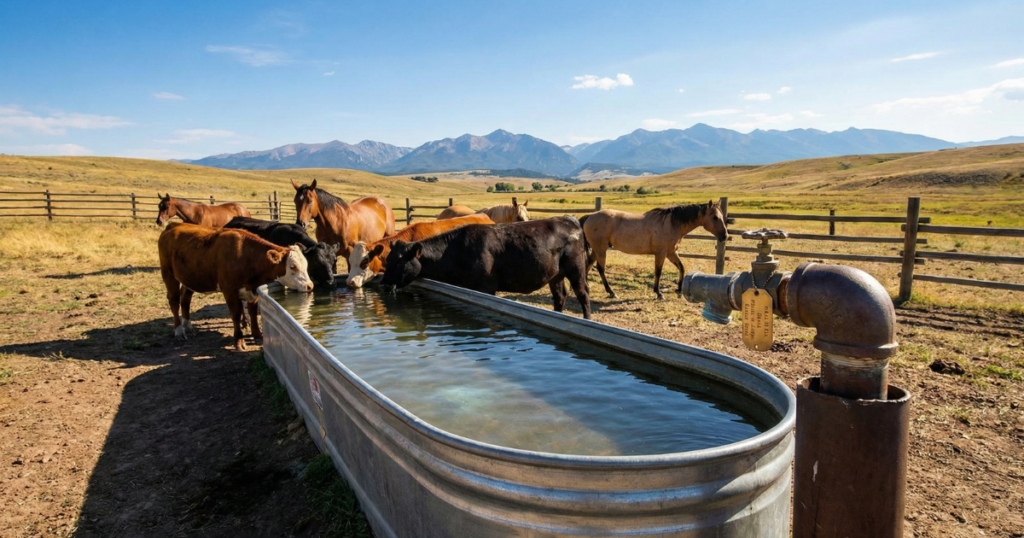
You ask the seller, “Can I keep horses here?” They point to the well and say, “Sure, we’ve had horses for 20 years.”
That sounds reassuring, but in Colorado, “historic use” is not the same as “legal right.”
While zoning tells you how many animals can fit on the land, water law tells you how many animals you can legally hydrate. This is a critical distinction that many buyers miss. If you are in a subdivision with an “Augmentation Plan,” your water usage is likely capped by a strict mathematical formula.
Here is how to figure out if your well is actually adjudicated for the size of your herd.
How Many Animals Is the Well Adjudicated For?
Quick Summary: The Legal Limit on Your Herd
- Permit vs. adjudication: A well permit is an administrative license. A water court decree (adjudication) is a legal cap that often controls the real limit.
- Volume cap: Most wells are limited by total annual volume (acre-feet), not by a specific number of horses.
- Augmentation plans: Subdivision plans may allocate a fixed amount of replacement water per animal equivalent, creating a hard limit.
- Don’t trust “history”: Prior owners may have exceeded legal use; that does not become your legal right.
1. Permit vs. Adjudication: Know the Difference
Before you do any animal math, identify which document governs the well.
- The Well Permit: Issued by the State Engineer. In some situations this is the primary document.
- The Adjudication (Decree): A Water Court order that can set firm annual pumping limits and usage conditions, especially in subdivisions.
2. The Real Limit: Acre-Feet (Not Headcount)
Water courts rarely write “4 horses allowed.” They regulate volume.
- Acre-foot basics: About 325,851 gallons.
- Typical cap: A decree may limit total annual use (example: 0.3 acre-feet/year).
- Household first: Indoor use often consumes most of the allowance.
- Livestock impact: Horses drinking 10–15 gallons per day add thousands of gallons per year.
3. The “Augmentation Plan” Trap
This is common in 5–10 acre subdivisions in places like Douglas and Elbert counties.
- Replacement water: Developers buy water to “replace” what wells pump.
- Allocated uses: Plans often list specific allocations for house, lawn, and livestock equivalents.
- Hard cap: If the plan allocates water for a set number of horses (or equivalents), exceeding that is a legal problem.
4. Why “Historic Use” Is Dangerous
Assumptions based on what someone “got away with” are risky.
- Enforcement can be complaint-driven, meaning it may not appear until neighbors or HOAs raise it.
- Sales can increase scrutiny when documentation is requested or reviewed.
- Commercial activity on a household-type well can trigger immediate enforcement actions.
We Read the Decrees
We locate the augmentation plan or water decree, calculate the annual volume, and compare it to your herd’s needs.
Contact Us Today to verify the specific water adjudication on a property.
Browse Active Colorado Horse Properties: View All Available Listings
Frequently Asked Questions (FAQ) About Water Adjudication
Can I buy more water rights if I hit my limit?
Sometimes. In some subdivisions you may be able to purchase additional replacement water shares, but it depends on availability and district rules.
What is a “Metered Well”?
Some decrees require a totalizing flow meter and annual reporting. If pumping exceeds the adjudicated volume, the state can detect it.
Does a “Domestic” permit always allow unlimited livestock?
No. Domestic permits are generally for non-commercial use and may still be limited by volume caps and decree conditions.