
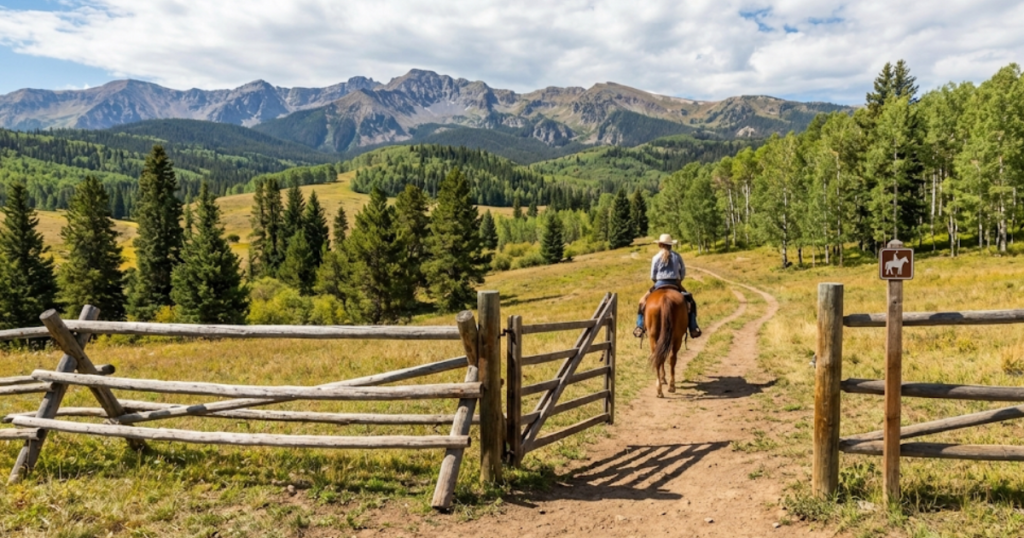
It is the ultimate equestrian dream. You finish your morning coffee, saddle up in your own barn, and ride off into the sunset without ever touching a truck key.
But in reality, most horse properties are “trailer-out” properties. You might have 5 acres to ride in circles, but if you want to go for a long trail ride, you have to load the trailer and drive to a trailhead.
Properties with true “ride-out” capability are rare and highly competitive. They offer a lifestyle freedom that simply cannot be matched. However, you have to verify that the access is legal, safe, and permanent.
Does This Property Have Direct Access to Public Riding Trails, or Do I Have to Trailer Out?
Quick Summary: The Ride-Out Reality
- The gold standard: Direct access means you can open a gate and be on a trail without trailering.
- Legal matters: Permanent access requires a deeded easement or recorded bridle path.
- HOA vs. public: Some neighborhoods offer private equestrian trails; others rely on shared public open space.
- Safety test: If access requires crossing fast traffic or unsafe terrain, it functions like a trailer-out property.
1. The Value of Ride-Out Access
Trail access is both a lifestyle benefit and a resale differentiator.
- Ride-from-home access encourages more frequent, spontaneous riding.
- Properties with true ride-out access tend to be scarcer and more competitive.
- Homes near established trail systems often hold value better over time.
2. Legal Access vs. Informal Access
Assumptions about access can disappear after closing.
- Neighbor-permission riding is not a permanent right.
- Look for recorded easements or platted bridle paths in title documents.
- Marketing language should never replace legal verification.
3. The Safety “Gauntlet” Test
Proximity alone does not equal usability.
- High-speed road crossings can negate nearby trail access.
- Physical barriers (cliffs, creeks, steep grades) may block entry.
- If you wouldn’t lead a horse there on foot, it’s not practical ride-out access.
4. Private Community Trails vs. Public Lands
Each access type offers a different riding experience.
- Private trails: Quieter, equestrian-focused, and HOA-maintained.
- Public open space: More mileage, but shared with hikers, bikers, and dogs.
- Horse suitability: Shared-use trails require a traffic-safe horse.
We Map the Ride for You
We review gates, easements, plats, and the actual route you’ll ride.
Our goal is to confirm whether a property truly supports ride-out living—or if trailering is unavoidable.
Browse Active Colorado Horse Properties: View All Available Listings
Frequently Asked Questions (FAQ) About Trail Access
Can I ride in the roadside ditch?
It may be legal in some rights-of-way, but safety depends on speed, footing, and visibility.
What is a conservation easement?
It protects land from development but does not automatically grant riding access.
Do I need a permit to ride public trails?
Often no, though some state parks require entry passes even for horseback access.