
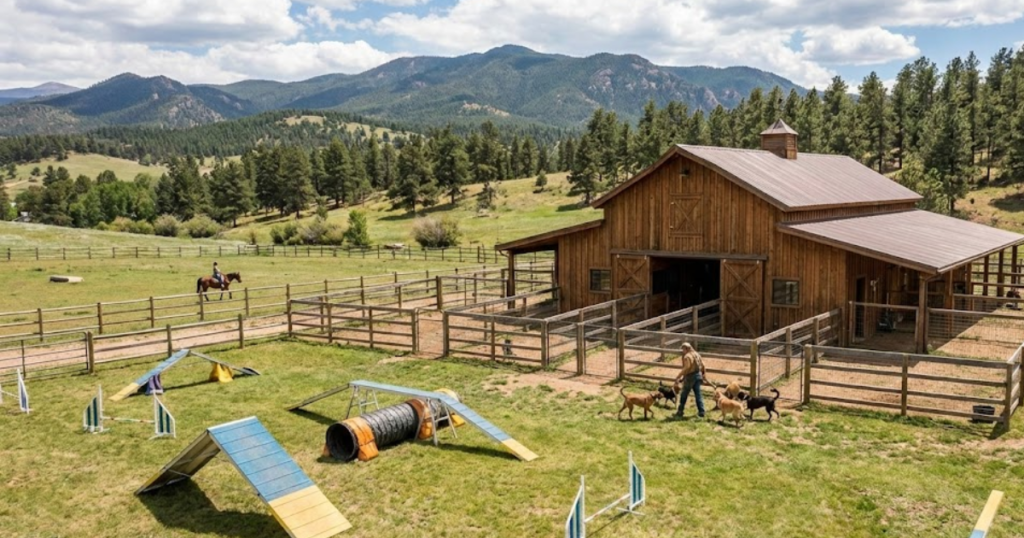
You have a vision. You want to buy a beautiful property, fill the stalls with paying boarders, and teach lessons in the arena to pay the mortgage. It seems like the perfect way to make the farm pay for itself.
But in Colorado, turning a private horse property into a commercial business is one of the hardest things to do legally.
There is a massive legal difference between “I have horses” and “I charge people to keep horses here.” If you cross that line without the right zoning and permits, you risk being shut down by the county, fined by the state water engineer, or sued by your neighbors.
Here is what you need to know before you bank on boarding income.
Can I Run a Boarding or Training Business on This Property?
Quick Summary: The Business Reality Check
- Zoning controls everything: A barn does not grant permission to operate a business.
- SUPs are not guaranteed: Conditional approvals involve neighbors, hearings, and denial risk.
- Water is the biggest limiter: Most domestic wells are not approved for commercial horse operations.
- HOAs and covenants often prohibit businesses: Even when counties allow them.
1. Zoning: Use by Right vs Prohibited Use
County zoning codes determine whether boarding, training, or lessons are legal.
- Residential and rural-residential zones often prohibit commercial equestrian activity.
- Agricultural zoning is more permissive but still regulated.
- Charging money—even for one horse—can classify the use as commercial.
2. Special Use Permits
When a business is not allowed by right, counties may require a Special Use Permit.
- Applications involve site plans, fees, and public hearings.
- Neighbor objections commonly derail approvals.
- Approval is never guaranteed—even after purchase.
3. Water and Well Limitations
Water law is often the silent deal-breaker.
- Domestic wells typically allow personal livestock use only.
- Boarding and training may require a commercial well permit.
- Augmentation plans can add significant cost and complexity.
4. Insurance and Liability
Operating a business changes your risk profile immediately.
- Homeowners policies often exclude commercial activities.
- Commercial equine liability insurance is typically required.
- Facilities may need upgrades to qualify for coverage.
Finding a Business-Ready Property
If your goal is a legitimate boarding or training operation, the property must support it legally and operationally.
We help buyers identify zoning, water rights, and existing approvals before they commit.
Frequently Asked Questions
Does agricultural zoning guarantee I can board horses?
No. Zoning, water, traffic, and permit requirements still apply.
Can I teach lessons without boarding?
Frequent traffic can still trigger enforcement or zoning violations.
Does Colorado’s Equine Liability Act fully protect me?
No. It does not cover negligence or zoning violations.