
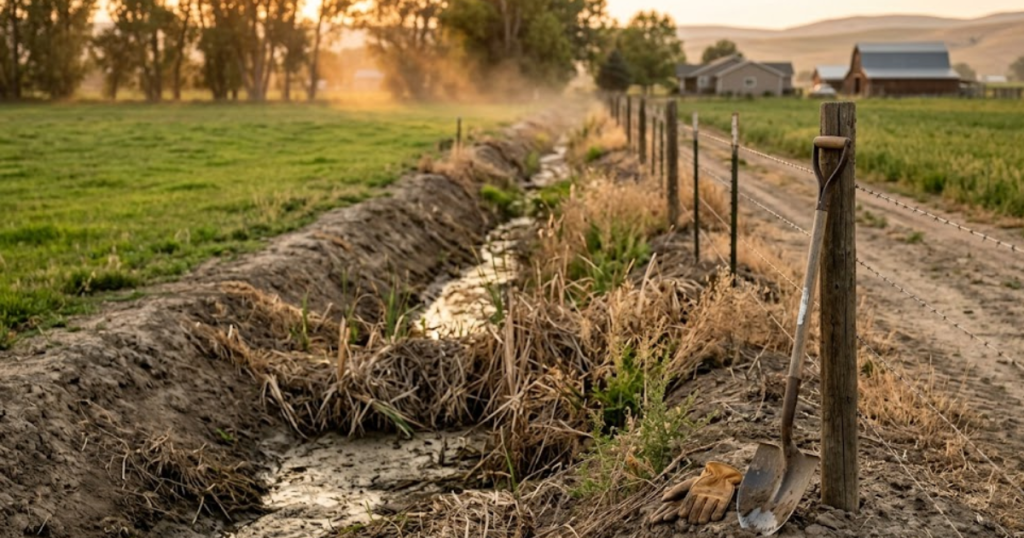
You buy a beautiful equestrian property with a picturesque stream running through the back pasture. You think you hit the real estate jackpot.
But a few weeks after closing, a man driving a heavy excavator rolls through your front gate, drives across your grass, and starts dredging mud out of that “stream.” When you run out to stop him, he informs you that it is not a natural creek. It is a commercial irrigation canal, and he has a legal right to be there.
Welcome to the complex, and often contentious, world of Colorado water law.
Water rights in Colorado are private property, and the infrastructure used to deliver that water is fiercely protected by state law. If an irrigation ditch runs through your new farm, you must understand your legal obligations regarding its maintenance, whether you actually use the water or not.
Here is what you need to know about navigating ditch easements on a rural property.
Are There "Ditch Rights" That Require Me to Maintain a Shared Canal?
Quick Summary: The Law of the Ditch
- The Dominant Estate: If a historic irrigation ditch crosses your land, the ditch owner holds an easement. They have the legal right to access your property, often with heavy machinery, to operate and maintain the waterway.
- The Maintenance Burden: If you do not own the water rights, you are not responsible for cleaning the ditch, but you are legally prohibited from blocking, altering, or damaging it.
- Shared Lateral Agreements: If you do own water rights on a shared lateral ditch, you are typically required by a ditch company or a neighborhood agreement to share the physical labor or the financial cost of annual spring maintenance.
- The Relocation Rule: You cannot simply pipe, move, or build a bridge over an irrigation ditch for your own convenience without written permission from the ditch owner or a formal court order.
Ditch easements can affect access, land use, maintenance responsibilities, and even future improvements, so you need to understand them before buying rural property.
1. Understanding the Ditch Easement
In real estate terms, the land a ditch crosses is called the "servient estate," and the ditch itself is the "dominant estate."
- Unwritten Rights: Because Colorado was built on agriculture, many ditch rights were established over a century ago. A ditch owner does not necessarily need a written, recorded deed to prove they have an easement. If the ditch has been there historically, their right of access is legally presumed.
- The Right of Way: The easement is not just the water channel itself. It includes the ditch banks and a reasonable amount of land on either side to allow for equipment access. In flat areas, this might be 20 feet. In difficult terrain, the easement could be significantly wider.
- Maintenance Access: The ditch company has the right to do whatever is reasonably necessary to maintain the flow of water. This includes driving trucks along the banks, operating heavy draglines to remove silt, cutting down trees that block the path, and burning weeds in the ditch bed.
2. When You Do Not Own the Water
If a lateral ditch crosses your horse pasture but you do not hold any shares in the ditch company, your role is strictly hands-off.
- No Maintenance Required: You are not financially or physically responsible for cleaning the ditch or repairing the headgates. The ditch company or the downstream water users carry that burden.
- The "Do Not Touch" Rule: You cannot take water out of the ditch for your horses. You cannot plant trees on the ditch bank. You cannot let your livestock trample the earthen walls and cause a blowout.
- Granting Access: You cannot lock the ditch rider out of your property. If you put a padlock on your perimeter gate, you must provide a key or the combination to the ditch company so they can perform their daily inspections.
Even if you do not own the water, you still need to preserve access and avoid interfering with the ditch or its maintenance corridor.
3. When You Do Share the Water
If you purchased a property with deeded agricultural water rights, you are now an active participant in the local water delivery system.
- The Ditch Company Fees: Most major canals are managed by a mutual ditch company. As a shareholder, you will pay annual assessment fees. These fees pay for the professional ditch rider who manages the main headgates and hires the heavy equipment crews for major repairs.
- Shared Laterals: The main canal delivers water to a smaller lateral ditch that might serve you and three of your neighbors. The ditch company is usually not responsible for the laterals. You and your neighbors are.
- Spring Cleaning: Every spring, before the water is turned on, the users of a shared lateral must work together to clear the winter debris, burn the weeds, and shovel out the silt. If you share a ditch, you must share the labor or the cost of hiring a contractor to do it.
4. The Danger of Altering a Ditch
Many new landowners want to move a ditch to build a riding arena, or they want to pipe it underground so their horses do not trip in it.
- The Accommodation Doctrine: Under Colorado law, you cannot unilaterally alter a ditch just because it is on your land.
- Seeking Permission: You must approach the ditch company or the downstream users with your engineering plans. If they agree that your proposed pipe or relocation will not impede their water flow or increase their future maintenance costs, they might grant you a crossing agreement.
- The Court Option: If the ditch owner refuses, your only recourse is to seek a declaratory judgment from a water court, proving that your alterations are reasonable and will not damage the ditch owner's vested rights. Proceeding without permission will result in a court order forcing you to tear up your improvements and restore the ditch at your own expense.
We Help You Navigate Ditch Laws
We do not just look at the grass, we look at how it gets watered.
When Mark Eibner and Belinda Seville help you evaluate a Colorado horse property, we pull the records to identify the specific ditch companies operating on the land. We help you understand the extent of the easements, your maintenance obligations, and whether the existing water rights are sufficient to support your equestrian goals.
Contact Us Today to find a property with clear, manageable water infrastructure.
Browse Active Colorado Horse Properties: Browse Active Colorado Horse Properties with established agricultural water rights
Frequently Asked Questions (FAQ) About Ditch Rights
Can I build a fence across an irrigation ditch to keep my horses contained?
Usually, yes, but with strict conditions. You generally need to sign a crossing agreement with the ditch company. The fence cannot catch debris or obstruct the flow of water, and you must install gates wide enough to allow the ditch rider's heavy equipment to pass through the easement without delay.
What happens if a ditch breaches and floods my riding arena?
This is a complex legal issue. Ditch owners are not strictly liable for all seepage. Seepage is considered a normal historical burden of having a dirt ditch. However, if the ditch company was negligent in their maintenance, such as failing to clear a known blockage that caused a massive blowout, you may have grounds to seek damages.
Can I use the ditch water for my horses if it crosses my land?
Absolutely not, unless you hold the specific, deeded water rights to do so. Taking water from a ditch without a decreed right is considered theft in Colorado and is heavily prosecuted by the state water commissioner.