
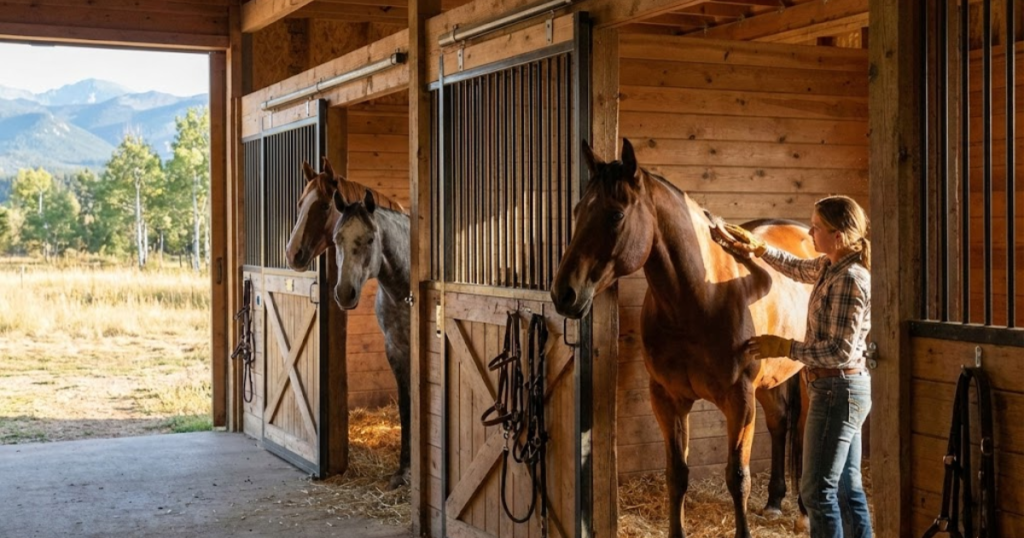
You walk into a barn during a showing. It looks clean. It has fresh shavings. It smells like pine.
But… is it safe?
Many barns in Colorado were built for storage or cattle, not for expensive performance horses. A “stall” might just be a partitioned corner of a pole barn with thin walls and poor airflow. If you put a 1,200-pound animal in there, you could be facing a major vet bill.
When we evaluate a barn, we look past the fresh paint. We look for the hidden hazards that can injure your horse. Here is what you need to inspect before you buy.
Are the Barn Stalls Actually Safe for Your Horse?
Quick Summary: The Stall Safety Checklist
- Stall size: 12' x 12' is the default for most full-sized horses. Bigger horses often need 12' x 14' or more.
- Ventilation: You want steady airflow year-round to reduce ammonia, moisture, and respiratory irritation.
- Walls & edges: Prioritize kick-proof materials and add chew guards on exposed wood edges to prevent splinters.
- Flooring: Safe traction + drainage. Mats over a level base are ideal; avoid slick concrete and uneven holes.
- Doors & hardware: Sliding doors, secure latches, and smooth hardware reduce injury risk and “escape artist” problems.
1. The Dimensions: 12x12 is the Standard
Stall size is a safety feature, not a luxury detail.
- Why it matters: Horses need enough room to stand, turn, and lie down without getting pinned against a wall.
- Standard: 12' x 12' works for most full-sized horses.
- Large breeds: Consider 12' x 14' or larger for Warmbloods, Drafts, and big-bodied performance horses.
- Future-proofing: Bigger stalls help resale value and make short-term medical confinement safer.
2. Ventilation: Airflow Beats “Warmth”
Respiratory health depends on air exchange—not how cozy the barn feels to people.
- Ammonia: If you can smell it, it’s already too concentrated for sensitive lungs.
- Moisture: Damp barns encourage mold and bacteria.
- Look for: Ridge vents, eave vents, cupolas, operable windows, and Dutch doors that allow cross-ventilation.
3. Walls & Edges: Kick-Proof and Chew-Proof
Stall walls are impact zones. They must handle kicks, leaning, and long-term chewing.
- Kick resistance: Avoid thin plywood and weak partitions that can splinter under force.
- Better options: Thick tongue-and-groove boards, properly framed lumber, HDPE kick walls, or steel + wood systems.
- Chew guards: Cap exposed edges (tops of boards, door frames, corners) with metal guards to reduce splinter injuries.
- Pro tip: Run your hand along edges—if you feel sharp chips now, your horse will find them later.
4. Flooring & Drainage
What’s under the bedding matters more than the bedding itself.
- Traction: Horses slip in stalls and aisles more often than people expect—especially in winter.
- Concrete: Durable and easy to sanitize, but hard; use quality rubber mats and reduce slick finishes.
- Compacted base: Packed crusher fines / limestone can work well if maintained and leveled.
- Drainage: Avoid persistent wet spots; moisture invites thrush, skin issues, and ammonia buildup.
5. Doors, Latches, and Hardware
Doors should be smooth, strong, and boring—in the best way.
- Sliding doors: Often safer because they don’t swing into the aisle.
- Latches: Use secure latches that won’t pop open when a horse leans, paws, or nudges.
- Hardware check: No protruding bolts, sharp edges, or loose hinges.
- Gossip window: A safe top opening can reduce boredom and weaving.
6. Barn Layout: Aisles, Lighting, and Fire Risk
Even “nice” barns can have layout hazards that show up during daily use.
- Aisle width: Wider aisles reduce spooking and make it safer to pass horses and equipment.
- Lighting: Bright, even lighting helps reduce shadows that trigger spooks—especially in enclosed barns.
- Electrical: Look for protected wiring, covered outlets, and tidy cords—barns are high-risk fire environments.
- Storage: Keep hay and chemicals stored correctly and away from ignition sources.
We Inspect the Barn for You
A barn can be the best feature on a horse property—or the most expensive surprise.
When we tour, we look at stall size, airflow, wall construction, flooring, and hardware so you know what you’re buying (and what it will cost to fix).
Contact Us Today to evaluate a specific property’s barn and stalls.
Browse Active Colorado Horse Properties that are vetted for equestrian use. View All Available Listings
Frequently Asked Questions (FAQ) About Barn Stall Safety
What is the safest stall size for a horse?
For most horses, a 12' x 12' stall is the baseline. Larger horses often do better in 12' x 14' or bigger to reduce casting risk and improve comfort.
How can I tell if a stall has poor ventilation?
Watch for condensation, a stale smell, or strong urine odor. Also look for ridge vents/eave vents and operable openings that create real airflow, not just light.
Are rubber mats required?
Not always required, but strongly recommended—especially over concrete. Mats improve traction, reduce joint strain, and help create a safer, more even surface.