
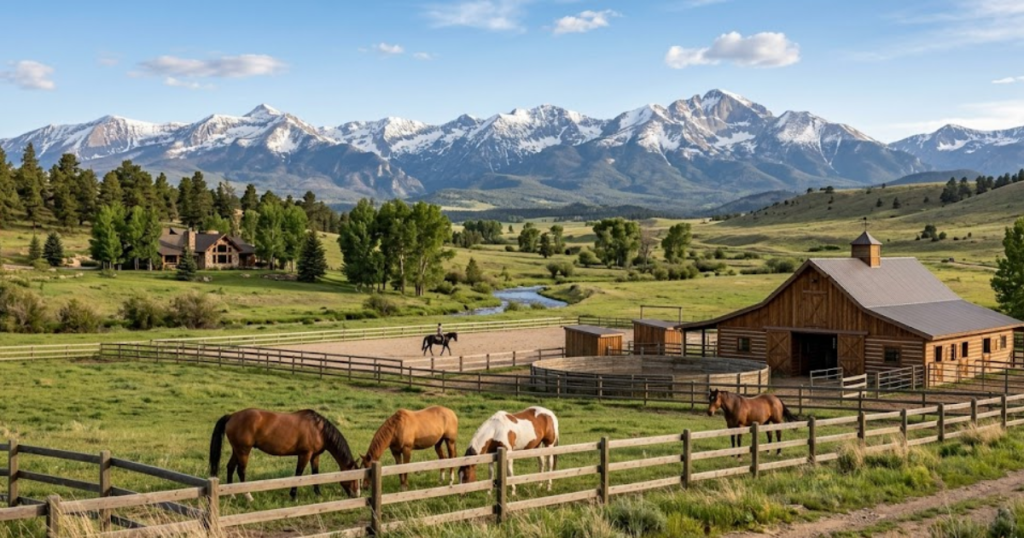
When you are in the market for a Colorado horse property, it is essential to consider several factors that can impact your equine companions’ well-being and your overall enjoyment of the land.
Whether you are an experienced equestrian or just beginning your horse-owning journey, evaluating a working farm requires a different perspective than buying a standard residential home. You are not just buying a house, you are buying a habitat.
These five critical aspects should be at the very top of your checklist as you seek the perfect equestrian property in Colorado.
5 Things To Look For in a Colorado Horse Property
Quick Summary: The Equestrian Checklist
- The Foundation: A healthy property starts with the land itself. You need a balance of open pasture, natural shade, and a slight slope to ensure proper drainage and prevent deep mud.
- The Water Supply: Water is the lifeblood of any farm. You must verify the reliability of the property's water source and thoroughly research the associated water rights before buying.
- Essential Structures: A property needs more than just a house. Evaluate the barn for appropriately sized stalls, secure tack rooms, and adequate dry storage for your winter hay supply.
- Future Growth: Do not just buy for the horses you have today. Check the county zoning and building restrictions to ensure you have the legal room to add arenas, run-in sheds, or additional fencing as your herd grows.
Horse property is not just about curb appeal. It is about land function, water security, daily horse care, and the long-term flexibility to grow with your needs.
1. Land, The Foundation of Your Equine Haven
The land itself is the fundamental building block of your horse property.
Consider the terrain and the current condition of the perimeter fences. Ideally, you will want a property that offers a healthy balance of open grazing land and areas with natural shade provided by mature trees.
Moreover, you must evaluate the lay of the land. A perfectly flat pasture can become a swamp after a heavy rain. A slight slope is highly beneficial as it naturally facilitates drainage, preventing erosion and muddy conditions, which is crucial for protecting your horses' hooves from bacterial infections.
2. Water, The Lifeblood of Your Horse Ranch
Water is the absolute lifeblood of any horse property for sale.
Before you make an offer, you must carefully assess the water supply available on the property and research the specific water rights associated with the deed. Ensuring a sufficient, legal, and highly reliable water source is vital for meeting your horses' daily hydration needs and maintaining your pasture grass during the dry summer months.
Do not just verify that water exists. Confirm that it is legal, dependable, and capable of supporting both your horses and your land management plans.
3. Structures, Shelter and Support for Your Horses
The outbuildings on the property are vital for your daily horse care routines.
Focus on whether the property already includes a functional barn. Examine the number and size of the stalls within the barn, and inquire if it has essential amenities like a secure tack room, rodent-proof feed storage, and a safe wash stall.
Additionally, consider whether there is a dedicated secondary structure for storing hay, or whether the main barn is engineered to safely accommodate that highly combustible bulk storage need.
4. Riding Space, Room to Roam
Your horses require ample space to roam, graze, and stretch their legs.
Explore the property's dedicated riding space to determine if there is enough land for your horses to exercise and thrive. Furthermore, it is incredibly valuable to assess the property's proximity to BLM (Bureau of Land Management) land or public riding trails. Having direct trail access from your property can offer extended riding opportunities and scenic variety without the hassle of constantly hooking up a horse trailer.
5. Building Restrictions, Room for Growth
The equestrian world is diverse, and your property should be adaptable enough to accommodate your current needs and your future goals.
Consider the potential for future expansions, like adding agricultural support buildings, pipe corrals, a covered riding arena, or even a primary residence if the property currently consists of just land and a barn. You must rigorously assess any county building restrictions, HOA covenants, or zoning regulations that might legally block your ability to make these necessary additions.
We Evaluate the Property Before You Buy
We do not just look at the scenic views, we inspect the infrastructure.
When Mark Eibner and Belinda Seville help you buy a horse property, we bring decades of rural real estate experience to your search. We help you evaluate the water rights, verify the zoning restrictions, and ensure the land provides a safe, healthy environment for your animals.
Contact Us Today to find the ideal horse property that suits your unique needs.
Browse Active Colorado Horse Properties: Browse Active Colorado Horse Properties that meet all the criteria on your checklist
Frequently Asked Questions (FAQ) About Buying Horse Property
How many acres do I need for one horse in Colorado?
While zoning laws vary by county, a general rule of thumb for dryland grazing in Colorado is 2 to 2.5 acres per horse. If you plan to supplement their diet with hay year-round, you can keep them on smaller acreage, provided the specific county zoning allows it.
Can I build a barn before I build a house on vacant land?
In many Colorado counties, the answer is no. Standard residential zoning often requires a primary dwelling to be permitted or built before you can construct an accessory structure like a barn. You must verify agricultural exemptions if you plan to build the barn first.
Are existing fences always accurate to the property lines?
Never assume a fence is on the actual property line. In rural areas, fences were often built based on convenience or geography rather than legal surveys. We always recommend getting a professional survey or an Improvement Location Certificate (ILC) before closing to avoid boundary disputes.