
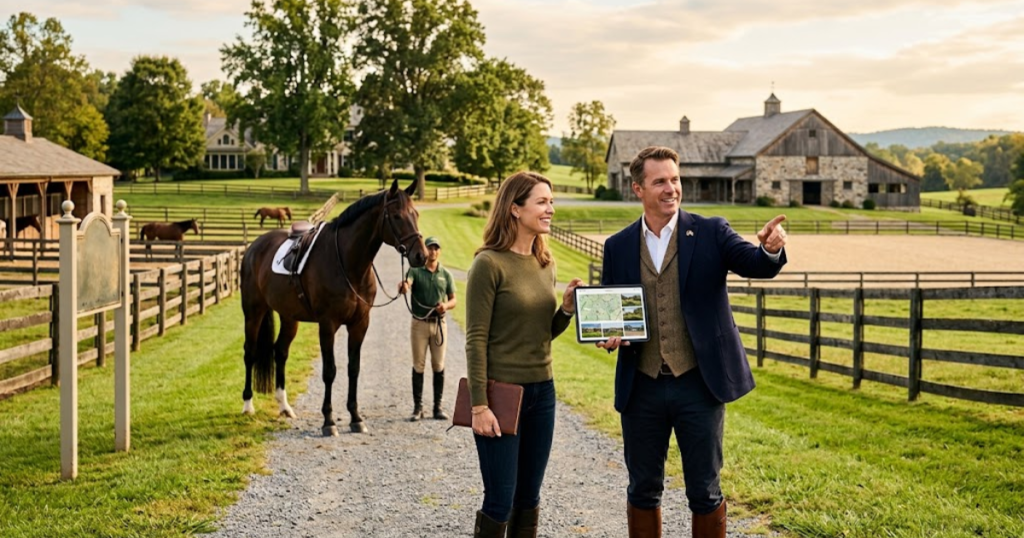
You have made the decision to buy a horse property in Colorado. You start browsing online, find a beautiful 10-acre parcel with a barn, and click the button on the website that says “Contact Agent.” A friendly realtor calls you five minutes later, eager to show you the house. You ask them if the property has a domestic and livestock well permit, and they respond with dead silence, followed by a promise to look into it later.
This is the exact moment you need to hang up the phone.
Finding an agent to help you buy a suburban house is incredibly easy. Finding a real estate professional who specializes in equestrian estates is a completely different challenge. You are not just buying a place to sleep, you are buying an agricultural facility, a zoning permit, and a complex water rights package.
When searching for horse properties colorado, you need an agent who acts asaand providening investigator, a water rights translator, and an infrastructure expert. Here is the comprehensive guide on exactly how to find, vet, and hire a true equestrian real estate professional.
How to Find a Real Estate Professional Specializing in Equestrian Estates
Quick Summary, The Search for a True Specialist
- Avoid the Online Roster Trap, Clicking a generic "contact agent" button on a massive real estate portal is a gamble. You will almost always be connected to a residential generalist who pays for leads, rather than a true agricultural expert.
- Tap the Local Network, The best equestrian agents are deeply embedded in the local horse community. Large animal veterinarians, farriers, and local feed store owners know exactly which realtors actually understand functional horse properties.
- Audit Their Listings, Before hiring an agent, look at the properties they are currently selling. If their listing descriptions focus entirely on the kitchen remodel and fail to mention the well permit, arena footing, or county zoning, they are not a specialist.
- The Interview Is Mandatory, You must interrogate a potential agent about their knowledge of water rights, animal density codes, and rural lending options before you sign a buyer representation agreement.
1. Ignore the Standard Real Estate Search Engines
The biggest mistake buyers make is relying on general real estate platforms to find their agent. Platforms like Zillow, Trulia, and Realtor.com are built for residential volume. The agents featured next to a listing on those sites are often not the listing agent, nor are they area specialists. They are simply agents who paid the platform a marketing fee to capture buyer leads.
Equestrian properties are a highly niche subset of the market. General real estate platforms do not have search filters for stall sizes, arena footing types, or livestock well permits. Because the platforms treat a hosand scoresexactly like a suburban house with a large yard, they will seamlessly connect you with agents who have never stepped foot in a barn. You have to look outside the standard algorithms to find a dedicated professional.
2. Tap into the Grassroots Equestrian Network
Equestrian real estate operates on a whisper network. The best agents do not just sell horse properties, they live the lifestyle. To find them, you need to talk to the professionals who service the local horse community.
Call Local Large Animal Veterinarians, Equine veterinarians travel to dozens of farms every single week. They know which properties are safe, which ones are falling apart, and most importantly, they know which real estate agents are actively buying and selling the best farms in the county.
Ask Your Farrier, Farriers are incredibly well connected. They talk to trainers, breeders, and casual owners every day. If there is a highly respected equestrian agent dominating the local market, your farrier will know their isit.
Int Feed Stores, Skip the big box chain stores and visit the local, independent feed and tack shops in the county where you want to buy. Look at their community bulletin boards, or simply ask the owner who they recommend for buying agricultural land.
3. Audit Their Digital Footprint and Property Portfolio
Once you have a few names, you must verify their expertise before you pick up the phone. A true specialist will have a digital footprint that proves their competency in the rural market.
Review Their Current Listings, Look at the properties they are currently representing. Read the property descriptions carefully. A standard residential agent will write three paragraphs about the granite countertops and the master bathroom. An equestrian specialist will write about the kitchen, but they will also detail the clear span width of the indoor arena, the brand of the automatic waterers, the type of fencing, and the specific county zoning classification.
Check Their Website Infrastructure, Does their personal website offer resources for rural buyers? Do they write about well permits, pasture management, and soil drainage? If their website only features market updates for suburban subdivisions, they are a generalist trying to land a luxury listing.
4. The Ultimate Interview Checklist
Never sign a buyer agency agreement without conducting a rigorous interview. You are hiring a consultant to protect a massive financial investment. You must ask highly technical questions to expose whether they are a true specialist or a generalist faking it.
Question One, "How do you verify water rights and well permits?" If they say they just ask the seller or check the MLS, disqualify them immediately. The only correct answer in Colorado is that they directly pull the permit history from the Colorado Division of Water Resources to verify if the well is legally coded for livestock use or restricted to household use only.
Question Two, "How do you calculate animal density for a property?" An amateur will tell you that as long as a property has a few acres, you can keep horses. A professional will explain that every county has specific zoning codes, such as Agricultural One or Large Rural Residential, and they will explain how they cross reference those county codes with your specific herd size before you ever look at a property.
Question Three, "What rural lenders do you recommend?" Equestrian estates are difficult to finance. Standard banks often refuse to loan money on properties with massive agricultural outbuildings. A true specialist will have a curated network of lenders, such as Farm Credit or specialized portfolio banks, that understand how to underwrite equestrian loans and agricultural appraisals.
Question Four, "How do you evaluate barn and fencing safety?" Ask them what they look for when they walk a property. You want them to mention checking for dangerous barbed wire, evaluating the ceiling height and ventilation in the stalls, inspecting the arena base for proper drainage, and ensuring the pasture layout does not place heavy hooves over the home's septic leach field.
5. Evaluate Their Network of Rural Contractors
A standard residential transaction requires a home inspector and a title company. An equestrian transaction requires a small army of rural specialists.
When interviewing an agent, ask for a list of their trusted vendors. If they hand you a list of standard home inspectors, they do not understand the assignment. You need an agent who has direct, established relationships with agricultural well testers, septic system engineers, rural surveyors, grading contractors, and arena builders. If the property you are buying needs a new riding arena, your agent should be able to instantly recommend a contractor who understands base compaction and premium footing installation.
6. Look for Genuine Equestrian Empathy
Finally, you want an agent who understands your daily workflow. They do not have to be an Olympic show jumper, but they must understand the mechanics of horse ownership.
An agent who understands horses will look at a property differently. They will immediately notice if a driveway does not have a wide enough turning radius for a four horse gooseneck trailer. They will notice if the hay storage is located too far from the main barn for efficient winter feeding. They will look at the topography and immediately spot where water will pool and freeze into dangerous ice patches in January. You are paying for this specialized foresight.
We Are Colorado's Premier Equestrian Real Estate Team
You do not have to guess if our team understands your needs. We focus exclusively on the intersection of residential comfort and highly functional agricultural infrastructure.
When Mark Eibner's team represents you, you get the backing of true equestrian specialists. We actively navigate the complex zoning codes across the Front Range, we pull the well permits before we write the offer, and we evaluate the safety of the infrastructure from the horse's perspective. We protect you from the hidden legal and agricultural traps that generalist agents miss, ensuring your next farm is a safe, legal, and functional home for your herd.
Contact us today at coloradohorseproperty.com to find premium horse properties colorado buyers trust.
Browse active colorado horse ranches for sale or ask our team about finding a functional horse property for rent colorado with verified equine infrastructure.
Frequently Asked Questions (FAQ) About Hiring Equestrian Agents
Should I use the agent who is listing the horse property I want to buy?
No. It is highly recommended that you secure your own buyer's agent who specializes in equestrian properties. The listing agent represents the seller and their financial interests. You need a dedicated advocate who will aggressively verify the water rights, zoning, and inspection results on your behalf.
Do equestrian real estate agents charge a higher commission?
No. In typical real estate transactions, the brokerage commissions are paid by the seller out of the final purchase price. You receive specialized agricultural expertise, water rights verification, and zoning protection without paying a higher rate than you would for a standard residential agent.
Are there professional designations for horse property agents?
Some platforms offer specific network designations for equestrian agents, and many top rural brokers hold certifications like the Accredited Land Consultant designation. However, the best proof of expertise is a thorough interview and a review of their past agricultural transactions.
Will an equestrian agent help me find raw land to build a farm?
Yes, a top tier specialist is absolutely vital for raw land purchases. They will help you verify that the unbuilt land has the proper zoning for your future barn, the correct soil for an arena, and the legal right to drill a livestock well before you purchase the dirt.