
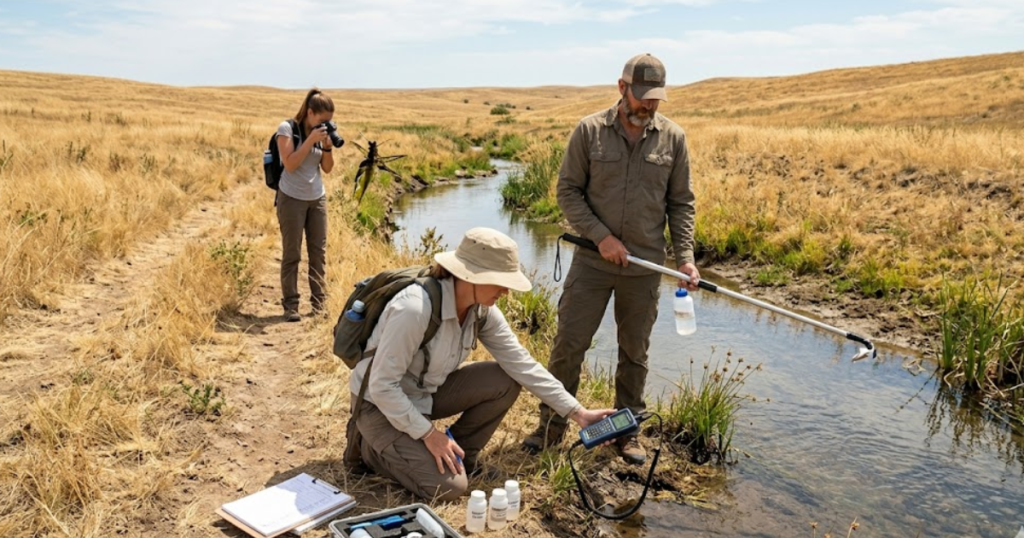
You buy a stunning horse property next to a beautiful, quiet pond. In May, it feels like a private paradise. But when the heat of July arrives, the reality of the landscape sets in.
The pond turns out to be a stagnant breeding pool. By late afternoon, thick clouds of mosquitoes and biting gnats rise from the water. Your horses are stomping their feet, swishing their tails violently, and pacing the fence line in a total panic. You cannot even enjoy a trail ride because the bugs are swarming your face. You quickly realize you have to lock your horses inside the barn with heavy fans running just to give them relief.
When looking at rural real estate, buyers always check the condition of the grass and the fences. However, you must also look at the surrounding environment to see if the property is a natural trap for insects.
How Severe Is the Summer Fly and Gnat Population Due to Nearby Standing Water or Livestock?
Quick Summary: The Summer Swarm
- The Standing Water Trap: Stagnant ponds and slow-moving creeks are massive breeding grounds for mosquitoes and biting gnats. If your property has still water, your horses will suffer during the summer.
- The Wind Advantage: Properties located on a hill or an open plain get a steady breeze. A constant wind physically stops small flies and gnats from landing on your horses. Properties tucked into deep, windless valleys trap stale air and bugs.
- The Neighbor Effect: Flies do not care about your property lines. If the ranch next door has hundreds of cattle or piles of rotting manure, those flies will blow directly into your barn.
- The Allergic Reaction: Biting gnats, often called no-see-ums, cause a severe allergic reaction in many horses known as sweet itch. This causes the horse to rub their mane and tail completely raw, which leads to expensive veterinary bills.
Summer insect pressure affects not just comfort, but horse behavior, skin health, turnout quality, and how usable the property really feels during warm months.
1. Identify the Breeding Grounds
Bugs need specific environments to multiply. You must look for these hazard zones during your property tour.
- Stagnant Water: Mosquitoes need still, non-moving water to lay their eggs. You must look closely at any ponds, seasonal bogs, or old tires left on the property. If a pond does not have a mechanical aerator, a fountain or bubbler, to keep the water moving, it will become a massive mosquito factory.
- Irrigation Ditches: Many farms use deep dirt trenches to move water around the pasture. If the water stops flowing and sits in the trench for more than a few days, it will breed thousands of biting gnats.
- Deep Mud: Gnats love wet, rotting organic material. If the property has low spots where mud and manure mix and never fully dry out, you will have a constant gnat problem.
2. Look at the Neighbors
You can keep your own barn perfectly clean, but you cannot control what your neighbors do.
- Large Livestock Operations: Take a drive up the road before you buy. If there is a massive cattle feedlot, a dairy farm, or a poorly managed poultry farm within a few miles, you will inherit their fly problem.
- The Upwind Threat: You need to figure out which way the wind normally blows in the summer. If a messy neighbor is located directly upwind of your new barn, the daily breeze will carry all of their flies straight onto your property.
Fly pressure is a regional problem as much as an on-site problem. Nearby livestock density and wind direction can matter as much as your own manure management.
3. Evaluate the Natural Airflow
Wind is your best, completely free defense against flying insects.
- The High Ground: Properties that sit up on a ridge or a slightly elevated plain are highly desirable. A steady breeze of just five miles per hour is enough to stop most small gnats and mosquitoes from flying.
- The Wind Block Trap: If the barn is built at the very bottom of a steep valley, or if it is completely surrounded by incredibly dense, tall trees, the airflow will stop. This creates a pocket of hot, dead air where flies will thrive and multiply.
4. Check for Built-In Defenses
A premium horse property will often have existing systems in place to fight the summer swarms.
- Overhead Spray Systems: Look up at the ceiling when you walk through the barn aisles and stalls. The best barns feature an automatic fly spray system. This is a network of small plastic tubing and nozzles that automatically sprays a safe insect repellent into the air every few hours.
- Natural Predators: Look around the outside of the barn for wooden bat houses mounted high on poles, or swallow bird nests tucked up under the roof eaves. A single brown bat can eat thousands of mosquitoes in one night. If the property supports these natural predators, it will naturally keep the bug population under control.
We Evaluate the Environment Before You Buy
We do not just look at the house; we look at the entire ecosystem surrounding it.
When Mark Eibner and Belinda Seville help you buy a farm, we look closely at the land. We search for stagnant water hazards, map out the neighboring livestock operations, and evaluate the natural breeze corridors. We want to ensure that your horses can actually enjoy their summer turnout in peace.
Contact Us Today to find premium horse properties Colorado buyers trust for a clean, comfortable, and healthy environment.
Browse Active Colorado Horse Properties: Browse active Colorado horse ranches for sale or ask our team about finding a horse property for rent Colorado while you search for the perfect permanent estate
Frequently Asked Questions (FAQ) About Fly Control
Can I put fish in a stagnant pond to eat the mosquito eggs?
Yes. Stocking a small pond with specific fish, like the Western Mosquitofish, is a very common and natural way to stop mosquitoes from breeding. However, you must check with the local Department of Wildlife first to ensure you are not introducing an illegal species into the local watershed.
Will a standard Homeowners Association (HOA) allow me to build a manure compost bin to reduce flies?
It depends entirely on the specific rules of the neighborhood. Some rural neighborhoods with a Homeowners Association are very strict and require you to haul all manure off the property weekly in a rented dumpster to prevent flies from bothering the neighbors. You must read the rulebook carefully.
Do I really need to buy expensive fly sheets for my horses?
If you buy a property in a low valley with lots of bugs, yes. A lightweight mesh fly sheet acts as a physical shield. It stops flies from biting the horse's skin and helps prevent the horse from stomping their shoes off in frustration.