
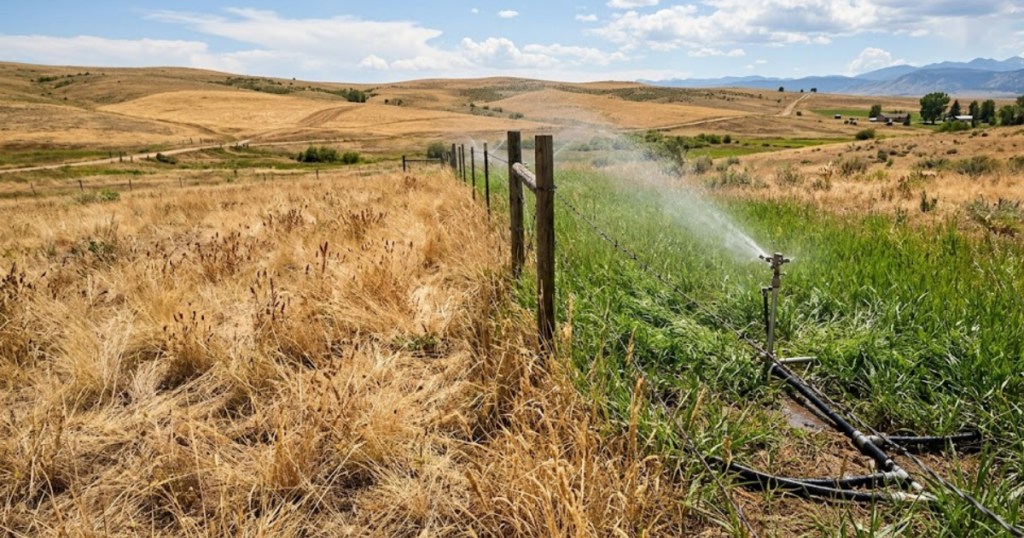
You tour a sprawling equestrian estate in early May. The pastures are lush, emerald green, and look like a golf course. You close on the property and move your horses in. By the second week of July, the Colorado heat sets in, the afternoon rains vanish, and your beautiful green pastures turn entirely brown and crispy.
You panic, assuming the grass has died, and you begin desperately dragging hoses and running well sprinklers 24 hours a day to turn it green again. By August, you have pumped your residential well completely dry, and the grass is still brown.
When evaluating horse properties colorado buyers love, out-of-state buyers frequently misunderstand the natural cycle of Western vegetation. A brown pasture in July is not a dead pasture. If you expect your acreage to look like a Kentucky bluegrass lawn all summer, you will exhaust your water supply and your bank account.
Here is how to understand native grass dormancy and manage your summer pastures before you buy the farm.
What Is the Condition of the Native Grass in Mid-July: Does It Naturally Go Dormant, or Does It Require Continuous Irrigation?
Quick Summary: The Mid-Summer Brown-Out
- The Dormancy Defense: In Colorado, it is completely natural for non-irrigated pasture grasses to turn tan or brown by mid-July. This is a biological survival mechanism called dormancy, not death.
- Cool-Season vs. Warm-Season: Cool-season grasses, like smooth brome or orchard grass, will shut down in the severe summer heat without massive amounts of continuous water. Native warm-season grasses, like Blue Grama, thrive in the heat but will still cure and go dormant during extreme dry spells.
- The Sugar Spike Danger: When cool-season grasses go into drought-stress dormancy, they stop growing but continue to produce sugars. This causes a massive spike in stored Non-Structural Carbohydrates, NSC. Grazing this stressed grass can trigger sudden laminitis or colic in metabolically sensitive horses.
- The Overgrazing Threat: If you allow horses to graze heavily on dormant grass, they will eat down to the crown, the plant's energy storage base. Without the ability to recover, the grass will permanently die, leaving your pasture open to toxic weed invasions the following spring.
A brown pasture in July can be normal in Colorado. The real issue is whether the land is following a healthy dormancy cycle or being pushed toward permanent decline by poor grazing or unrealistic irrigation expectations.
1. The Biology of the Summer Slump
To manage a Western pasture, you must understand the two distinctly different types of grass growing in the dirt.
- Cool-Season Grasses: Species like smooth brome, timothy, and orchard grass thrive in the cool, wet months of spring and fall. When the extreme heat of mid-July arrives, these grasses naturally shut down and turn brown to conserve water. This is a healthy survival response.
- Warm-Season Native Grasses: Native High Plains species like Buffalo grass and Blue Grama wake up later in the year and actually prefer the intense summer heat. However, if the summer is exceptionally dry with zero rainfall, even these deep-rooted native grasses will eventually cure, turn tan, and go dormant to protect their root systems.
- The Tug Test: If you are unsure if your brown pasture is dormant or dead, simply grab a handful of grass and tug gently upward. If it resists and stays firmly rooted, it is just sleeping. If it pulls easily out of the dirt, the root system has failed.
2. The Invisible Danger of Drought Stress
Letting your horses graze freely on dormant, brown grass in July is actually highly dangerous for their metabolic health.
- The Sugar Trap: When cool-season grasses enter drought dormancy, the leaves stop growing upward. However, the plant is still capturing sunlight and producing Non-Structural Carbohydrates, NSC, which are essentially pure plant sugars.
- The Laminitis Trigger: Because the grass cannot use these sugars to grow without water, the plant hoards them at the base of the stem. A horse eating this stressed, brown grass is consuming massive spikes of concentrated sugar. For an easy keeper or a horse with Equine Metabolic Syndrome, this sudden sugar load can trigger a catastrophic bout of laminitis or founder.
- The Weed Takeover: Toxic, deep-rooted weeds, like bindweed or knapweed, stay green much longer during a drought than pasture grass. If your horses are left on a dormant brown pasture, they will naturally seek out anything green and juicy, drastically increasing the risk that they will consume toxic plants they would normally ignore.
Summer pasture risk is not just about appearance. Brown, stressed grass can be metabolically dangerous and can shift horse behavior toward more harmful grazing choices.
3. The Continuous Irrigation Trap
Trying to fight nature with a residential well is a losing battle.
- The Volume Reality: It takes approximately 27,000 gallons of water to apply one single inch of water across one acre of land. If you have five acres of pasture, attempting to keep it green during July requires pumping hundreds of thousands of gallons of water per month.
- The Augmentation Limit: As covered in our previous water rights guides, almost no standard residential well permit or Augmentation Plan legally allows you to pump that volume of water for outside irrigation.
- The Senior Rights Exception: The only properties that can legally and physically keep pastures bright green through July and August are massive agricultural ranches that own historic, senior surface water rights and have access to flowing irrigation ditch water.
4. The Shelter-in-Place Rotational Strategy
Instead of trying to water a dormant pasture, savvy Western farm managers change their routine.
- The Sacrifice Lot Utility: When the pastures begin to cure and turn brown in July, you must physically remove the horses from the grass. This is when you utilize the cleared, bare-dirt sacrifice lot or fire paddock we discussed in previous guides.
- The Hay Supplement: While the horses are held in the dry lot, you must feed them high-quality baled hay to replace the lost pasture forage.
- The Fall Rebound: By keeping the horses off the brown grass, you protect the fragile plant crowns from being crushed by hooves or overgrazed. When the temperatures drop and the rains return in September, the dormant grass will rapidly wake up, giving your herd a safe, lush fall pasture to graze before winter sets in.
We Evaluate the Forage Before You Buy
We do not just look at the color of the grass; we identify the species and calculate the management strategy.
When Mark Eibner and Belinda Seville represent you in buying a rural estate, we analyze the pastures realistically. We help you identify whether the property relies on cool-season or warm-season native grasses, verify the exact legal limitations of your well water, and ensure the property has the proper cross-fencing to manage the herd during the inevitable summer dormancy.
Contact Us Today to find premium horse properties Colorado buyers trust for sustainable, healthy grazing acreage.
Browse Active Colorado Horse Properties: Browse active Colorado horse ranches for sale or ask our team about finding a horse property for rent Colorado while you learn the ropes of Western pasture management
Frequently Asked Questions (FAQ) About Summer Grass Dormancy
Should I mow the pasture while it is dormant in July?
No. You should never mow a dormant, heat-stressed pasture. Mowing removes the tall, brown canopy of the grass, which acts as natural shade for the soil. If you cut the grass short during July, the sun will bake the exposed dirt, destroying the soil microbes and severely damaging the grass crowns.
Will fertilizing a brown pasture in the summer help it turn green again?
Absolutely not. Applying nitrogen fertilizer to a drought-stressed, dormant pasture is a massive mistake. The fertilizer will physically burn the remaining grass, and without heavy rainfall to wash the nutrients into the soil, the chemicals will simply sit on the surface and waste your money. You should only fertilize in the cool, wet months of spring or fall.
If my pasture is mostly native Buffalo grass, can I graze it all summer?
Yes, native warm-season grasses like Buffalo grass and Blue Grama are much safer to graze during the summer heat. Because they are adapted to the arid climate, they do not hoard sugars, NSC, the way cool-season grasses do under stress. However, you must still rotate the horses to prevent them from grazing the grass down to bare dirt.