
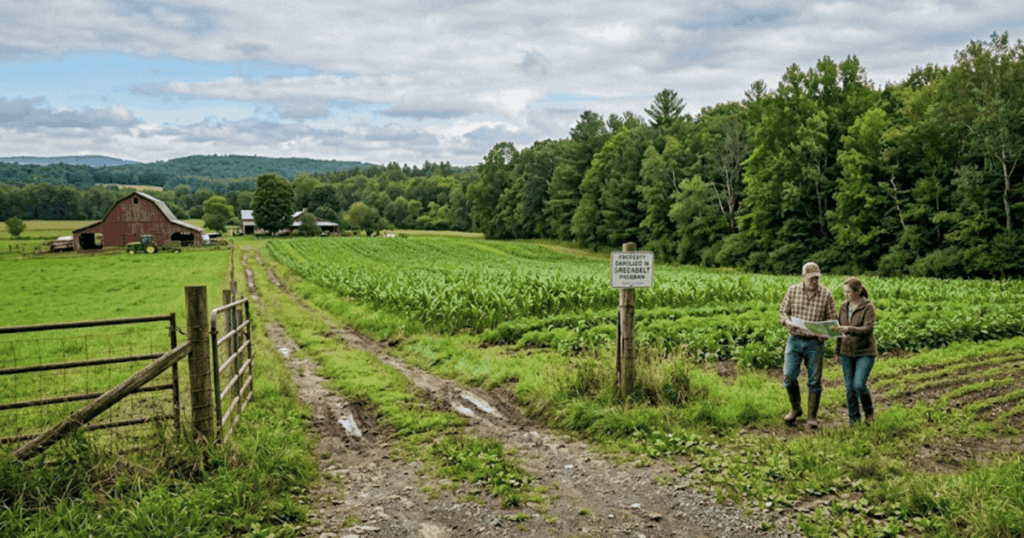
You will find a gorgeous 35-acre horse property in Colorado. You look at the listing sheet and see the annual property taxes are shockingly low, only $800 a year. The seller excitedly tells you the property has “Ag Status.”
You buy the farm, move your four beautiful trail horses into the pasture, and settle into the rural lifestyle. A year later, you get a notice from the county assessor. They have audited your property and revoked your agricultural classification. Your property taxes instantly jump from $800 a year to $8,000 a year. What went wrong?
Many buyers assume that putting horses on acreage automatically makes it a “ranch.” In the eyes of the Colorado Department of Revenue, that assumption is a massive, expensive mistake.
Understanding how Agricultural Property Classification works and more importantly, how it is lost is critical when buying rural acreage. Here is how to navigate the strict tax realities of a Colorado horse property.
Does the Property Qualify for "Greenbelt" Tax Treatment?
Quick Summary: The Tax Trap of the West
- The Agricultural Advantage: Colorado's Greenbelt, Agricultural, property tax classification assesses land based on its earning capacity rather than its market value, frequently lowering annual property taxes by 80% to 90%.
- The Pleasure Horse Penalty: Grazing your personal riding horses on your own land does not qualify. Colorado county assessors explicitly exclude pleasure horses and hobby farming from agricultural status.
- The Profit Requirement: To qualify with horses, you must prove the operation is a legitimate, profit-seeking agricultural business, such as a large-scale breeding operation or raising draft horses for agricultural work.
- The Leasing Loophole: If your personal horses do not qualify, you can often maintain the tax exemption by executing a formal, written lease agreement with a local cattle or sheep rancher to graze their livestock on your excess pasture.
Low property taxes can be a major part of the financial appeal of rural land, but agricultural classification is fragile if your actual use of the property does not meet county standards.
1. The "Pleasure Horse" Trap
This is the number one misconception that traps out-of-state equestrian buyers.
- The Definition of Livestock: Colorado law defines agricultural livestock as domestic animals used for food, breeding, draft work, or profit.
- The Hobby Exclusion: If you own geldings, retired horses, or horses used strictly for personal trail riding or showing, the county considers them pleasure horses. Even if you have ten of them eating down 40 acres of grass, the state views your property as a large residential hobby, not a working farm.
- The Reclassification Shock: The moment the assessor realizes the property is no longer producing an agricultural product for profit, they will strip the agricultural status and reclassify the dirt as Residential or Vacant Land. Vacant land in Colorado is taxed at an assessment rate of nearly 29%, meaning your tax bill will skyrocket overnight.
2. The Strict "For-Profit" Requirement
To keep or earn the Greenbelt classification using your own horses, you must run a highly documented business.
- The Breeding Operation: To qualify with equines, you generally must be operating a legitimate breeding facility, producing foals for sale, or a draft-horse operation where the horses are actively working the land to produce crops.
- The Burden of Proof: The county assessor will require hard proof. You must be prepared to submit your IRS Schedule F, Profit or Loss From Farming, tax returns, detailed accounting records, veterinary breeding logs, and brand inspection certificates. If you cannot prove a primary intent to make a monetary profit, the exemption will be denied.
Ag status is not about what the property looks like. It is about whether the county can verify a real agricultural use that meets the legal and financial test for profit-driven activity.
3. The "Bona Fide Lease" Loophole
If your personal riding horses do not qualify, you can still protect the property's tax status by utilizing your excess land.
- The Cattle Contract: The most common strategy for Colorado equestrians is to fence off their primary horse paddocks and lease the remaining large pastures to a local commercial rancher for grazing beef cattle or sheep.
- The Written Requirement: A handshake agreement does not work. You must have a legally binding, written lease agreement showing the exchange of compensation, and the rancher must actually graze the livestock on your land for the required number of months per year.
- The Trespass Grazing Warning: Simply leaving your gate open and letting a neighbor's cows wander onto your property is considered trespass grazing. Without a formal lease, the assessor will not grant you agricultural status for those animals.
4. The Waiting Period for New Status
If you buy a property that is currently taxed at the high residential rate and you want to convert it to Agricultural status, it takes time.
- The Three-Year Rule: You cannot get agricultural status on day one. Under Colorado law, you must prove the land was actively used for a profit-seeking agricultural purpose for two consecutive years prior, and is currently being used for that purpose in the third year.
- The Operational Audit: During this waiting period, the agricultural appraiser from the county assessor's office will physically inspect the property, review your land use, and monitor your lease agreements before finally granting the major tax break in year three.
We Verify the Status Before You Buy
We do not just look at the current tax bill; we evaluate how your specific use will affect it.
When Mark Eibner and Belinda Seville represent you in a purchase, we dig deep into the property's tax classification. We call the county assessor, verify the existing agricultural leases, and help you determine if your personal equestrian plans will trigger a devastating tax reassessment after closing.
Contact Us Today to find a property where your equestrian lifestyle aligns with smart tax strategy.
Browse Active Colorado Horse Properties: Browse Active Colorado Horse Properties that offer secure agricultural tax benefits
Frequently Asked Questions (FAQ) About Greenbelt/Ag Taxes
Does commercial horse boarding qualify for Agricultural status?
Generally, no. While it varies slightly by county interpretation, most Colorado assessors view boarding other people's horses as a commercial service business, not the production of an agricultural product from the land. Unless the boarding is strictly tied to a larger breeding or farming operation, the facility may be taxed at the much higher commercial property rate.
How much land do I need to qualify for Agricultural status?
For standard farming or grazing, Colorado law does not actually mandate a strict minimum acreage. However, the parcel must be large enough to sustain a legitimate, profit-seeking agricultural business. It is incredibly difficult to convince an assessor that a 2-acre lot is a working cattle ranch. Note that forest agricultural management programs do require a strict minimum of 40 acres.
If I buy a property with Ag status, does it automatically transfer to me at closing?
The tax status stays with the land, but the county assessor will immediately send you an Agricultural Questionnaire shortly after closing. If you fail to return the questionnaire with proof that you are continuing the agricultural use, or continuing the cattle lease, they will instantly drop the status for the next tax year.