
You turn into the driveway of a beautiful Colorado property. The pastures stretch for acres, and they are fully enclosed. You breathe a sigh of relief, thinking you will not have to spend a dime on fencing.
But as you walk the perimeter, you realize the fence is a patchwork of sagging wire, leaning wooden posts, and rusty cables. What looked like a turnkey equestrian estate from the road is actually a massive liability.
Fencing is the most expensive and critical infrastructure on any horse property. It dictates the safety of your herd and the aesthetic value of your farm. When evaluating a property, the two most common professional-grade options you will encounter in the West are “No-Climb” wire and “Pipe and Cable.”
Here is how to evaluate the safety, maintenance, and longevity of these two primary fencing styles before you buy.
Is the Fencing "No-Climb" Wire or "Pipe and Cable"?
Quick Summary: The Boundary Battle
- The Foal-Safe Shield: No-climb woven wire is the gold standard for keeping predators out and preventing foals from rolling under the fence, but it requires a solid top rail to prevent horses from crushing it.
- The Iron Wall: Pipe and cable fencing is virtually indestructible, completely wind-resistant, and offers unobstructed mountain views, but the cables require seasonal tightening.
- The Tumbleweed Trap: As mentioned with high-wind properties, wire fencing acts as a massive net for tumbleweeds and snowdrifts, significantly increasing your winter maintenance.
- The Barbed Wire Dealbreaker: Horses are flight animals with thin skin. Buying a property lined with old cattle barbed wire means budgeting thousands of dollars to immediately tear it out and replace it.
Fencing is one of the most expensive and safety-critical systems on a horse property. Its condition and design directly affect daily management, liability, and future replacement costs.
1. The Security of "No-Climb" Wire
When safety is your absolute top priority, woven wire is difficult to beat.
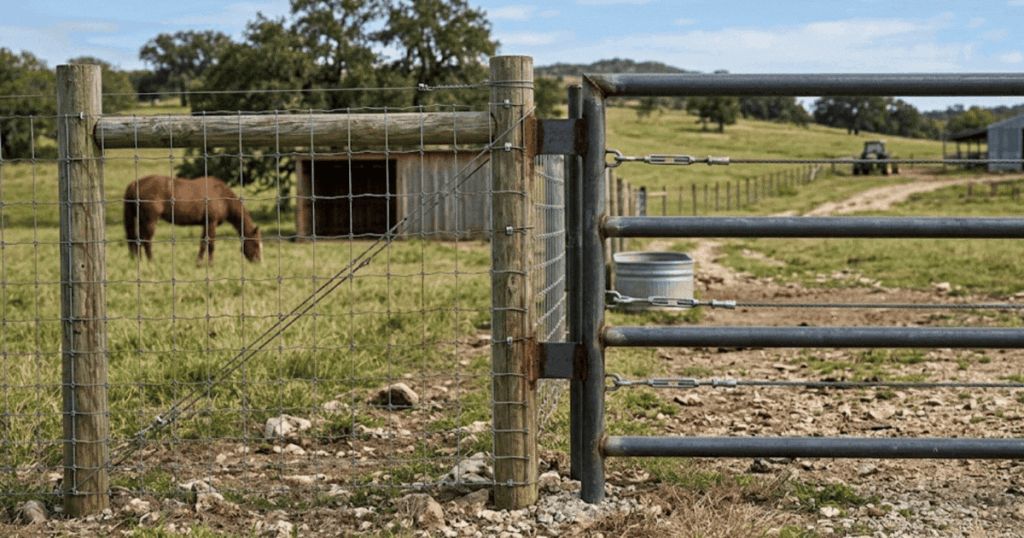
- The 2x4 Grid: True no-climb fence is a stiff, heavy-gauge woven wire featuring 2-inch by 4-inch rectangular gaps. This specific spacing is crucial. It is narrow enough that a horse cannot get a hoof caught through the wire, preventing catastrophic degloving injuries.
- The Predator Barrier: This is the ultimate choice if you have foals, miniature horses, or livestock guardian dogs. It creates a solid physical barrier down to the dirt that keeps your smaller animals in and keeps coyotes and stray neighborhood dogs out.
- The Crushing Weight: Horses love to lean over fences to reach the grass on the other side. If a no-climb fence does not have a rigid top rail made of wood, steel pipe, or heavy polymer, the 1,200-pound weight of a leaning horse will permanently crush and buckle the top of the wire, destroying its integrity.
2. The Indestructibility of "Pipe and Cable"
If you want a fence that will outlast you, steel is the answer.
- The Western Aesthetic: Built from heavy steel oilfield pipes with thick steel cables threaded through them, this fencing style defines the modern Western ranch. It provides incredibly clean, open sightlines across your pastures and frames mountain views perfectly.
- The Wind Resistance: Unlike wire fencing or solid wood, pipe and cable lets the fierce Colorado winds pass straight through. It will never catch blowing debris, and it will not blow down in a severe winter storm.
- The Leg Trap Danger: The major drawback is the flexibility of the cables. If a horse kicks out in a disagreement with a pasture mate, their leg can easily slip between the cables. When they pull back in a panic, the strong steel cable will not break, often leading to severe tendon injuries. It is generally not recommended for small, crowded paddocks.
Pipe and cable shines on large perimeter runs and premium visual boundaries, but it still needs to match the behavior, density, and temperament of the horses using the space.
3. The Seasonal Maintenance Factor
You are not just buying a fence. You are buying the chore of maintaining it.
- Wire Stretching: Over time, heavy winter snowpack, temperature shifts, and the constant leaning of horses will cause no-climb wire to stretch and sag. You must have the equipment and the know-how to periodically re-stretch and re-staple the wire to wooden posts to keep it tight.
- Cable Tightening: Steel cables expand in the hot Colorado summer and contract in the freezing winter. A pipe and cable fence requires you to walk the perimeter with a heavy wrench every spring and fall to adjust the turnbuckles and remove the dangerous slack from the lines.
4. The "Sightline" Requirement
Horses are far-sighted prey animals. They do not see thin wire well when running at full speed.
- The Visibility Factor: If a property has bare wire fencing spanning across a massive pasture, a spooked horse can easily lose track of the boundary and run straight through it.
- The Top Rail Addition: Whether it is no-climb wire or smooth high-tensile wire, a safe equestrian fence must have a highly visible top line. If you are buying a property with bare wire, you need to budget for adding a white vinyl top rail, a heavy wooden rail, or a thick strand of electrified white poly-rope so the horses can clearly see where the pasture ends.
We Inspect the Boundaries Before You Buy
We do not just look at the acreage; we walk the fence line.
When Mark Eibner and Belinda Seville represent you in buying a horse property, we aggressively evaluate the perimeter. We check the tension of the cables, the condition of the wire, and the depth of the posts. We want to ensure the fencing is safe for your specific discipline and will not require a $50,000 replacement bill the day after you close.
Contact Us Today to find a property with premium, horse-safe perimeters.
Browse Active Colorado Horse Properties: Browse Active Colorado Horse Properties featuring professional-grade fencing infrastructure
Frequently Asked Questions (FAQ) About Horse Fencing
Is barbed wire ever acceptable for horses?
Absolutely not. Barbed wire is designed for thick-skinned cattle. Horses have thin skin and a strong, frantic flight response. If a horse gets tangled in barbed wire, they will panic and tear their flesh, often resulting in fatal injuries or career-ending scars. If a property has barbed wire, you must factor the cost of immediate removal into your purchase offer.
How tall should an equestrian fence be?
A safe horse fence should be an absolute minimum of 54 inches, or 4.5 feet, tall. For larger warmbloods, stallions, or properties located near busy county highways, a 5-foot or 6-foot perimeter fence is highly recommended to discourage jumping.
Does electric fencing count as a permanent boundary?
While electric tape or rope is excellent for cross-fencing interior pastures to manage grazing, or for keeping horses from chewing on a wooden rail, most county codes and HOA guidelines do not consider a standalone electric wire to be a secure, permanent perimeter boundary. If the power grid goes down or a battery dies, the fence immediately becomes useless.