
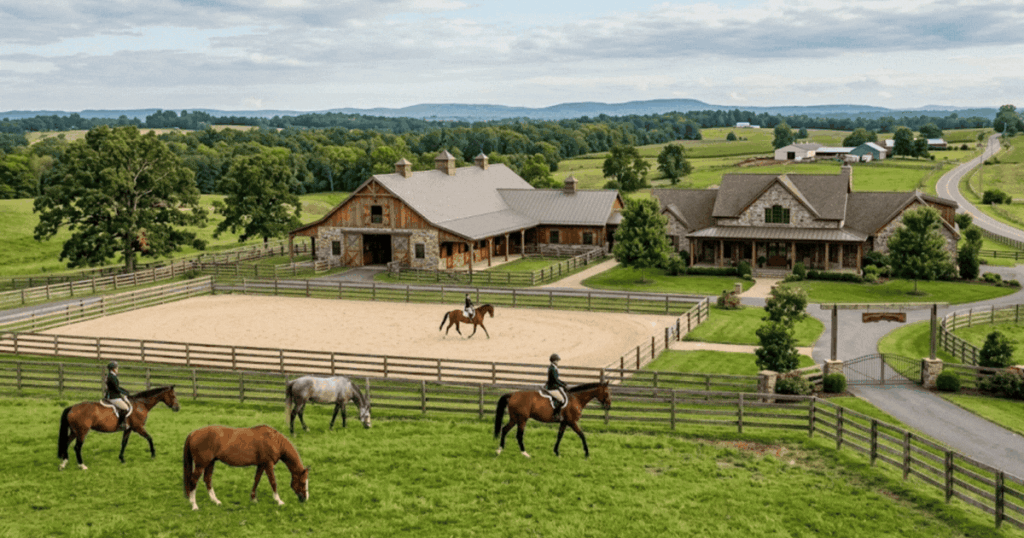
You finally find a sprawling property with stunning mountain views, and you are ready to build the equestrian estate you have always dreamed of. You plan to pour your savings into a custom barn, imported arena footing, and miles of premium pipe fencing.
You are buying a lifestyle, but you are also making one of the largest financial investments of your life.
While no one wants to think about selling their dream farm the day they buy it, life changes. Job relocations, health issues, or the desire to downsize will eventually force an exit strategy. If you do not understand the historical resale trends of the county before you buy, you could find yourself trapped in a property that is impossible to sell without taking a massive financial loss.
Here is how to evaluate the true resale potential and investment trajectory of a Colorado horse property.
What Is the "Resale Value" Trend for Horse Properties in This County?
Quick Summary: The Exit Strategy
- The Scarcity Premium: As Colorado's population grows and urban sprawl consumes agricultural land, mid-sized equestrian acreages, especially 10 to 35 acres close to town, are becoming increasingly rare, driving their baseline value permanently upward.
- The Water Multiplier: The fastest-appreciating asset on any Colorado property is not the house or the barn. It is the deeded water rights. Properties with reliable, senior irrigation water hold their value exponentially better than dryland pastures.
- The Over-Improvement Trap: You rarely get a dollar-for-dollar return on massive equestrian infrastructure. Building a $500,000 hyper-customized indoor arena on a $600,000 piece of land will likely price the property completely out of its local neighborhood market.
- The Turnkey Demand: Today's buyers want immediate gratification. Properties with safe, well-maintained, and functional equestrian infrastructure sell significantly faster and for a premium compared to fixer-upper farms.
Even when you are buying for lifestyle reasons, resale history, water security, and improvement strategy all shape whether the property will protect your money over time.
1. The Scarcity of the Acreage Premium
In the rural real estate market, dirt is your safest investment.
- The Shrinking Supply: As Colorado developers continue to buy up massive ranches and subdivide them into high-density neighborhoods, true agricultural acreage is disappearing.
- The Sweet Spot Demand: There is an incredibly high, permanent demand for 10-to-35-acre parcels located within a 30-minute drive of major city amenities. Because no one is making more land, properties in this specific acreage sweet spot have historically shown aggressive, recession-resistant appreciation.
- The Isolation Discount: Conversely, while 100 acres in a deeply remote, off-grid county might sound romantic, the buyer pool for extreme isolation is very small. Those properties typically sit on the market much longer and appreciate at a much slower, flatter rate.
2. The "Over-Improvement" Trap
Equestrians are notorious for over-improving their properties for their specific discipline.
- The Appraisal Reality: If you build a massive, climate-controlled dressage barn in a county where the median home price is $500,000, you have drastically over-improved for the neighborhood. A bank appraiser will not be able to find comparable sales to justify your asking price, meaning future buyers will not be able to get a loan to buy it from you.
- Broad Appeal vs. Niche Use: To maximize resale value, infrastructure should appeal to the broadest possible segment of the equestrian market. A well-built, multi-purpose pole barn with standard 12x12 stalls and a good outdoor arena will yield a much higher return on investment than a highly specialized, hyper-customized breeding facility.
The best resale improvements are usually functional, versatile, and broadly useful, not the most expensive or discipline-specific buildouts you can imagine.
3. The Undeniable Value of Water Rights
In the arid West, the resale value of the land is intrinsically tied to the water that flows through it.
- The Irrigated Premium: A 20-acre parcel with historic, deeded irrigation shares that can reliably grow lush hay will always command a massive premium over a 20-acre parcel of dry, native dirt.
- The Appreciating Asset: As water becomes increasingly scarce across the Colorado River Basin, senior water rights are appreciating faster than the real estate itself. Buying a property with ironclad water rights is the absolute best way to insulate your investment against future market downturns.
4. Macro Trends and the "Turnkey" Premium
The demographics of the rural buyer are fundamentally shifting.
- The Remote Work Migration: The normalization of remote work has allowed high-income earners to leave the cities and pursue the rural equestrian lifestyle. This has driven a sustained upward trend in rural property values, specifically in counties with reliable high-speed internet.
- The Demand for Turnkey: Modern buyers are busy. They do not want to spend their first three years on a property fixing broken fences, grading arenas, or tearing down dangerous run-in sheds. Properties that are turnkey, meaning a buyer can safely unload their horses on closing day, regularly trigger bidding wars and sell for top dollar.
We Evaluate the Investment Before You Buy
We do not just look at how the property rides today; we look at how it will appraise tomorrow.
When Mark Eibner and Belinda Seville represent you in a purchase, we analyze the county's historical sales data. We help you avoid properties in declining areas, steer you clear of the over-improvement trap, and ensure you are putting your money into assets, like prime acreage and senior water rights, that have a proven track record of strong resale value.
Contact Us Today to find an equestrian property that serves as a sound financial investment.
Browse Active Colorado Horse Properties: Browse Active Colorado Horse Properties with strong historical value and premium amenities
Frequently Asked Questions (FAQ) About Horse Property Resale
Do indoor arenas add significant resale value to a property?
They add value, but rarely a 100% return on the cost of construction. An indoor arena makes a property highly desirable in Colorado's snowy climate, helping it sell much faster, but you should only expect to recoup about 50% to 60% of the actual building cost in the final appraised value.
Does having a second home or caretaker's unit on the property help resale?
Yes, significantly. An accessory dwelling unit, guest house, or apartment over the barn adds massive value. It appeals to buyers needing multi-generational housing, those looking for rental income, or professionals who need on-site housing for their barn staff.
Will bad perimeter fencing ruin my property value?
It will certainly hurt your final sales price and increase your days on the market. Dilapidated, dangerous fencing, like sagging barbed wire or rotting wood, is the first thing an equestrian buyer sees. It signals deferred maintenance and immediately causes buyers to start mentally deducting thousands of dollars from their offer.