
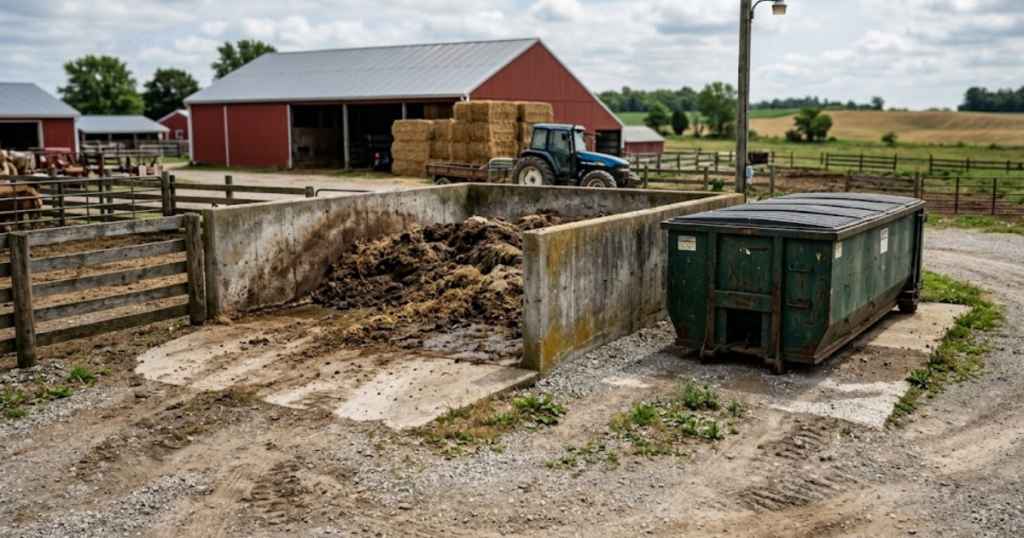
You finally purchase your dream equestrian estate. The barn is immaculate, the pastures are fenced in premium steel pipe, and the mountain views are breathtaking. You move your five horses in, and everything is picture-perfect.
A month later, reality sets in. You have a massive, steaming mountain of manure piled up behind the barn. The flies are multiplying, the neighbors are starting to complain about the smell, and you suddenly realize the property has absolutely no infrastructure designed to handle the waste.
Manure management is the most overlooked logistical challenge of buying a rural horse property. It is not glamorous, but it is the daily reality of the equestrian lifestyle. If a farm is not engineered to efficiently handle, store, and remove waste, your luxury estate will quickly become a health hazard.
Here is how to evaluate a property’s waste management infrastructure before you close the deal.
Is There a "Manure Pit" or a Designated Area for a Dumpster?
Quick Summary: The Mountain of Logistics
- The Daily Math: A single 1,000-pound horse produces roughly 50 pounds of manure every single day. For a herd of four, you are managing over 36 tons of biological waste a year. You cannot simply ignore it.
- The Roll-Off Requirement: If you plan to use a commercial manure dumpster, the property must have a reinforced concrete pad and a massive, hard-packed turnaround area so the heavy commercial trucks can actually access it during the muddy season.
- The Contamination Threat: You cannot put a manure pile wherever it is convenient. County health codes strictly dictate how far your waste storage must be from property lines, natural waterways, and domestic water wells to prevent nitrate leaching.
- The Composting Commitment: Active composting is a brilliant ecological solution, but it requires dedicated infrastructure. A true compost system requires multi-bay concrete bins, a tractor with a front-end loader, and active daily management, not just a static pile in the woods.
Manure management is one of the least glamorous parts of horse ownership, but it has major consequences for daily labor, sanitation, neighbor relations, and long-term property functionality.
1. The Reality of the "Static Pile"
The most common and worst method of manure management is simply dumping it in a pile out back.
- The Fly Breeding Ground: A static, unmanaged manure pile is the ultimate breeding ground for biting flies and parasites. If the pile is situated too close to the barn, your horses will be miserable all summer, and your premium barn aesthetic will be ruined.
- The Spontaneous Combustion Risk: As a massive pile of manure and soiled wood shavings decomposes, it generates intense internal heat. In the dry Colorado climate, a neglected, deeply packed manure pile can actually spontaneously combust, starting a catastrophic barn fire.
- The Aesthetic Cost: When you invest in a premium, high-end property, a sprawling, muddy mountain of waste destroys the visual appeal and significantly impacts the resale value of the estate.
2. The Commercial Dumpster Logistics
Many modern equestrian facilities rely on commercial waste management companies to drop off and swap out roll-off dumpsters. It is highly convenient, but it requires specific infrastructure.
- The Weight Problem: Manure is incredibly dense and heavy, especially after a rain or snowstorm. A standard dirt driveway will not support the weight of a commercial garbage truck trying to retrieve a full dumpster.
- The Concrete Pad: To use a dumpster service, the property should ideally feature a thick, reinforced concrete pad. Without a pad, the metal wheels of the dumpster will sink deep into the mud during the spring thaw, making it impossible for the truck to pull it out.
- The Turnaround Radius: Commercial trucks require a massive turning radius. You must evaluate the driveway layout to ensure a heavy truck can safely back up to the dumpster pad without running over your fencing or getting stuck in the pasture.
A manure dumpster system only works if the site is engineered for truck access, heavy weight, and all-season retrieval.
3. Navigating County Health and Water Codes
In Colorado, you cannot just push waste wherever you want. The state fiercely protects its water table.
- The Setback Rules: Every county has strict agricultural setback regulations. Generally, a manure storage area must be kept at least 100 to 150 feet away from any property line, and significantly farther away from any natural arroyos, streams, or irrigation ditches.
- Well Contamination: If a manure pile or a dumpster pad is situated uphill from your domestic water well, heavy rainfall will wash high concentrations of nitrates directly into your drinking water. An improperly placed manure pit is a massive environmental liability.
4. The True Composting Setup
If the property features a composting area, you need to look closely to see if it is a legitimate system or just a dressed-up dirt pile.
- The Bin System: True aerobic composting requires a three-bin system, usually constructed with heavy concrete retaining walls or thick wooden timbers, allowing you to cycle the waste through different stages of decomposition.
- Equipment Access: To properly compost, you must turn and aerate the piles regularly. The designated area must be wide enough and have the proper clearance for you to safely operate a tractor with a front-end loader.
We Evaluate the Logistics Before You Buy
We do not just look at the premium finishes; we look at the daily operations.
When Mark Eibner and Belinda Seville help you purchase a Colorado horse property, we bring an operational eye to the showing. We evaluate the property's waste management systems, check the setback requirements, and ensure the farm is engineered to handle the harsh realities of keeping livestock. We want your equestrian estate to remain pristine, functional, and environmentally sound.
Contact Us Today to find an equestrian property built with professional-grade logistics in mind.
Browse Active Colorado Horse Properties: Browse Active Colorado Horse Properties that are fully equipped for efficient farm management
Frequently Asked Questions (FAQ) About Manure Management
Can I just spread the manure directly onto my pastures to fertilize the native grass?
You should never spread raw, fresh manure on your grazing pastures. Raw manure contains active internal parasites and weed seeds. Spreading it will infect your herd with worms and ruin the grass. You must properly compost the manure to an internal temperature of at least 140°F to kill the parasites before spreading it.
Do commercial waste companies charge extra for manure dumpsters?
Yes. Because manure is significantly heavier than standard household trash, waste management companies usually charge specialized heavy haul rates, or they may restrict you to using smaller 10-yard or 15-yard dumpsters to ensure their trucks can legally lift the weight.
Can I legally burn my horse manure to get rid of it?
Absolutely not. Burning manure and soiled bedding is highly illegal in Colorado. It violates strict state air quality regulations and poses an extreme, unpredictable wildfire hazard.