
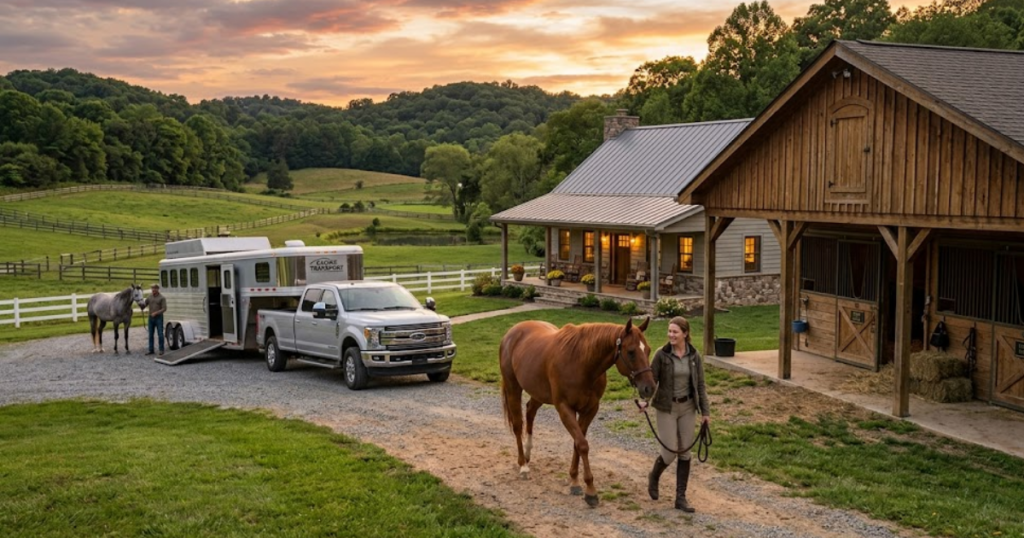
You buy a stunning equestrian estate with a charming guest cabin and an extra barn. You immediately see an incredible income opportunity. You plan to list the cabin on Airbnb as an “equestrian retreat” or a “horse hotel.”
People traveling cross-country with their horses are constantly desperate for safe, comfortable layovers. You imagine hosting happy travelers, filling your empty stalls, and using the extra income to pay for your own hay bills. It sounds like the perfect rural side-hustle.
But a month after your first guests arrive, you receive a cease-and-desist letter from the county, a massive fine from your HOA, and a cancellation notice from your insurance provider.
Operating an Airbnb that accommodates horses is a brilliant business idea, but it crosses several complex legal boundaries. When you invite paying guests and their livestock onto your land, you are no longer a private homeowner—you are operating a commercial agricultural facility. Here is how to navigate the legal landscape before you buy a property for this purpose.
Can I Legally Operate a "Short-Term Rental" (Airbnb) for People Traveling With Horses?
Quick Summary: The "Horse Hotel" Reality
- The Permitting Hurdle: Short-term rentals are heavily regulated across Colorado. You cannot simply list a guest house on Airbnb; you must navigate county zoning codes and obtain specific STR licenses, which many rural counties strictly limit or outright ban.
- The Commercial Boarding Trap: Allowing paying guests to stable their horses on your land often triggers commercial boarding regulations. This requires a completely different tier of zoning approvals and specialized commercial insurance.
- The Water Rights Restriction: Your exempt domestic well permit is likely limited to your own household and your personal livestock. Using that well to provide water for paying guests and their horses can be classified as illegal commercial water use.
- HOA Roadblocks: Even if the county allows a horse Airbnb, strict equestrian Homeowners Associations almost universally ban short-term rentals and transient horses to protect neighborhood privacy and bio-security.
A horse-friendly Airbnb can sound like a perfect rural income stream, but once paying guests and livestock enter the picture, the property may be regulated as a commercial operation rather than a private home.
1. Navigating County STR Regulations
The first hurdle has nothing to do with the horses. It is about the humans.
- The Crackdown: Over the last five years, Colorado counties have heavily cracked down on short-term rentals to combat the housing crisis and prevent party houses in quiet neighborhoods.
- The License Requirement: You cannot legally operate an Airbnb without a county-issued STR license. Many counties have placed strict caps on the number of licenses they issue, meaning you might be put on a multi-year waitlist just for the chance to apply.
- Owner-Occupied Rules: Some counties will only issue an STR permit if the property is your primary residence and you are physically present on the property while the guests are there. You must verify these specific municipal codes before you purchase an investment property.
2. The Commercial Boarding Classification
Once you add horses to the equation, the zoning laws become significantly more complicated.
- The Legal Shift: Keeping your own horses on agricultural land is a use by right. However, charging people money to keep their horses on your land overnight changes the property's legal classification from private agricultural use to a commercial boarding operation.
- The Special Use Permit: Many rural residential zones do not allow commercial boarding by default. You will likely have to apply for a Special Use Permit through the county planning department. This is a public process that involves hearings, heavy fees, and gives your neighbors the opportunity to officially object to your business.
A property that works perfectly for personal horse use may still be entirely unsuitable for paid overnight horse guests under local zoning rules.
3. The Water Rights Limitation
In Colorado, water is strictly monitored, and your well permit dictates exactly what you can and cannot do.
- Household and Personal Use: Most rural horse properties operate on an exempt domestic well permit. This legally restricts the water usage to the primary home, perhaps a small lawn, and watering the homeowner's personal livestock.
- Commercial Violations: The moment you run a commercial Airbnb and a commercial boarding operation, you are technically using that well for commercial purposes. Unless you have specific deeded commercial water rights or a commercial well permit, you are in violation of state water law and can be shut down by the state water commissioner.
4. Bio-Security and Liability Risks
Transient horses bring hidden dangers to your property that require serious infrastructure and insurance.
- The Bio-Security Threat: Horses traveling cross-country are exposed to countless pathogens at rest stops and show grounds. Bringing transient horses onto your property creates a massive bio-security risk for your own herd. You must have a completely separated quarantine barn and independent paddocks to keep the guest horses safely away from your personal animals.
- Commercial Liability: A standard homeowner's or farm insurance policy will absolutely not cover you if a paying guest is injured on your property, or if their horse gets tangled in your fence and requires a $5,000 emergency vet surgery. You must purchase specialized Care, Custody, and Control commercial equine liability insurance.
We Check the Zoning Before You Buy
We do not just look at the guest cabin; we look at the county codes.
When Mark Eibner and Belinda Seville help you purchase a property with income potential, we dive deep into the local regulations. We check the county's current stance on short-term rentals, evaluate the specific language of the well permit, and ensure the zoning actually supports a commercial equestrian endeavor. We want your business plan to be legally sound from day one.
Contact Us Today to find a property zoned for your equestrian business goals.
Browse Active Colorado Horse Properties: Browse Active Colorado Horse Properties that offer the right infrastructure for commercial use
Frequently Asked Questions (FAQ) About Equestrian Airbnbs
Can I circumvent the rules if I do not charge a separate fee for the barn?
No. If the use of the barn or the paddocks is advertised as part of the short-term rental package, the county and your insurance company will still view it as a commercial equestrian transaction, regardless of how you itemize the receipt.
Are equestrian HOAs more friendly to horse-related Airbnbs?
Actually, they are usually the most restrictive. Equestrian HOAs are designed to maintain a quiet, predictable environment for the residents. They almost universally ban short-term rentals and transient boarding to prevent strangers from constantly driving horse trailers through the private neighborhood.
Do I need a special permit if guests sleep in their own horse trailers for dry camping?
Yes. Allowing paying guests to dry camp or live in their horse trailers on your land often triggers county regulations regarding RV parks, commercial campgrounds, and sanitation or septic dumping codes, which are entirely separate from standard short-term rental laws.