
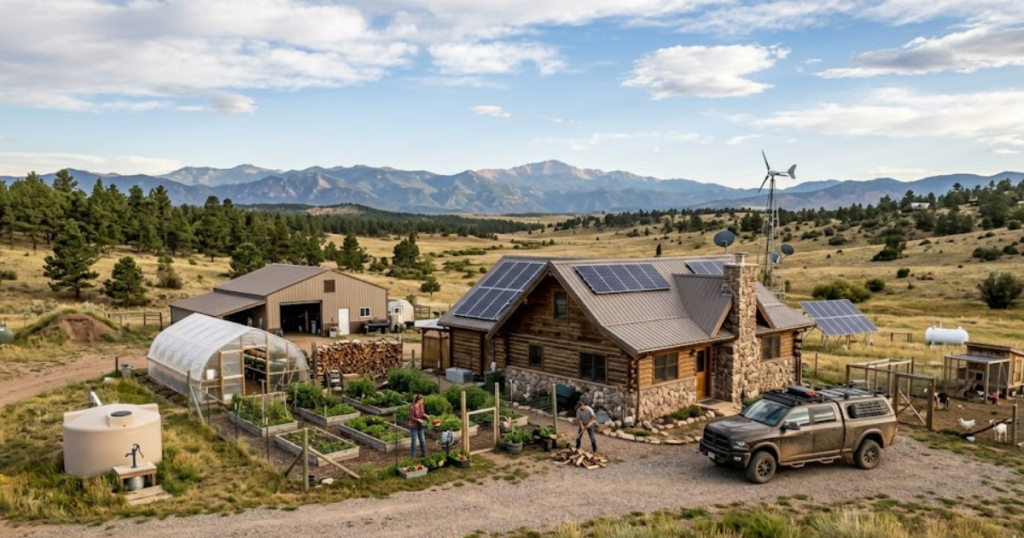
You are looking for a property that offers more than just a beautiful view and a place to ride. You want absolute peace of mind.
In today’s unpredictable world, true luxury is self-reliance. While many rural properties offer basic off-grid capabilities like a wood stove or a small solar setup, a true “prepper” or survival estate takes autonomy to a commercial level. Building a homestead that can completely sustain your family and your animals without county utilities requires specialized engineering.
If you are looking to purchase a property that offers total independence in Colorado, here are the essential infrastructure components you need to look for.
The Essentials of a True Off-Grid "Prepper" Property in Colorado
Quick Summary: The Blueprint for Complete Autonomy
- Redundant Power Systems: True off-grid living requires more than just a few solar panels. A resilient property needs a heavy-duty solar array, massive battery banks, and a backup generator, ideally protected by EMP hardening.
- Multi-Layered Water Security: A deep electric well is a great start, but true security requires a manual hand-pump backup and large underground cisterns so your family and your horses never go without water during a grid failure.
- Fortified Food Production: Producing your own food requires dedicated agricultural infrastructure. Look for heavy-duty fencing to protect gardens from hail and wildlife, along with predator-proof barns for small livestock and poultry.
- Underground Sanctuaries: For the ultimate peace of mind, high-end autonomous properties feature purpose-built steel or concrete bunkers equipped with NBC air filtration and independent plumbing.
True off-grid security is not about one feature. It is about layering power, water, food production, and shelter so the property can continue functioning when utilities fail.
1. Redundant Power Grids and EMP Protection
A true autonomous estate must be able to keep the lights on and the water flowing, no matter what happens to the county grid.
- The Solar Backbone: A reliable property relies on a high-efficiency solar system with a massive deep-cycle battery bank. This ensures you can capture and store the abundant Colorado sunshine to power your house and barn through the night.
- The Generator Backup: If the sun is not shining during a multi-day blizzard, you need an integrated propane or diesel generator that automatically kicks on to charge the batteries. Massive, buried fuel tanks are a must.
- EMP Protection: For maximum security, the most advanced properties feature EMP Shield technology. This hardens the house, the solar inverters, and the generator against catastrophic electromagnetic pulses, protecting your critical electronics.
2. Multi-Layered Water Security
Water is your most critical resource. In a survival scenario, a single electric well pump is a major point of failure.
- The Manual Backup: If your solar panels and your generator both fail, you still need water. Essential off-grid properties utilize a specialized manual hand pump, installed directly alongside the electric submersible pump inside the same well casing, allowing you to manually draw water from hundreds of feet underground.
- Underground Cisterns: Relying strictly on the well’s flow rate during an emergency is risky. High-capacity, buried cisterns provide a massive reserve of fresh water that is safe from freezing temperatures and surface contamination.
The strongest off-grid properties do not rely on one water source or one pumping method. They build in backups before an emergency ever happens.
3. Fortified Agricultural Infrastructure
A self-reliant estate must be able to produce and protect its own food supply year-round.
- The Protected Garden: A standard backyard garden will not survive the intense Colorado sun, heavy hail, and aggressive deer population. Look for garden spaces surrounded by eight-foot fencing, supported by heavy-duty steel cables that allow you to hang protective shade cloth.
- Secure Livestock Barns: Raising your own poultry or small livestock requires fortified barns. The best properties feature predator-proof runs with rebar buried in concrete perimeters, ensuring coyotes, foxes, and mountain lions cannot dig their way into your food supply.
4. The Underground Sanctuary
The ultimate selling point of a true prepper estate is a secure location to weather any storm.
- The Engineering: High-end survival properties often feature commercial-grade steel or concrete bunkers, buried deep underground and coated in marine-grade protective sealants.
- The Life Support: A bunker is only useful if it can sustain life long-term. Essential features include heavy-duty security doors, NBC air filtration systems, and air supplies that are completely independent of the main house.
- The Amenities: Survival does not have to mean roughing it. Premium bunkers are fully plumbed into the property’s septic and propane lines, featuring running water, hot showers, and flushing toilets, along with hardwired internet access and security camera monitoring.
We Evaluate the Survivability Before You Buy
We do not just evaluate the square footage, we evaluate the survivability.
When Mark Eibner and Belinda Seville represent buyers looking for highly specialized autonomous properties, we know how to calculate the massive value of buried infrastructure. Building a redundant, off-grid setup from scratch takes years of planning and hundreds of thousands of dollars. We help you find estates where this critical work is already done, allowing you to step directly into a fully operational, secure lifestyle.
Contact Us Today to discuss purchasing a secure, autonomous property for your family.
Browse Active Colorado Horse Properties: Browse Active Colorado Horse Properties that offer off-grid capabilities and agricultural freedom
Frequently Asked Questions (FAQ) About Autonomous Properties
Can I keep horses on a fully off-grid property?
Yes, absolutely. Horses actually thrive in these environments, provided your off-grid water system is robust enough to supply the 10 to 15 gallons of water each horse needs every single day, even in the dead of winter.
Are underground bunkers legal to build in Colorado?
Yes, but they must be properly permitted through the county building department. They are typically classified as storm shelters or accessory subterranean structures. Unpermitted underground structures can cause massive legal and safety issues during a real estate transfer.
What is the lifespan of an off-grid battery bank?
It depends heavily on the battery chemistry and how well they are maintained. Traditional lead-acid deep cycle batteries may last 5 to 7 years, while modern lithium iron phosphate (LiFePO4) battery banks can easily last 10 to 15 years with proper management.