
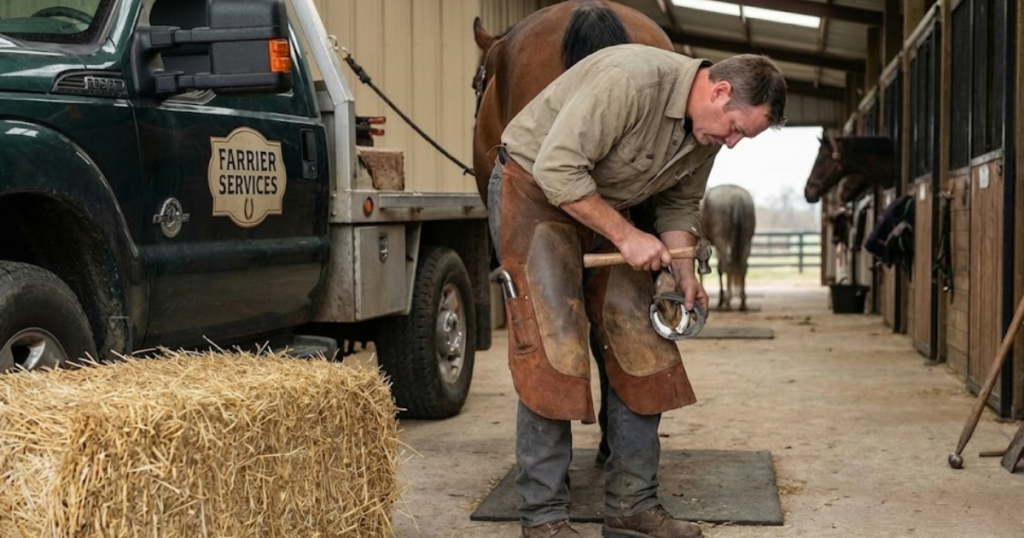
You finally closed on your dream horse property. The barn is set up, the fences are secure, and your horses are settled in the pasture.
But six weeks later, your horse throws a shoe. You pull out your phone to call a farrier, only to discover that every reputable professional in the county is completely booked.
This is a hidden crisis in rural real estate. The phrase “no hoof, no horse” is absolute truth. A beautiful arena is useless if your horse is lame because you cannot find anyone to trim their feet. Finding a farrier who is taking new clients, shows up on time, and knows what they are doing is one of the biggest logistical hurdles of moving to a new area.
Here is how to secure reliable hoof care before you back the trailer down your new driveway.
Is There a “Local Farrier” Who Is Currently Accepting New Clients?
Quick Summary: The Hoof Care Crisis
- The professional shortage: There is a massive shortage of reliable, certified farriers in rural Colorado. The best ones have closed their books and are not accepting new clients.
- The geography surcharge: Farriers build efficient travel routes. If your new property is 30 miles down a dirt road, you will either be denied service or charged a massive trip fee.
- The network dependency: You rarely find a good farrier through a basic internet search. You find them through local word of mouth at feed stores and veterinary clinics.
- The barefoot alternative: If your horse does not require specialized therapeutic shoes, finding a professional barefoot trimmer is often easier and more affordable in remote areas.
A beautiful property is only practical if you can actually build a reliable hoof-care team around it.
1. The Farrier Shortage Reality
Good farriers are in incredibly high demand.
The physical toll
- Shoeing horses is back-breaking work.
- Many farriers cap their client lists strictly to preserve their own physical health and prevent burnout.
The closed books
- When a farrier is established, they “close their books.”
- This means they will not take on a single new horse, no matter how much you offer to pay.
The reliability factor
- The hardest part is finding someone who actually answers the phone and shows up when scheduled.
- A farrier who is taking on dozens of new clients might be new to the area, or they might have a reputation for being unreliable.
2. The Geography of the “Trip Fee”
Your property location directly dictates your farrier options.
Route efficiency
- Farriers make money by shoeing horses, not by driving.
- They cluster their clients geographically.
- If you buy a property in a dense equestrian neighborhood, getting a farrier to stop by is easy because they are already next door.
The remote penalty
- If you buy an isolated mountain property 40 minutes away from the main highway, you are asking the farrier to sacrifice two hours of driving time.
The cost
- To compensate for the lost time, they will charge a hefty “trip fee” or “barn call fee.”
- This can easily add $50 to $100 to your bill every single time they visit.
The farther your property sits from an established horse corridor, the smaller your farrier pool becomes.
3. Unlocking the Local Network
You cannot rely on a Google search to find the best hoof care.
The vet connection
- The absolute best way to find a farrier is to call the local equine veterinarian.
- Vets work hand-in-hand with farriers on therapeutic cases.
- They know exactly who does the best work and who might have an opening.
The feed store board
- Local agriculture runs on bulletin boards.
- Visit the nearest feed store and look at the business cards pinned near the register.
- Talk to the staff, as they always know who the active professionals are in the valley.
Barn sharing
- If you only have one or two horses, a farrier might not want to make the trip.
- A great strategy is to coordinate with a neighbor who has a large herd.
- You can walk your horses over to their property on shoeing day to make it worth the farrier’s time.
4. Therapeutic vs. Barefoot Needs
Your options change depending on what your horse actually needs.
The specialist
- If you have a performance horse that requires specialized aluminum shoes, wedges, or corrective trimming, your pool of qualified farriers is very small.
- You must secure this professional before you move.
The barefoot trimmer
- If your horses are retired or strictly used for light trail riding, they might be perfectly fine going barefoot.
- Finding a certified barefoot trimmer is often easier than finding a traditional blacksmith who works with hot steel.
We Connect You to the Local Professionals
We do not just hand you the keys, we help you build your farm team.
When Mark Eibner and Belinda Seville help you buy an equestrian property, we tap into our local network. We can give you the names of the reputable farriers, equine dentists, and veterinarians who actively service that specific zip code. We want your transition to a new property to be seamless for both you and your horses.
Contact Us Today to find a home in a supportive equestrian community.
Browse Active Colorado Horse Properties: View All Available Listings
Frequently Asked Questions (FAQ) About Finding a Farrier
How much does a farrier cost in Colorado?
Prices vary wildly by region and the specific needs of the horse. A basic barefoot trim usually runs between $50 and $75. A standard set of four steel shoes can cost anywhere from $150 to $250. Specialized therapeutic shoeing can easily exceed $300 per visit.
Can I just trailer my horse to the farrier’s clinic?
Yes, and this is becoming increasingly common. Many high-end farriers have set up their own stationary clinics. Instead of them driving to you, you load your horse and drive to their facility. This completely eliminates the trip fee and allows the farrier to see more horses in a day.
What should I do if my horse loses a shoe and I cannot find a farrier?
You should always keep a basic hoof care kit in your barn. Have your current farrier teach you how to safely pull a loose shoe so it does not twist and damage the hoof wall. You can then protect the bare foot with a specialized hoof boot or a duct tape wrap until a professional can arrive.