
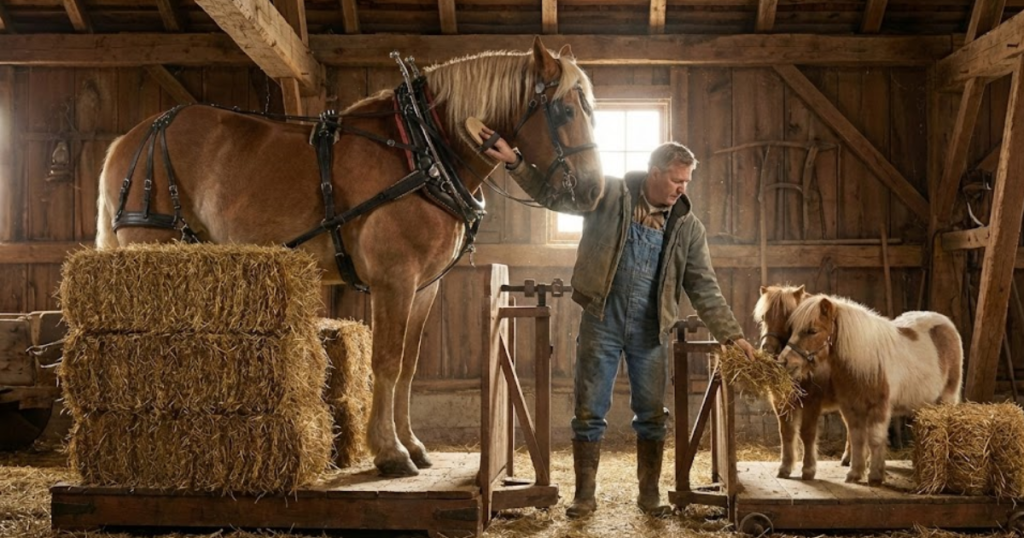
You found a property zoned for “4 Animal Units.” You plan to breed Miniature Horses. Does that mean you can only have 4 tiny ponies on 10 acres?
Or perhaps you own Draft horses. Does a Shire count as two horses because of its size?
The concept of an “Animal Unit” (AU) is the government’s way of standardizing livestock density. However, the definition varies wildly depending on whether you are talking to a Zoning Officer, a Tax Assessor, or a Range Scientist.
Here is how the math changes based on the size of hooves in your herd.
What Does “Animal Units” Mean for Horses (And How Many Can I Legally Keep)?
Quick Summary: AU Is a Legal Limit, Not a Guess
- Animal Unit (AU) = a standardized livestock “impact” number: Counties use it to limit stocking density (odor, manure, runoff, flies, neighbors).
- There is no single Colorado-wide AU definition: The exact math can vary by county, municipality, and HOA.
- Two different “counts” can apply at once: Zoning might allow X animals, but HOA covenants might allow fewer.
- Health and land condition still matter: Even if zoning allows more horses, your pasture may not. Over-stocking creates mud, weeds, and vet bills.
Never rely on “the seller said.” Get the allowed animal count in writing from the authority that enforces it.
1. What Is an Animal Unit?
An Animal Unit (AU) is a regulatory shortcut that tries to convert different animals into one comparable “load” on the land.
- Why it exists: To prevent too much manure, too much nutrient runoff, and too many animals in a small area.
- What it is not: A horse welfare metric. It’s a zoning and public health tool.
- What it usually controls: The maximum number of animals allowed per parcel size, often expressed as “X animal units per acre” or “X animal units per parcel.”
2. Who Sets the Rule: County, City, or HOA?
Before you do any math, you must identify who actually enforces the rule.
County zoning
- Controls agricultural/residential use in unincorporated areas.
- Often uses AUs, animal-per-acre limits, or “large animal” definitions.
City limits
- Some properties are technically in city limits and follow stricter “urban livestock” rules.
- These may limit barns, manure storage, and the total number of horses regardless of acreage.
HOA / covenants
- HOAs can be more restrictive than the county.
- Common restrictions: max number of horses, where manure must be stored, trailer parking, and barn size/appearance.
Assume the tightest rule applies. If zoning allows 4 horses but the HOA allows 2, you effectively have 2.
3. Minis vs. Drafts: Does Size Change the Count?
Sometimes yes, sometimes no. This depends entirely on the written definition in the code you’re under.
How many codes handle it
- “Horse is a horse” approach: Every equine counts the same—mini, pony, warmblood, draft. Simple, common, and strict.
- Weight-based AU approach: Some jurisdictions base AU on an assumed animal weight. In that case, a draft can consume more AUs than a mini.
- Hybrid approach: Certain codes split “large animals” (horse/cattle) vs “small animals” (goats/sheep) and do not differentiate within horses.
Even if minis count as “less” on paper, neighbors and enforcement still respond to impact: manure volume, smell, flies, and traffic.
4. The Practical Reality: “Legal” vs. “Healthy” Stocking
Many buyers focus only on what’s allowed legally. The land has its own opinion.
What drives land capacity
- Soil: Clay soils turn into mud faster and recover slower.
- Water: Irrigated pasture supports more grazing; dryland pasture often supports almost none.
- Management: Sacrifice paddocks, rotational turnout, manure removal, and footing pads radically change your “real” capacity.
A realistic frame
- If you don’t have irrigation, most Front Range properties function like dry lots with hay feeding the majority of the year.
- That means your limiting factor becomes manure management and mud control, not grass.
5. How to Verify the Allowed Count Before You Buy
Here’s the fast, practical checklist that prevents post-closing surprises.
Do these three checks
- Identify the jurisdiction: County, city, and HOA.
- Pull the written rule: The exact zoning code section (or covenant clause) that lists animals/AUs.
- Ask for a written determination: Email the zoning office with the parcel number and ask: “How many horses are permitted on this lot?”
Also verify these “gotchas”
- Setbacks: Barns and shelters often must be a minimum distance from property lines.
- Manure storage rules: Some areas require covered bins or specific placement away from watercourses.
- Commercial use: Training/boarding may be prohibited even if personal horses are allowed.
Make animal count verification an inspection item so you can walk away if the legal capacity doesn’t match your needs.
We Verify the Horse Count in Writing
We don’t guess. We confirm.
When Mark Eibner and Belinda Seville help you buy a horse property, we verify the jurisdiction rules and make sure you know exactly what’s allowed before you commit.
Contact Us Today to verify animal limits before you buy.
Browse Active Colorado Horse Properties: View All Available Listings
Frequently Asked Questions (FAQ) About Animal Units
Is an “animal unit” the same thing everywhere in Colorado?
No. AU definitions vary by jurisdiction. Always use the code and definitions for the county/city/HOA that governs the parcel.
If zoning allows 4 horses, can I run a boarding business?
Not necessarily. Many areas allow personal horses but restrict commercial boarding/training due to traffic, noise, and business licensing rules.
Do minis “count less” than full-size horses?
Sometimes, but only if the governing rule explicitly differentiates by weight or by equine category. Many codes count every horse the same.