
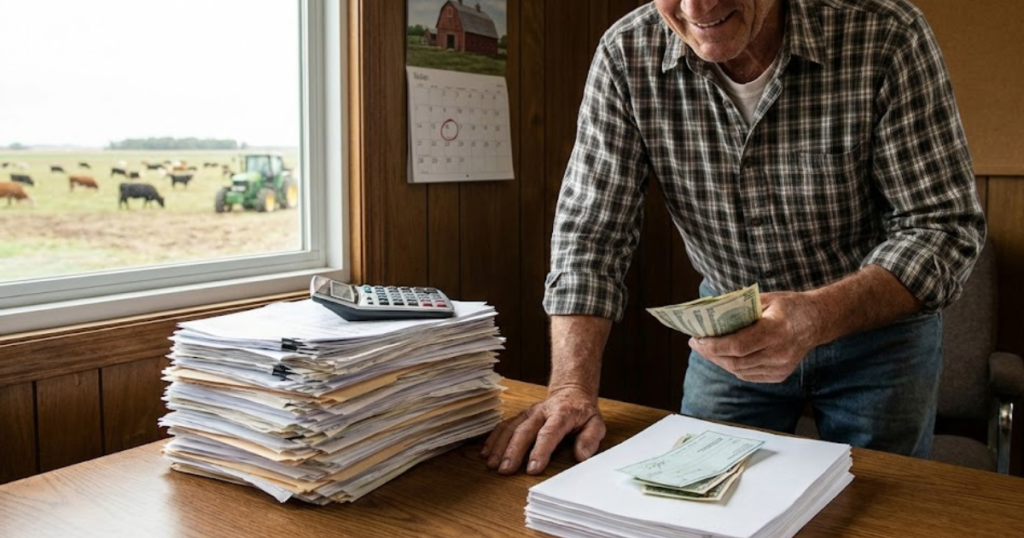
You look at two identical 40-acre properties on Zillow.
One has property taxes of $5,200 a year. The other has taxes of $48 a year.
You assume it is a typo. It isn’t.
In Colorado, agricultural land is not taxed on its market value (what it would sell for). It is taxed on its “productive capacity” (how much corn or grass it can grow). Because growing grass is not very lucrative, the taxable value is incredibly low.
However, getting and keeping this status is harder than just buying a cowboy hat. If you lose this status, your tax bill can jump 2,000% overnight.
Here is how to figure out if a property qualifies and how to keep those taxes low.
How Much Does Agricultural (Ag) Status Save on Property Taxes?
Quick Summary: The Tax Break Everyone Wants
- The savings are massive: This isn’t “a few hundred bucks.” It can be the difference between thousands per year and double digits.
- Ag status is a tax classification: It’s about whether the land is being used as a farm/ranch business, not whether you can keep animals.
- Hobby horses usually don’t qualify: Personal riding horses are typically considered personal use, not agricultural production.
- The most common path: Lease pasture to a neighbor for cattle grazing or hay production so the land is used in a profit-driven agricultural operation.
Colorado agricultural land is generally valued for taxes based on its productive capacity (what it can produce), not its market value (what it could sell for). When the land’s productive value is low, the tax bill can be shockingly low. The catch is that qualifying and keeping the status takes proof and consistency.
1. The Math: Why the Savings Are So Big
To understand the savings, you need to understand what the county is actually taxing.
- Vacant land (no Ag status): Generally assessed against market value at a higher assessment rate than residential property, which can create a big bill on acreage.
- Residential land: If there’s a house, the home site is typically assessed as residential (often lower than vacant land), but still tied to market value.
- Agricultural land: Valued based on income potential/productive capacity. Large acreage of dry grazing can be valued by the county at surprisingly low totals.
The result: On many ranch-style properties, Ag status can materially change the carrying cost of the land portion of the tax bill.
2. Zoning vs. Ag Tax Status (Not the Same Thing)
This is where buyers get fooled by a single checkbox.
- Zoning (example: A-1): A land-use rule that often governs what you’re allowed to do (animals, structures, uses).
- Ag Tax Status: A county assessor classification tied to actual agricultural use with intent to generate monetary profit.
- Common mistake: Buyers see “ag zoning” and assume “ag taxes.” You can have agricultural zoning and still pay full residential/vacant taxes if you aren’t farming/ranching in a qualifying way.
3. Do Horses Count? The “Pleasure Horse” Trap
This is the most painful surprise for new acreage buyers.
- The rule: Agricultural status typically hinges on land being used for the primary purpose of obtaining a monetary profit.
- What can qualify: Commercial operations like breeding, boarding, or training may be treated as agricultural when properly documented.
- What usually doesn’t: Keeping horses for personal recreation is generally considered a hobby/personal use.
- Burden of proof: If you claim Ag status based on horses, counties commonly want documentation (business intent, income/expense records, tax forms, etc.).
If your plan is “we’ll have a few horses and ride on weekends,” assume you will need another strategy if Ag tax status is a priority.
4. How to Qualify: The Grazing Lease Strategy
If your personal horses don’t qualify, this is the most common way small ranches get the tax break.
- Lease the grass: Sign a grazing lease with a local cattle operator who runs livestock as a business.
- How it works: You allow cattle to graze seasonally. Payment can be nominal or structured as a trade (for example, fence maintenance), but the key is that the land is supporting a commercial operation.
- Hay production option: If the pasture is suitable, leasing to a hay producer for cutting/baling can also support agricultural use.
The goal is simple: your acreage needs to be used as an income-producing agricultural asset—not just a scenic backyard.
5. The Two-Year and Ten-Year Rules
Ag status usually isn’t something you “turn on” the week after closing.
- Reinstating status (common scenario): If the property lost Ag classification and is currently taxed as vacant/residential land, you may need to prove qualifying agricultural use for two consecutive years before the classification changes.
- Subdivision complication: If the land is part of certain recorded subdivisions (often post-1970), the rules can be stricter and may require longer proof windows—sometimes referenced as a ten-year history requirement.
Translation: if you’re buying for the tax savings, the timeline matters. Build your strategy early and document everything.
We Verify the Tax Record
We don’t trust a listing description to tell you how the county will tax the land.
- We go to the County Assessor database.
- We confirm the classification code (for example: vacant vs. residential vs. dry grazing).
- We verify what your tax bill is likely to be now and what you’d need to do to keep it tax-efficient.
Contact Us Today to find a property with verified Ag status and a clear plan to maintain it.
Browse Active Colorado Horse Properties: View All Available Listings
Frequently Asked Questions (FAQ) About Ag Status
Can I get Ag status on 5 acres?
Technically, state rules don’t always set a hard minimum acreage, but practically it can be difficult. County assessors often look at “economic feasibility” and whether the acreage realistically supports a profit-driven agricultural operation.
What happens if I build a house on Ag land?
Often the home site (commonly 1–2 acres, depending on county rules) is reclassified as residential and taxed at a higher rate, while the remaining acreage can stay agricultural if you continue qualifying agricultural use. This “split classification” is often an ideal scenario for acreage buyers.
Do llamas or alpacas count?
They can. Counties may recognize livestock like llamas, alpacas, goats, and sheep when they’re raised for production (fiber, breeding, meat, etc.) and you can demonstrate business intent and documentation to support agricultural use.
Does “ag zoning” automatically mean “ag taxes”?
No. Zoning is about permitted land use. Ag tax status is about the land’s current, documented use for profit-driven agriculture. You can have agricultural zoning and still be taxed as residential or vacant land.
What’s the simplest way for a horse property owner to qualify?
For many small acreage owners, a grazing lease to a cattle operator (or a hay cutting lease) is the most straightforward method. It makes the pasture part of a commercial agricultural operation and creates documentation counties typically want to see.