
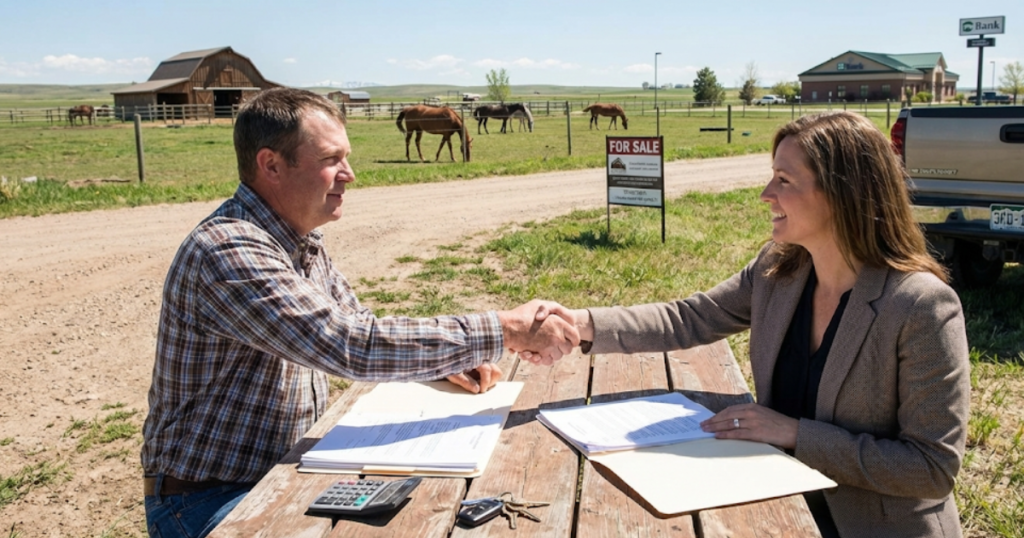
You found the perfect ranch. It has 35 acres, a barn, and a nice house. You call your bank to get a pre-approval, and they ask: “Is this a working farm?”
How you answer that question determines if you get the loan.
Financing a horse property is different from buying a suburban condo. Lenders get nervous about large acreage, outbuildings, and agricultural zoning.1 If you use the wrong terminology or apply for the wrong loan product, you can get denied even if you have perfect credit.
Here is how to navigate the lending landscape for equestrian estates.
How Are Horse Properties Financed? Do I Need a Special Farm Loan?
Quick Summary: It Depends on the House-to-Land Ratio
- Most buyers use standard mortgages: If the property is primarily residential with horse amenities, conventional financing often works.
- The hobby-farm gap: When land and outbuildings outweigh house value, residential lenders may hesitate.
- Business use changes underwriting: Boarding or training income can trigger agricultural or commercial loan requirements.
- Appraisal matters: Unique properties need comparable sales or deals can fall apart late.
1. Standard Residential Mortgages
This is the most common financing path for horse properties.
- Best fit: The home is the primary value driver and the use is residential.
- Acreage flexibility: No universal cap, but comps must support value.
- FHA/VA: Possible when the property is not presented as a commercial operation.
2. The “Hobby Farm” Loan
This bridges the gap between residential and agricultural lending.
- Use case: Serious facilities without reliance on farm income.
- Borrower profile: Buyers qualifying on outside income.
- Trade-offs: Higher down payments and slightly higher rates.
3. The True Ag Loan
This is for income-producing or large-scale agricultural properties.
- When required: Commercial boarding, training, or ranch operations.
- Why ag lenders: Better understanding of land, water, and zoning.
- Considerations: Larger equity requirements and different loan structures.
4. The Income Deal-Breaker
How you describe the property can determine loan eligibility.
- Residential loans: Qualify on personal income, not projected horse revenue.
- Commercial trigger: Presenting the property as a business often disqualifies residential products.
- Strategy: Align loan type with actual use and lender guidelines.
We Connect You With Horse-Savvy Lenders
Equestrian properties require lenders who understand acreage, barns, and rural appraisals.
We help connect buyers with financing partners experienced in Colorado horse property.
Contact Us Today for a lender referral.
Browse Active Colorado Horse Properties: View All Available Listings
Frequently Asked Questions (FAQ) About Financing
Does agricultural zoning prevent residential financing?
Usually no, as long as the use is residential and not a commercial farming operation.
Can I use USDA loans for horse property?
Sometimes, depending on property condition and intended use.
Why did my barn add little value on appraisal?
Residential appraisers often discount outbuildings compared to construction cost.