
A ranch can give a family more than a place to live: it can create shared work, routines, and responsibility that strengthen connection over time. That’s how owning a ranch improves family connection: relatives build a shared identity through caring for the land, making decisions together, and passing on knowledge and values.
The appeal is clear: open space and a working landscape can bring family members together. Shared ownership also calls for honest conversations about priorities, roles, and the future. A lasting family legacy depends not only on keeping the land, but on deciding together what it means and how to use it.
This article explores how ranch life can foster belonging, shape family decisions, and create personal and financial value across generations. It also covers why thoughtful planning matters, from managing everyday responsibilities to deciding how ownership may pass to the next generation.
Key Takeaways
- Assess a ranch’s financial potential alongside the ongoing demands of its land, infrastructure, and operation.
- Shared responsibilities and traditions can help family members build a lasting sense of belonging.
- Clear communication and deliberate ownership planning can help families manage disagreements and make decisions together.
- Think beyond the current generation: a family legacy can endure even if future heirs choose a different path for the land.
Financial and nonfinancial returns of ranch ownership
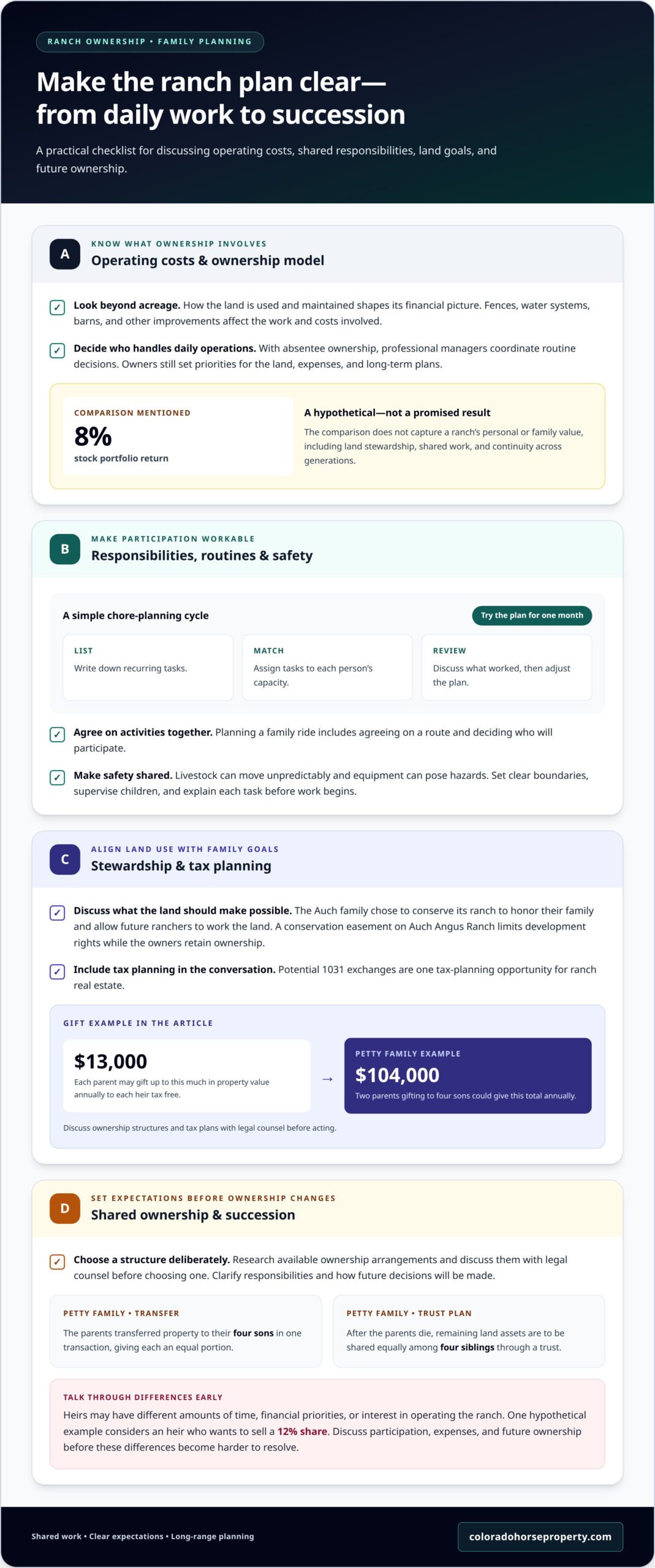
A ranch can provide value through income, land stewardship, and family involvement, but those benefits come with operating expenses. Fences, water systems, barns, and other improvements all affect the work and costs involved. The financial picture depends on how the land is used and maintained, not just its size.
An 8% stock portfolio return offers a different financial comparison, but it doesn’t capture the ranch’s personal or family value. The figures describe a hypothetical, not a promised result. Land stewardship, a place for shared work, and continuity across generations may matter alongside cash flow.
Absentee ownership is another possible model. Professional managers handle daily operations while the owners live elsewhere. Managers can coordinate routine decisions, but owners still need to set priorities for the land, expenses, and long-term plans. This approach may suit relatives who value owning a ranch but cannot take part in everyday work.
Shared ownership needs a clear structure before disagreements arise. Research the available ownership arrangements and discuss them with legal counsel before choosing one. A trust is one possible approach: the Petty family’s plan calls for remaining land assets to be shared equally among four siblings through a trust after their parents die. The right arrangement makes responsibilities and future decisions clear.
Prepare heirs by discussing both benefits and obligations before transferring a share. In a hypothetical inheritance, three children receive a ranch, but their time, financial priorities, and interest in operating it may differ. A further example considers an heir who wants to sell a 12 percent share. Clear expectations about participation, expenses, and future ownership can help families address such differences early, while preserving the ranch’s role in their shared life.
In a hypothetical shared-property example, one child lives three miles away while another lives in New York City, and two or three generations may face tensions requiring attention.
Family identity and a shared sense of belonging
The right ranch size, location, and facilities depend on planned family activities, capacity for upkeep, and access needs. To understand how owning a ranch improves family connection, consider whether the land and facilities support shared routines.
Shared Ranch Recreation
Shared ranch recreation means choosing leisure activities family members can enjoy together on the property. A wildlife observation walk, family photo project, or garden can bring different ages into one activity. Let relatives choose roles suited to their interests, such as mapping plants or recording seasonal changes. Shared experiences help family members build curiosity about and respect for the landscape.
Family Traditions on the Ranch
Ranch traditions are recurring activities that give relatives a shared way to mark time and express family values. Families can see how owning a ranch improves family connection by creating an annual gathering around a seasonal task, meal, or project. Invite each generation to suggest an idea, then keep the ritual simple enough to repeat. Over time, these moments can become part of the family’s living legacy.
Ranch and Suburban Family Life
Ranch and suburban settings offer different opportunities for family connection. Ranch life can put shared activities amid open ground and property routines; suburban life may bring relatives together through neighborhood spaces and community events. Neither setting guarantees closeness. Consider which environment suits your family’s preferred pace, interests, and everyday access needs. A setting that supports regular time together matters more than appearance alone.
Activities That Strengthen Family Relationships
Shared activities strengthen relationships when relatives communicate and make room for each person’s perspective. Planning a family ride, for example, means agreeing on a route and deciding who will participate. Livestock and ranch equipment require care: animals can move unpredictably, and equipment can pose hazards. Set clear boundaries, supervise children, and explain each task before work begins. These habits make safety a shared responsibility.
Joint decisions and long-range planning
Ranch decisions work best when family members agree on priorities, assign responsibilities, and review the results. For chores, list recurring tasks, match them to each person’s capacity, then try the agreed approach for a month. Meet afterward to discuss what worked and adjust the plan. This routine gives children and adults a clear way to contribute and raise concerns.
Long-term plans also shape how land is used. The Auch family chose to conserve its ranch to honor their family and allow future ranchers to work the land. A conservation easement on Auch Angus Ranch limits development rights while allowing the owners to retain ownership. This example shows how families can weigh stewardship, future agricultural use, and control of the property together.
Tax planning belongs in those conversations, alongside succession and land goals. Potential 1031 exchanges are one tax-planning opportunity for ranch real estate. Another example involves gifts: each parent may gift up to $13,000 in property value annually to each heir tax free. Under the Petty family example, two parents could gift a total of $104,000 annually to four sons. Families should discuss ownership structures and tax plans with legal counsel before acting.
Succession planning clarifies who will own and manage the ranch. The Petty parents transferred property to their four sons in one transaction, giving each son an equal portion. Their plan also calls for remaining land assets to be shared equally among four siblings through a trust after their parents die. Early, regular, and deliberate communication helps relatives understand intended roles and decisions.
Plans can change without erasing a family’s work. Selling a ranch after five generations is one possible outcome, and it does not necessarily undo what the family accomplished. Some new owners also invest in property improvements over several years as they grow into the operation. Discussing that pace together helps family members align resources, expectations, and definitions of success.
Benefits of farming or ranching alongside family across generations
A ranch shared across four or five generations can connect family history with decisions still unfolding. Grandparents may remember why a pasture was divided a certain way; younger relatives can learn how that choice affects current use. The question of how owning a ranch improves family connection becomes practical when relatives exchange knowledge, not just stories. Families can record these details in a shared land history, including names, places, and the reasons behind past choices.
Knowledge passes between generations most effectively when each person has a meaningful role. One relative might explain how a gate or water system works, while another records maintenance needs or photographs a changing landscape. These contributions let children and adults learn together without assuming everyone wants the same daily workload. They also preserve the context behind family decisions, rather than leaving future owners to guess what earlier generations intended.
Working together can build patience and shared problem-solving. For example, relatives planning a pasture improvement can discuss the goal, hear different views, and agree on how to judge the result. The process gives younger family members a chance to ask questions and contribute ideas. It also shows that stewardship involves ongoing choices, not simply inheriting property or repeating older practices without discussion.
Generational ownership still needs room for different ambitions. Some relatives may want hands-on involvement; others may contribute through planning, preserving records, or supporting a family gathering. Discussing roles openly can help a family avoid treating one person’s preferred level of participation as the standard for everyone. A shared ranch can remain meaningful even as individual responsibilities change.
Families can see how owning a ranch improves family connection by making the legacy adaptable. Set aside time to discuss what each generation wants the ranch to represent, then revisit those conversations as circumstances change. Continuity may be measured by the knowledge, care, and mutual respect relatives carry forward, not by whether every generation follows the same path.
Colorado Horse Property
Colorado Horse Property helps families connect their ranch goals with a property search and purchase. If you are considering how land, facilities, and location could support shared use across generations, its AI-Powered Horse Property Search can help identify properties with equestrian features that match your priorities. Buyer Representation and Real Estate Listing Services support the property decision, while Transaction Management helps coordinate the purchase process.
A ranch is a substantial family commitment, so a clear picture of your intended use and long-term plans can guide your search. Contact Colorado Horse Property to discuss your ranch real estate goals.
Shape the Ranch Future Your Family Wants
Before choosing a property, agree on what your family wants its next chapter to look like. Decide which relatives hope to be involved, what kind of land use suits your plans, and which features would support shared time. Understanding how owning a ranch improves family connection can turn those conversations into practical priorities for a property search.
Colorado Horse Property can connect those priorities to ranch real estate. Its AI-Powered Horse Property Search helps identify properties with equestrian features, while Real Estate Listing Services and Buyer Representation support the search and purchase. Start with a clear picture of how your family wants to use the land and what matters most for the future.
Contact Colorado Horse Property to discuss your family’s ranch goals. Take the next step toward a property that fits the life you want to build together.
Frequently Asked Questions
What family activities can you do together on a ranch?
Families can plan activities around the ranch’s landscape and facilities, such as birdwatching, sketching views, or photographing seasonal changes. A shared map can help relatives choose a route and mark places to revisit. Families can also cook outdoors or create a nature journal together. These relaxed activities welcome different ages and interests without requiring everyone to participate in the same way.
How does caring for livestock teach children responsibility and teamwork?
Caring for livestock can help children connect a task with an animal’s daily needs. With an adult guiding each activity, a child might help prepare feed or observe an animal while another family member handles the next task. Adults can explain why routines matter and invite children to share what they notice. Clear boundaries around handling animals keep responsibilities suited to each child’s age and experience.
What are the benefits of outdoor time and nature for family well-being?
Time outdoors gives families a change of setting for conversation and shared attention. Watching clouds, noticing tracks, or identifying plants can turn a walk into an activity that sparks curiosity across ages. Nature can also provide a calmer setting for time together away from household routines. Families can choose a pace and activity that suit their abilities, making outdoor time easier to share regularly.