
A coverage map can make a remote Colorado property look connected, even when terrain tells a different story. Setting up utilities for a remote Colorado property starts with checking which internet options can actually serve the site. Mountain homes may have fiber, fixed wireless, DSL, cable-style service, or satellite. Trees, terrain, distance from towers, and line of sight all affect service, so a map alone may not show what you can get at the property.
Internet is only one part of making a rural home work day to day. You’ll also need to identify the power and water sources, whether wastewater goes to sewer or septic, and which services your plans require. This guide covers how to assess internet access, identify utility providers, and understand a property’s systems, whether you’re planning full-time living, seasonal stays, or a working horse property.
Key Takeaways
- Assess internet at the property itself: terrain, trees, tower distance, installation needs, and cell reception can shape real-world service.
- Map nearby power and utility infrastructure, then account for easements and the work needed to connect the home.
- Match services to how you’ll use the property, including power, water, wastewater, heating, and waste collection.
Is Internet Available?
Test internet options at the property rather than relying on a coverage map alone. Terrain, trees, tower distance, and line of sight can all affect service.
Verify Internet Speeds and Cell Service
Test cell reception inside the home and in likely work areas. Compare advertised internet speeds with performance at the property, including during the hours you expect to work or stream. Mountain terrain, tree cover, weather, and equipment needs can make mapped coverage differ from real-world service. Note installation requirements, equipment, and whether a technician needs access to the home. Include power for routers, antennas, and other connection equipment in your setup plan.
Compare Available Connection Types
Compare cellular, satellite, fixed wireless, and DSL options for the specific address. Colorado mountain properties may also have fiber or cable-style service, but available connections vary by location. For fixed wireless, check whether an outdoor antenna or a clear line of sight is needed. Review installation terms and equipment requirements, as these can affect which option suits your household.
Coordinate Service With the Previous Resident
Contact utility companies a few weeks before moving and arrange the account transfer or new service start. If the previous resident still has an active account, schedule their service to end the day after they move out. Call the utility company again a couple of weeks after your first contact if the handoff remains unresolved. In the United States, customers denied service or required to pay a deposit have 60 days to request the reason in writing. The FTC says deposit or letter-of-guarantee requirements must be the same for all customers.
Find out whether wastewater goes to a municipal sewer or a septic system. If rural land isn’t connected to municipal sewer, a home or other plumbed structure needs a septic system. Knowing which system serves the property helps you understand what must be in place before occupancy.
What Utilities Are Common in Mountain Homes?
Remote homes may combine grid power with propane, solar, or generator backup. Off-grid systems can require substantial upfront investment, and winter conditions can reduce solar output and affect battery performance.
Check Easements and Nearby Infrastructure
Review recorded utility easements and locate nearby power lines, poles, water connections, and roads. Compare infrastructure locations with parcel boundaries: a line crossing a neighboring property does not automatically give you access. Ask utility companies and the county about documented routes and requirements for extending service. Keep easement terms and connection arrangements in writing, especially for vacant land or older cabins.
Verify Grid Power and Connection Costs
Find out whether grid power reaches the lot line, is nearby, or is unavailable. Connection costs can depend on easements, existing infrastructure, and utility company requirements. Record the provider’s scope of work alongside details of the parcel’s existing electrical setup.
Evaluate Off-Grid Utility Risks and Costs
Assess solar panels, battery capacity, generator backup, propane use, and water storage as parts of one operating system. In mountain winters, shorter days, snow-covered panels, cold batteries, and higher heating demand can strain power supplies. Include generator fuel and system maintenance in your planning.
- Schedule move-in connections with enough notice for service activation and any required technician visit. Water activation can take a few days, and a technician may need access to the home. On move-in day, confirm electricity, water, heating, and internet work as expected. Check whether the community handles trash or sewer through municipal service or association dues. As you compare parcels, Colorado property listings can help you focus on homes suited to your intended use.
Assessing which utilities a home needs
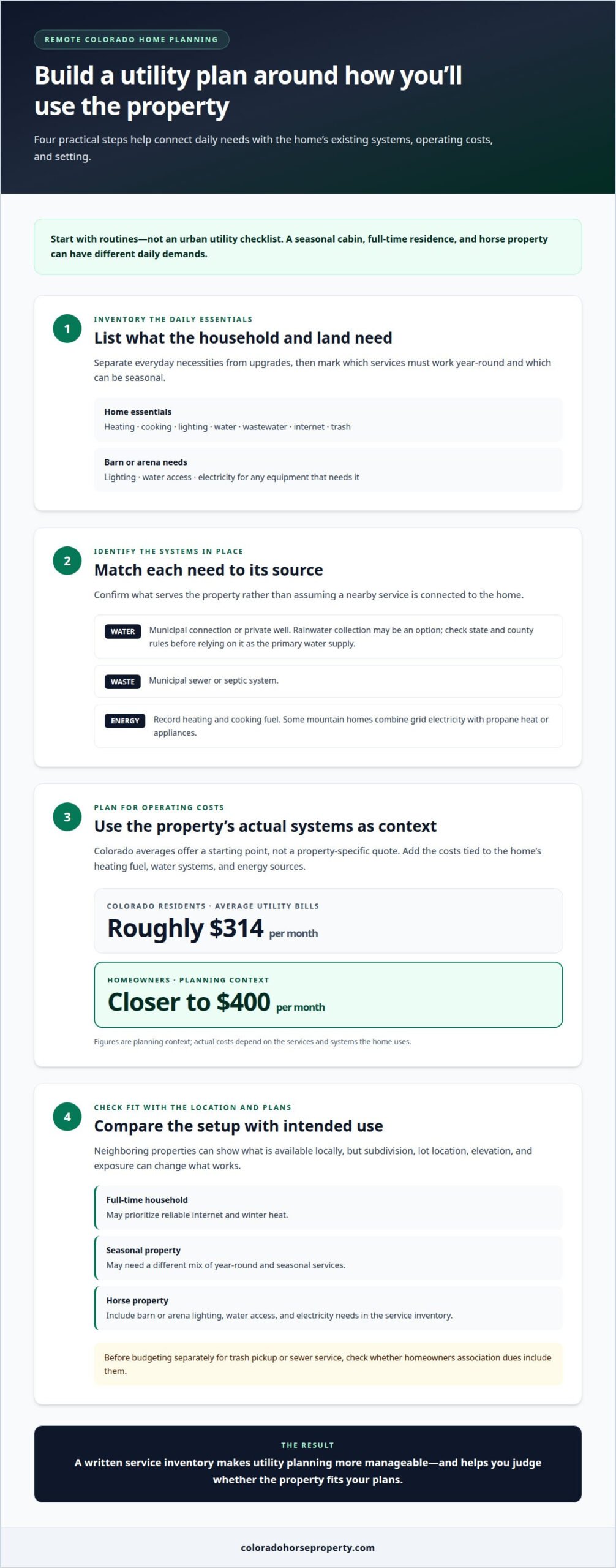
Choose services around how you’ll use the home, not a standard urban checklist. A seasonal cabin, full-time residence, and horse property can have different daily demands. When setting up utilities for a remote Colorado property, start with the routines the land and home need to support.
- List essential uses before moving in: heating, cooking, lighting, water, wastewater, internet, and trash. For a barn or arena, account for lighting, water access, and any equipment that needs electricity. This inventory separates daily necessities from upgrades and helps you judge whether the property’s setup fits your plans. Note which services need to work year-round and which can be seasonal.
- Match each need to the property’s existing system. Identify whether water comes from a municipal connection or a private well, and whether wastewater goes to sewer or septic. Note the heating and cooking fuel, too. Some mountain homes combine grid electricity with propane heat or appliances. Rainwater collection may also be an option, but check state and county rules before relying on it as your primary water supply.
- Estimate operating costs using the services the home actually uses. Colorado residents pay roughly $314 per month for utility bills on average, while homeowners should plan closer to $400 per month. Treat these figures as planning context, then account for heating fuel, water systems, and energy sources. Utility details can affect affordability, comfort, financing, insurance, and resale value.
- Compare the setup with your intended use and nearby homes. Neighbors’ arrangements may show what’s available locally, but subdivision, lot location, elevation, and exposure can change what works. Before budgeting separately for trash pickup or sewer service, check whether homeowners association dues include them. A full-time household may prioritize reliable internet and winter heat, while a seasonal property may need a different mix. A written service inventory makes setting up utilities for a remote Colorado property more manageable and helps you assess whether a property fits your plans.
What permits are required to drill a private well in Colorado, and how much does it cost?
Plan well and wastewater systems separately. Well depth and local geology shape drilling costs, while septic installation involves its own testing and county permit steps.
- Define water demand before planning a well. List household use and any livestock or irrigation needs, then compare the proposed supply with the property’s intended use. A year-round home and a seasonal cabin may have different requirements. Keep the well plan separate from wastewater planning: a well supplies water, while a septic system handles wastewater.
- Establish the parcel’s well approval and documentation requirements before scheduling drilling. Keep well-related approvals separate from septic paperwork. A county permit and soil percolation test are required before installing a septic system. These are septic steps, not a substitute for well authorization. Keep approvals and property details with the project documents.
- Plan the drilling budget around the site’s depth and geology. A deeper well or challenging local geology can affect the work required. Treat drilling as one part of the water system plan rather than assuming the drilling figure covers every water-related component.
- Coordinate the well plan with wastewater decisions before construction. If the property uses septic, soil testing and permitting may be part of the installation process. Septic systems also need professional maintenance from time to time. Include maintenance access and the locations of both systems in your property planning documents.
- Use the water setup as a purchase criterion, alongside access, power, and the home’s intended use. For a property search centered on equestrian land and infrastructure, explore Colorado horse property listings and compare how each parcel’s water arrangements fit your plans.
Colorado Horse Property
Colorado Horse Property helps buyers consider utility needs alongside the realities of rural and equestrian properties. If you’re weighing internet access, power, water, and wastewater alongside land features, its AI-Powered Horse Property Search can help you find listings with details such as barns, arenas, water rights, and pasture. Buyer Representation can support your evaluation of how a property’s infrastructure fits your intended use, while Transaction Management helps coordinate the purchase process.
Turn to Colorado Horse Property when comparing rural properties or preparing to buy and you want utility needs included in the decision. Contact Colorado Horse Property to discuss your property search.
Carry Your Utility Priorities Into the Property Search
A practical next step in setting up utilities for a remote Colorado property is to include service needs in your purchase criteria. Decide which infrastructure is essential, which alternatives you can manage, and what trade-offs would change how you use the land. That gives your search a clear purpose beyond acreage or scenery.
Colorado Horse Property’s AI-Powered Horse Property Search and Real Estate Listing Services can help focus your search, while Buyer Representation brings your priorities into the buying process. The right property should support how you intend to live and work, with essential services considered from the start.
Contact Colorado Horse Property to begin your property search. With your priorities defined, you can move toward a Colorado property that fits your plans.
Frequently Asked Questions
Is Power Available?
Some remote Colorado parcels have grid power at the lot line or nearby, while others have no grid connection available. Seeing a power line from the road doesn’t establish that a parcel can connect to it. For a specific property, distinguish existing service from nearby infrastructure and account for access rights, terrain, distance, and utility requirements. These details help determine whether a connection is practical and what work it involves.
What Does Off-Grid Mean?
Off-grid means a property relies on systems other than public utility connections for at least some services. It doesn’t necessarily mean every utility is independent: a home might use grid electricity but rely on propane heat and satellite internet. Identify each service separately, including its power source and backup. This gives you a clearer picture than treating “off-grid” as one fixed setup.
How do I check which utility providers serve a remote Colorado property?
Start with the property’s exact location and identify the service territory for each utility. Electricity providers may include Xcel Energy, Black Hills Energy, municipal utilities, or rural power cooperatives. Gas service may come from Xcel Energy, Black Hills Energy, Colorado Natural Gas, or a municipal provider. Water and sewer arrangements can be local. Make a separate provider list for electricity, gas, water, wastewater, trash, and internet.
How much does it cost to extend electricity to a remote property in Colorado?
These figures describe different parts of the work: the per-foot amount relates to extending lines, while total connection costs vary with distance, easements, utility requirements, and existing infrastructure. Include those factors when comparing parcels.
How do I get internet service at a remote Colorado property, including satellite options?
Check the service options for the property’s location, then compare real-world performance and installation needs. Colorado mountain homes may have fiber, fixed wireless, DSL, cable-style service, or satellite. Cellular reception can also matter for calls and backup planning. Terrain, tree cover, tower distance, and line of sight can affect service at the home.
What are the costs and requirements for septic system installation in rural Colorado?
Septic planning may involve evaluating soil conditions and checking local permitting requirements before installation. Soil conditions help determine which system is suitable, so include both steps in project planning. Septic systems also need professional maintenance from time to time.